Reviewed · BAALBEK & ANJAR TOURS
Guided Private Full Day Tour to Baalbek, Anjar and Chateau Ksara
A full day that strings together Baalbek’s Roman giants, Aanjar’s Umayyad ruins, and a wine stop in the Beqaa Valley is a smart way to see Lebanon’s big eras without stressing over driving. I love the private hotel pickup and drop-off, and I love having a guide who makes the history make sense as you walk. The main drawback to plan for: site entry fees and wine tasting cost extra, and lunch is not included.
Guides such as Georgette and Albert bring the day to life with clear explanations and good pacing. You are not just looking at stones, you are getting the why behind them, from the worship of a triad of deities to why these roads mattered for empires.
The tour runs about 8 hours, in an air-conditioned vehicle. That timing is great for a one-day plan, but you will still spend meaningful time on the road, so it helps to pack water and be ready for a full day.
Key things to know before you go

- Private pickup and drop-off from your Beirut hotel saves time and hassle.
- A professional guide helps you connect what you see at Baalbek, Aanjar, and Ksara.
- Baalbek includes free highlights, while other sites have separate entry costs.
- Aanjar is a crossroads story, tied to routes linking Beirut, Damascus, Homs, and Tiberiade.
- Château Ksara is a wine stop with a cave setting, but tasting is not included.
- Expect an all-day schedule with several short stops, not just one long museum visit.
A private Baalbek-Anjar-Ksara day that actually fits a travel schedule
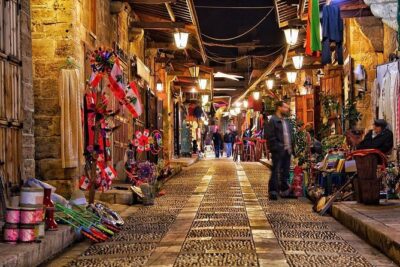
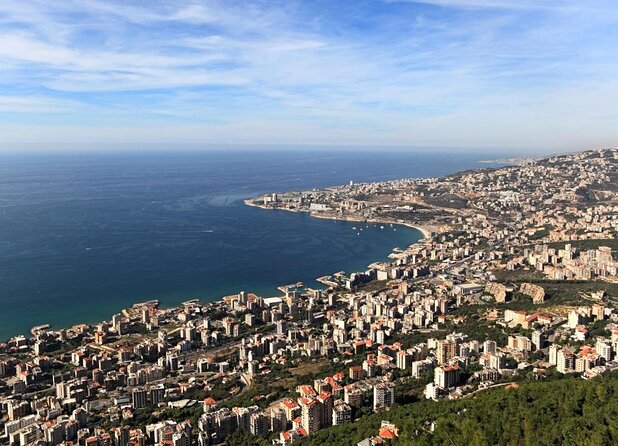
If you have only a day in the Beirut area, this kind of private full-day tour is practical. You skip the headache of arranging intercity transport, and you get a plan that moves across the Beqaa Valley at a steady rhythm. You start with pickup from your hotel, then head east toward Baalbek, with the chance to see how quickly the scenery shifts once you leave the city behind.
This is also the right format if you want a guide who can adjust. In days like this, it is less about ticking off photos and more about understanding the place while you stand in it. A good guide keeps the tempo. If you are the type who likes to ask questions, you tend to get good answers without the tour feeling rushed.
There is one planning point that matters. Entry fees and wine tasting are not included. Some parts are free, but some are not, so your final cost will be higher than the base price. Still, given that you are paying for private transport, guidance, and a full-day itinerary, it often feels like good value for people who want a clean, guided day.
Other days out of Beirut to consider
- Jeita Grotto,Harissa&Byblos Full-Day PRIVATE-CAR Trip from Beirut
★ 5.0 · 222 reviews - Private Anjar and Baalbek Tour from Beirut with Departure Ticket
★ 5.0 · 79 reviews - Semi-Private Tour to Jeita Grotto, Harissa & Byblos with Lunch
★ 5.0 · 52 reviews
Getting out of Beirut: how the drive sets up Baalbek

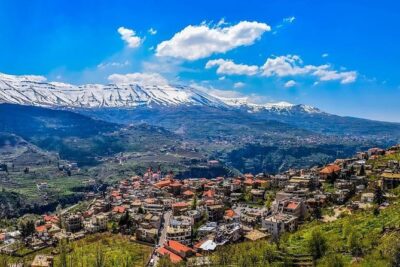
The drive to Baalbek is not just transit. It is part of the story because these sites are not in Beirut. The places you are visiting sit in and around the Beqaa Valley, tied to ancient roads and modern geography. An air-conditioned vehicle keeps things comfortable, especially if your day starts warm.
You can think of the route as a lead-in. By the time you reach Baalbek, you are already in the right setting: a valley corridor that has connected empires for centuries. That makes the explanations hit harder. When your guide talks about pilgrimages, sanctuaries, and the flow of people, you are already feeling the logic of the region.
Baalbek temples: Bacchus and Jupiter at a scale you have to see

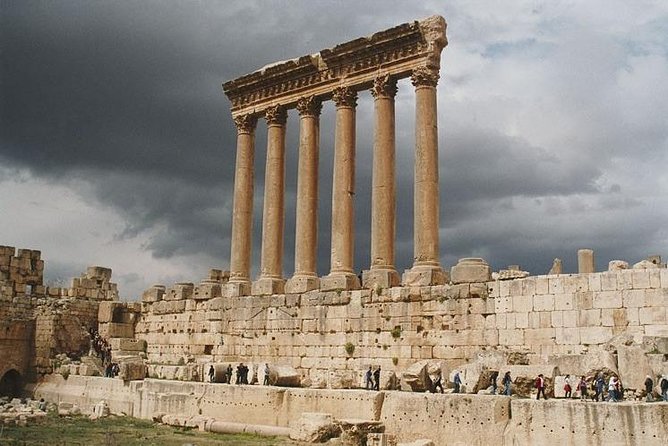
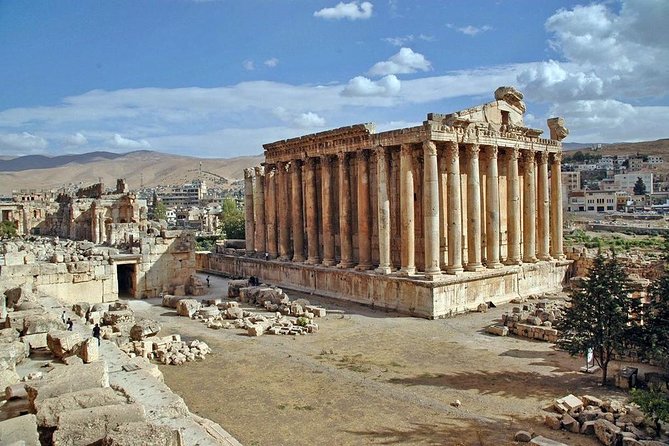
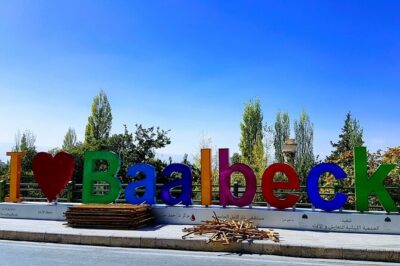
Baalbek is the headline for many reasons, but the simplest way to describe it is scale. The Baalbek temple complex includes two major Roman temple ruins, the Temple of Bacchus and the Temple of Jupiter. This site was inscribed as a UNESCO World Heritage site in 1984, and once you are there, you understand why the world took notice.
You will likely start with enough time to get your bearings. The first Baalbek stop gives you about two hours with admission ticket listed as free. That matters because it lets you spend time just absorbing the setting, not immediately worrying about ticket logistics.
What your guide should help you notice here
The guide work is especially valuable at Baalbek because the place is a layered timeline. Baalbek was known as Heliopolis during the Hellenistic period. In Roman times, the sanctuary of Heliopolitan Jupiter drew thousands of pilgrims. So, when you see the Roman architecture, you can also understand it as the stage for an older cult.
You will also get the religious story behind the Romanized triad. People came to venerate Jupiter, Venus, and Bacchus. Even if you are not into theology, it helps to know the purpose of the sanctuary. It changes the way you read the ruins. Instead of only thinking, huge columns, you start thinking, huge gathering space.
A different spoke from Beirut:
- Guided Small-Group Tour to Baalbek, Anjar and Ksara with Lunch
★ 5.0 · 511 reviews - Guided Small-Group Tour to Jeita, Harissa, Byblos with Lunch
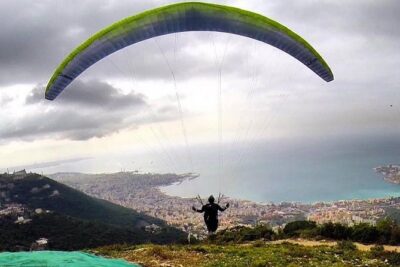
★ 5.0 · 361 reviews - Paragliding Trip Over Lebanon – Jounieh Bay
★ 5.0 · 257 reviews - First Paragliding Club in Lebanon – Since 1992
★ 5.0 · 193 reviews
The one cost wrinkle
After the initial Baalbek time, the temples portion lists admission as not included. You can still enjoy the core experience, but you should be ready for separate site entry fees depending on what ticketing is required at the moments you visit. This is the kind of detail that can surprise people who assume everything is bundled into the price.
Mosque of Sayyida Khawla and the Stone of the Pregnant Woman

Between the big Roman focus, there are smaller stops that add human texture. One is the Mosque of Sayeda Khawla in Baalbek. The story attached to the site is moving and specific. People in Baalbek believe Sayyida Khawla, daughter of Imam al-Hussein and grandson of the Prophet Muhammad, is buried there. The local tradition ties the belief to the caravan of captives from Karbala passing through Baalbek, when Khawla reportedly passed away and was buried.
Even if you are not there to pray, you should treat this stop as a reminder that the past lives inside the present. It is not only ruins. It is a living city with faith and memory.
Then comes the Stone of the Pregnant Woman, a worked Roman monolith in Baalbek. It is paired with another ancient block nearby, and together they are among the largest monoliths ever quarried. Your guide can explain what this likely meant for the nearby Roman temple complex, and why these pieces are famous for their monolithic scale.
You only get about 15 minutes here, so it is a quick hit. That short timing is fine if you use it well. Look closely. Think about how enormous stone would have been lifted and fitted. Even without an engineering background, you will feel the effort behind the design.
Umayyad Ruins of Aanjar: a crossroads city, not just a pile of stones

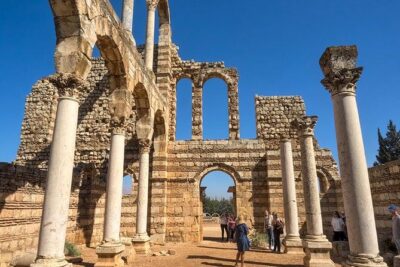
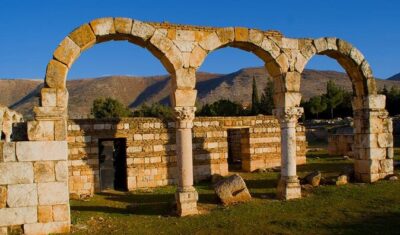
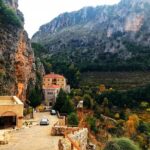
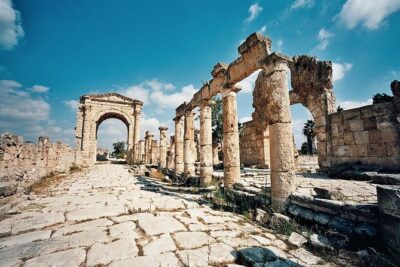
Next you head to Aanjar, the Umayyad Ruins of Aanjar. This stop shifts you from Roman imperial architecture to Umayyad civilization and planning. The ruins are described as strong evidence of the Umayyad world and a good example of an inland commercial center.
Here is why this place clicks if you like context. Aanjar sat at the crossroads of two major routes. One route led from Beirut to Damascus. The other crossed the Beqaa Valley and led from Homs to Tiberiade. In other words, it was not isolated. It was positioned for movement, trade, and travel.
You will have about 45 minutes here, and admission is not included. So again, expect some extra entry costs.
What you can expect to see
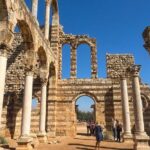
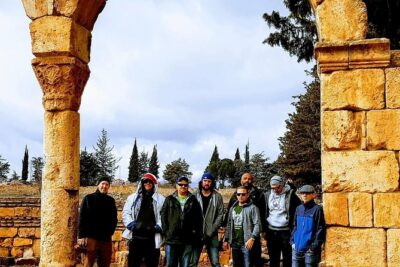
Aanjar includes walls of an Umayyad palace, harems, a mosque, the great palace of the caliph, and thermal baths. You will also see pillars with elements of Roman architectural style. That mix is one reason Aanjar feels more than just a single-era site. It shows how different powers adopted and reshaped what came before.
This is also a good stop if you like archaeology stories. The site was only discovered by archaeologists at the end of the 1940s. So when you walk around, you are not only seeing what was built, you are seeing what got uncovered in modern times and turned into a visitable place.
A practical tip
Because the Aanjar time is shorter, go into it with a question in mind. Ask yourself what kind of city it was built to be. With the route story in your head, the ruins feel more like a functioning layout than a static background.
Château Ksara in the Beqaa: wine culture in a cave setting

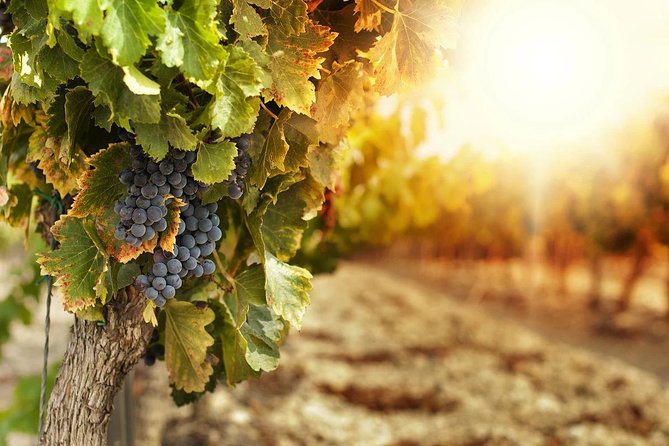
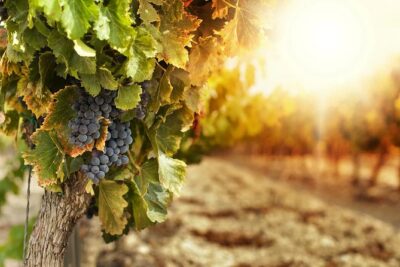
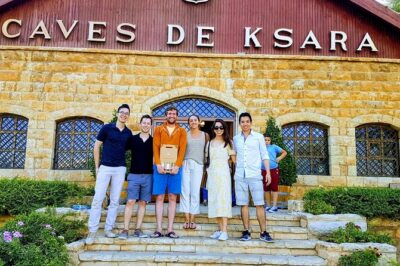
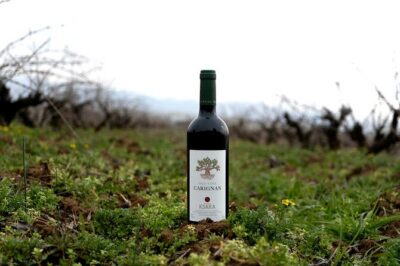
After the ancient stops, the day shifts to something more sensory at Château Ksara. This is a wine company in the Beqaa Valley, founded in 1857 by Jesuit priests. It is also noted for developing the first dry wine in Lebanon. Château Ksara produces around 3 million bottles annually and exports wines to over 40 countries.
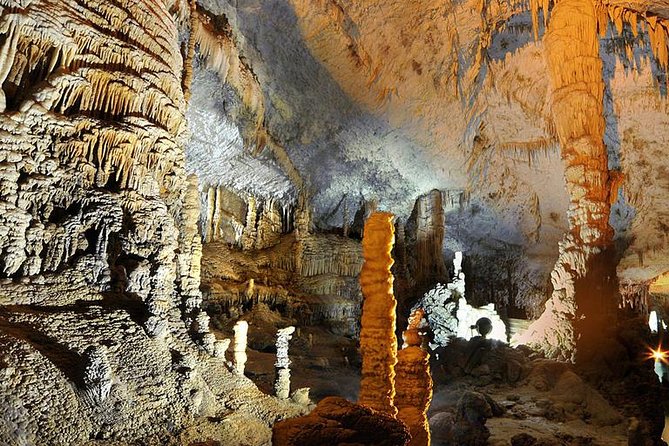
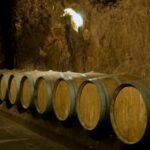
One of the best parts here is the setting. You sample local Lebanese wine while sitting in a cave. That detail alone makes it feel different from a standard winery visit, because the environment changes how you experience the tasting.
What is included and what costs extra
Château Ksara lasts about one hour. The important catch is that admission and wine tasting are not included in the tour price. So if wine is a priority for you, plan your budget for the tasting. If you are more curious than committed, you might treat the visit as a guided cultural stop first, then decide on tasting after you see the space and feel the flow of the cellar.
Either way, the stop is valuable because it closes the loop. You started with cities shaped by ancient movement and sacred purpose. Then you end with a modern Lebanese production tradition rooted in a specific valley and a specific company history.
Price and value: is $100 a smart deal for this private day?

At $100 per person, this tour can be a strong value if you care about three things: comfort, time efficiency, and a real guide. You are getting private transportation with air conditioning, plus hotel pickup and drop-off, a tour leader, and a professional guide. For an 8-hour day, that kind of bundled support matters.
Here is the tradeoff. Your base price does not include lunch, and it does not include entry fees for some parts of the day, plus it does not include wine tasting at Château Ksara. Baalbek’s first stop is marked as free, while other stops show tickets as not included. Aanjar also lists admission not included, and the temples portion of Baalbek is not included either.
So your total cost depends on what you choose to pay for on site. If you plan to visit all ticketed areas and do a tasting, budget a little extra from the start so there are no surprises mid-day. If you are selective, you can keep spending under control while still getting the big sights.
Bottom line: if you want a guided, door-to-door full day that covers major historical stops plus a wine finish, $100 is the kind of price that feels reasonable.
Who this tour suits best, and who should think twice

This is a great match if:
- You want a private day from Beirut that covers multiple major sites.
- You like history but also want someone to translate it into clear stories as you walk.
- You want to see Roman, Umayyad, and Lebanese wine culture in one coherent run.
- You value comfort, since the vehicle is air-conditioned and pickup and drop-off are handled.
You might think twice if:
- You are on a tight budget and do not want extra on-site fees and a wine tasting cost.
- You hate long driving days, even with an air-conditioned vehicle and a planned schedule.
- You expect lunch to be part of the package, because it is not included.
For most people, the private format is the big advantage. You do not have to sync up with a large group. If you have questions, your guide can respond in the moment.
Timing and pacing: how to make the most of an 8-hour day
The day is structured as a sequence of stops, each with its own time window. Baalbek first gives you around two hours, the main temples portion is around 1.5 hours, the stone stop is about 15 minutes, Aanjar is around 45 minutes, and Château Ksara is around one hour.
That mix means you will move. It is not a slow, museum day. It is a you-and-your-guide walk-and-learn day. The best way to enjoy it is to be mentally flexible. Do not plan to see every detail like you would in a two-day deep crawl. Instead, aim to understand the key ideas behind each stop, then take photos at moments that matter to you.
A simple strategy: at each site, decide on one thing you want to remember. At Baalbek, it might be the worship triad idea. At Aanjar, it might be the crossroads routes. At Ksara, it might be the cave setting. When you do that, the time crunch becomes easier to handle.
Guides like Georgette and Albert make a difference
One reason this tour earns near-perfect satisfaction is the human side. Guides such as Georgette bring a lot of enthusiasm and clarity, especially when explaining history in a way that feels connected to the real place. Albert stands out for how he balances reflections with practical pacing, and how he stays flexible during the day.
If your priority is not just seeing places but learning how to read them, that matters. Good guiding turns a long day into a story you can repeat later, instead of a list of stops.
Should you book this private full-day Baalbek, Anjar and Château Ksara tour?
Yes, if you want an efficient, comfortable day that combines major Roman ruins, Umayyad architecture, and a wine stop with a cave setting. The private pickup, the guided explanations, and the mix of sites across the Beqaa Valley are the big wins.
Just go in with one clear expectation: entry fees and wine tasting cost extra, and lunch is not included. If you budget for that up front, the day feels balanced and worth it. If wine is a must-do for you, plan for the tasting cost. If history is your top interest, you will get plenty to think about even at shorter stops like the Stone of the Pregnant Woman and the Khawla mosque.
If you like your travel days structured but not chaotic, this is a solid way to do Baalbek and beyond in a single go.
FAQ
How long is the Baalbek, Anjar and Château Ksara tour?
The tour is listed as approximately 8 hours.
Do you get hotel pickup and drop-off in Beirut?
Yes, pickup and drop-off from your Beirut hotel are included.
Is this tour private?
Yes, it is a private tour and only your group participates.
What is the price per person?
The price is $100.00 per person.
Are lunch and meals included?
Lunch is not included.
Are entry fees included for each site?
Some parts are free, like Baalbek’s first stop and the Stone of the Pregnant Woman. Other stops, including the Baalbek temples admission and the Umayyad Ruins of Aanjar admission, are not included.
Is the wine tasting included at Château Ksara?
Wine tasting is not included in the tour cost, and Château Ksara admission is also not included.
What transportation is provided?
You ride in a comfortable, air-conditioned private vehicle, and it includes hotel pickup and drop-off.
Will I receive a mobile ticket?
Yes, a mobile ticket is included.
Can I cancel and get a full refund?
Yes, you can cancel for a full refund if you cancel up to 24 hours in advance of the experience start time.
Newest Beirut write-ups
- Private Car with English Speaking Driver★ 5.0 · 6 reviews
- Baatara Gorge Waterfall, Jeita Grotto and Byblos Tour★ 4.5 · 6 reviews
- Private Trip to Qadisha Valley, Cedars Forest of God and Baalbek Temples★ 4.5 · 6 reviews
- Private Departure Transfer: Hotel to Beirut International Airport★ 4.0 · 6 reviews
- Private Trip to Qadisha Valley, Bcharri and Cedars of God★ 5.0 · 6 reviews
- PRIVATE city tour of Old Sidon & Historic Tyre★ 5.0 · 3 reviews
- Indoor Shooting Range Activity in Beirut Lebanon★ 4.0 · 7 reviews
- Exclusive Excursion: Discover Baalbek, Anjar, and Chateau Ksara★ 5.0 · 6 reviews
Baalbek & Anjar Tours, compared.

Guided Small-Group Tour to Baalbek, Anjar and Ksara with Lunch
Read our review →
Anjar, Baalbek & Ksara Day Trip – With Lunch (4G on Board)
Read our review →
Private Anjar and Baalbek Tour from Beirut with Departure Ticket
Read our review →
Lebanon tour Baalbek ruins & Ksara w/pick-up, lunch,guide+entries
Read our review →
Baalbek Temples & Ksara Caves w/pick-up,guide, entries+lunch
Read our review →
Small Group Tours to Baalbek, Anjar & Chateau Ksara with lunch and Tickets
Read our review →
Private Tour: Anjar, Baalbek and Ksara Day Trip from Beirut
Read our review →Browse the lists this tour appears in