
Reviewed · CEDARS & QADISHA VALLEY TOURS
Private Trip to Beiteddine, Deir el Qamar & Maaser el Chouf Cedars
A full-day, three-stop private loop through Beiteddine, Deir el Qamar, and the Chouf Cedars is interesting because it lets you see Lebanon in layers, not snapshots. I love how the day mixes palace grandeur, old village streets, and time in the mountains without feeling rushed.
I also like the built-in human factor. If you get guide Hassane, you’ll likely have plenty of chances to talk and connect the dots between what you see and what it meant to people over time, especially in Deir el Qamar.
One thing to consider: tickets for Beiteddine Palace and the Shouf Cedars Reserve are not included, and lunch is on your own. So plan a bit more than the base price to keep the day smooth.
Key things to know before you go
- Three major stops in one day so you get big variety without changing hotels or making extra plans
- Free time for lunch on your own keeps the day flexible, but you’ll need to budget for it
- Religious diversity in one compact area at Deir el Qamar, including a mosque and a church
- Shouf Cedars is Lebanon’s largest reserve and it’s set up for hiking and bird watching
- Guided context helps if you want more than just photos, especially at Beiteddine and the village sites
Why This Private Day Trip Works: Palace, Village, Cedars
This is one of those trips that feels efficient, but not fake. You’re not just driving past landmarks. You get time to slow down at each place and actually look at the details, from carved palace ornament to stone church history to the cedar reserve setting.
You’ll also appreciate that it’s private. That means your pace is adjustable, and you’re less stuck in a rigid group rhythm. The whole day is built around a simple idea: one seat in an air-conditioned vehicle, one tour leader, and a sequence of places that each tell a different part of Lebanon’s story.
The value comes from the mix. Beiteddine Palace gives you political and architectural meaning. Deir el Qamar gives you social meaning, especially the way different communities lived side by side. Shouf Cedars gives you the nature reset at the end, so the day doesn’t feel like only museums and churches.
Other days out of Beirut to consider
- Jeita Grotto,Harissa&Byblos Full-Day PRIVATE-CAR Trip from Beirut
★ 5.0 · 222 reviews - Private Anjar and Baalbek Tour from Beirut with Departure Ticket
★ 5.0 · 79 reviews - Guided Private Full Day Tour to Baalbek, Anjar and Chateau Ksara
★ 5.0 · 60 reviews
Getting From Beirut to the Chouf Mountains: Timing and Comfort
You start at 9:00 am with hotel pickup and drop-off in Beirut. The ride is in a comfortable vehicle with air conditioning, plus you have a tour leader in the mix, which matters when you want context without interrupting your sightseeing flow.
Expect roughly 40 minutes from Beirut to the Deir area in the mountains, at least in good traffic conditions. That timing is long enough to get settled and short enough that you’re not spending half the day in the car.
Because it is private, you can also think about your own comfort needs: if you want photos on the way, you’ll have better odds of getting quick stops at sensible moments than on a larger tour bus.
Beiteddine Palace Museum and the President’s Summer Residence
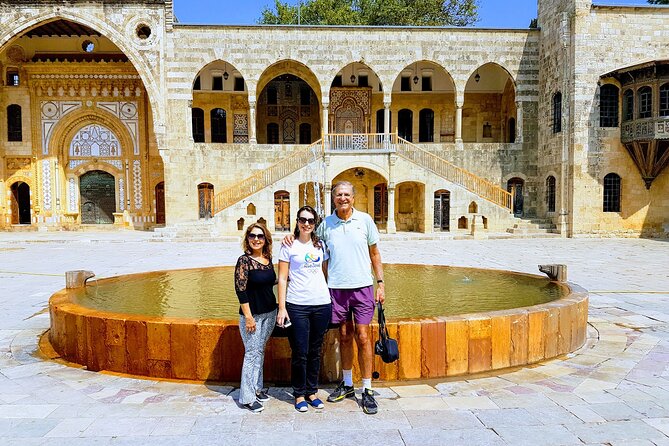
Your morning anchor is Beiteddine Palace, sometimes called the House of Faith. This is a 19th-century palace complex tied to Emir Bashir Chehab II, who built it between 1788 and 1818.
What I like about this stop is that it’s not presented as one single era. The palace has layers:
- After 1840, the Ottomans used it as a government building
- During the French Mandate, it served as a local administrative office
- In 1943, it became the president’s official summer residence
- During the Lebanese Civil War, it was heavily damaged, and today parts are open to the public while other parts remain tied to the current residence
That mix of uses over time helps you understand why the building feels both ceremonial and practical. You’re looking at the kind of architecture that supported power, administration, and daily life, not just decoration.
What to expect on-site
Plan on about 1 hour 30 minutes for your palace time. The palace museum visit is shaped by what’s open to the public during your visit, since the complex is still partly an active residence.
One practical note: admission is not included. If you want to avoid any last-minute friction, treat the palace ticket as part of your budget planning and consider setting aside time to handle entry before you lose momentum.
A different spoke from Beirut:
- Guided Small-Group Tour to Baalbek, Anjar and Ksara with Lunch
★ 5.0 · 511 reviews - Guided Small-Group Tour to Jeita, Harissa, Byblos with Lunch
★ 5.0 · 361 reviews - Paragliding Trip Over Lebanon – Jounieh Bay
★ 5.0 · 257 reviews - First Paragliding Club in Lebanon – Since 1992
★ 5.0 · 193 reviews
Potential drawback
If you’re the type who likes ultra-long museum sessions, 1 hour 30 minutes may feel short. Still, for most people it hits a solid pace: enough time to see the main palace character and then move on before the afternoon gets too slow.
Deir el Qamar: The Monastery of the Moon and Its Mixed Faith Streets
Next comes Deir el Qamar, a village about five kilometers from Beiteddine in the Chouf District. Its name means Monastery of the Moon, and it earns its reputation by being more than pretty views.
This is where you see Lebanon as a social map. The village was the first in Lebanon to have a municipality in 1864, and it was home to people from multiple religious backgrounds. The important detail is that the community included a mosque, synagogue, and Christian churches living close enough to shape daily life.
Then, history hits hard. In 1860, Deir el Qamar was destroyed during the conflict between Druze and Christians, with the town set ablaze. Later, Napoleon III sent a French contingent to help rebuild it, which is one reason the village’s story is tied to both local resilience and outside intervention.
That kind of history can sound heavy for a “day trip.” But that’s exactly why this stop works. It gives meaning to architecture and religious buildings that you might otherwise treat like just landmarks.
The village feel and the payoff
Even with just a limited time here, Deir el Qamar tends to deliver strong visual payoff. The red-roofed village setting gives you a classic mountain-town view, and the mix of religious buildings lets you notice how communities lived side by side.
You’ll also get a strong sense of location. Deir el Qamar sits in the same mountain world as Beiteddine, so your eyes start linking the dots between the palace authority up the hill and the community on the slopes.
Timing note
Your stop here is about 30 minutes. That’s enough time for a careful walk and quick context at the religious sites, plus a breather before the cedar reserve.
Fakhreddine Mosque and Our Lady of the Hill Church in One Quiet Stretch
Deir el Qamar gives you two religious sites that make the village’s story tangible.
Fakhreddine Mosque
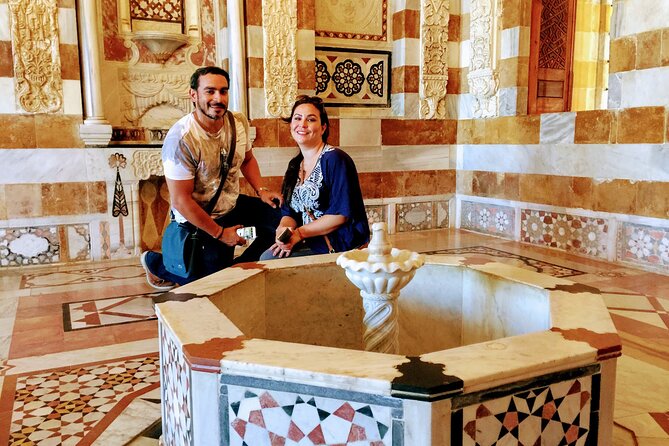
You’ll visit the Fakhreddine Mosque, known for its octagonal minaret. It was built in 1493, and restored in the 1500s by Fakhreddine I. It’s described as the oldest mosque in Mount Lebanon, which is a bold claim, and it’s the kind of marker that helps you understand why locals hold it in such high regard.
Even if you’re not a religious architecture specialist, this mosque gives you something simple and memorable: early Islamic building style and a minaret shape that instantly reads on the skyline.
Entry is free for this stop.
Saydet El Talle (Our Lady of the Hill) Church
Then you move to the Church of Saidet et Tallé, also translated as Our Lady of the Hill. It dates to the 15th century and is tied to a site with older layers underneath.
The church story connects to Monk Nicolas Smisaati, who built the church over ruins of an older Phoenician temple dedicated to Astarte. That older temple was reportedly destroyed by an earthquake in 859.
There’s also a legend connected to a Druze emir in Baakline, a light seen on the hill, and orders for soldiers to dig. The details can be a little story-like, but the point is that local memory clings to the hill itself, not just the building.
This church stop is also about 15 minutes, and entry is free.
Why this pairing matters
Seeing the mosque and church close together is useful. It helps you understand that Lebanon’s religious diversity is not a concept. In places like Deir el Qamar, it’s visible in the same streetscape and the same mountain setting.
Shouf Cedars Nature Reserve Hike: Birds, Trails, and Mountain Air
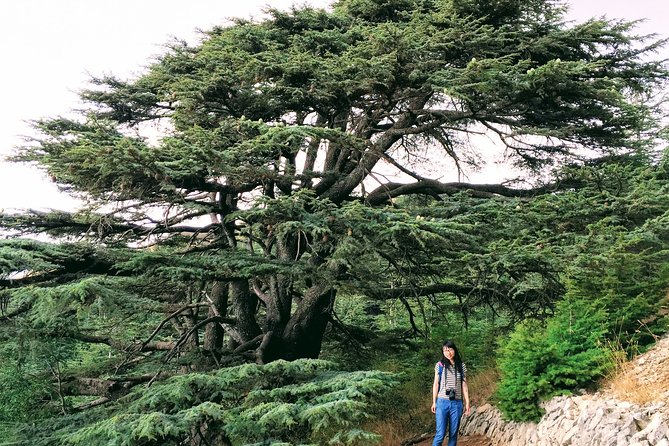
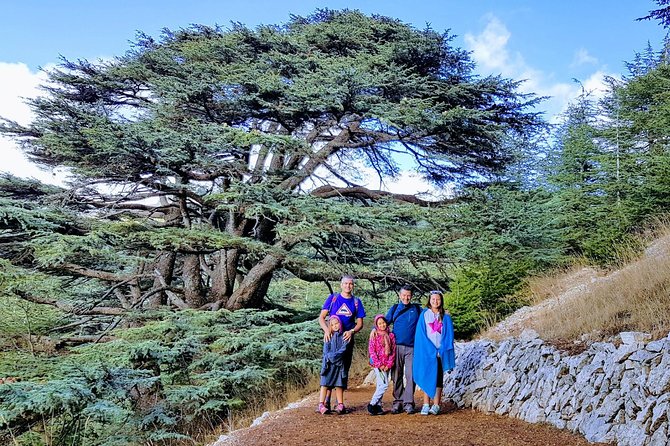
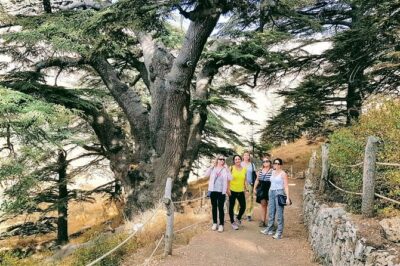
The day’s outdoor finale is Shouf Cedars Reserve, also called Al-Chouf Cedar Nature Reserve. This is the largest nature reserve in Lebanon, about 550 km², on the slopes of Barouk Mountain.
This is where the day shifts from buildings to breathing space.
The reserve is known for cedar trees, and it’s a major destination for hiking and trekking. Trails are set up for different fitness levels, and you can also find activities like bird watching, mountain biking, and even snowshoeing depending on the season.
What impresses me in the details is how busy the reserve’s ecosystem is. It hosts 32 species of wild mammals, around 200 species of birds, and about 500 species of plants.
Your time there
You’ll have about 45 minutes in the reserve, and admission is not included.
That time is enough for a short, satisfying walk and a chance to appreciate the cedars and the mountain air, without turning the day into a full trekking mission. Still, it’s not enough for someone trying to cover big distances end to end. So go into it thinking: short hike, best views, photos, then back to the road.
How to enjoy it more
Bring practical basics. Comfortable shoes matter here. If it’s warm, take advantage of shady stretches. If it’s cooler, a light layer helps. You will feel the change from the village stone and palace interiors into open mountain space, and you’ll want to move easily.
Lunch Time Strategy: Eat Local Without Stress
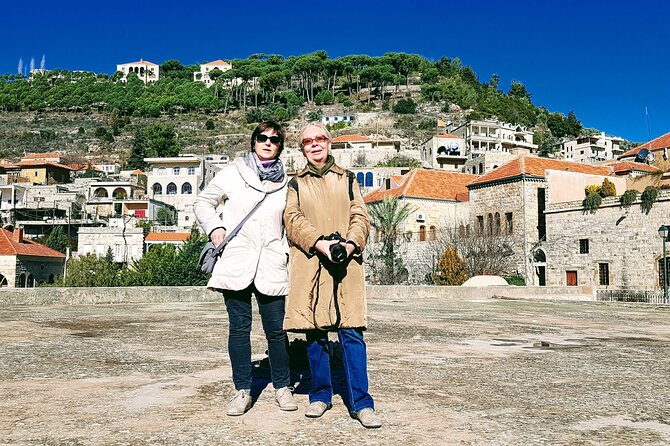
Lunch is the one moment the tour intentionally does not control. You get free time to grab a Lebanese lunch on your own at a local restaurant.
I like this setup because Lebanon’s food is where you can personalize your day. If you like grilled meats, you can go that direction. If you prefer something lighter, you have room to choose.
The trade-off is simple: lunch is not included, so budget for it. You’re also responsible for deciding where to eat during your break.
If you want to keep it low stress, pick somewhere close and quick so you don’t feel rushed when you’re heading back to the reserve later.
Price and Value for $100 Per Person
At $100 per person, the value depends on what you care about.
Here’s what you’re paying for, in plain terms:
- Private transportation in an air-conditioned vehicle
- Hotel pickup and drop-off in Beirut
- A tour leader on the day
- A structured day that hits three major destinations
- Time for lunch on your own, which keeps your choices flexible
The two main add-ons you should plan for are Beiteddine Palace admission and Shouf Cedars Reserve admission. Deir el Qamar’s specific mosque and church stops are free, which helps balance the costs a bit.
So the “real” cost is the base price plus those two admission items plus lunch. Once you factor those in, you’re basically buying convenience and context: less planning, less navigation, and more time to look instead of organize.
If you’re traveling as a family, the private format can be a big win because you can slow down when kids need it, and you’re not stuck absorbing a long bus ride with strangers.
What to Bring and How to Plan Your Day
This is a full-day outing that mixes indoor palace time, stone churches and mosques, and outdoor walking in a reserve.
For a smoother day, I’d pack:
- Comfortable shoes for walking on uneven ground
- A light layer, just in case temperatures shift in the mountains
- Sun protection if the day is bright
- Cash or card for admissions not included, and for lunch
Also, since you’ll be visiting religious sites, it’s smart to dress with respect and cover appropriately as needed. The tour does not specify dress rules, so I’d follow common sense for visiting holy places.
One more small planning tip: start the day with a full breakfast. Since lunch is on your own, having energy helps you enjoy the last stop in the cedar reserve.
Who This Tour Suits (and Who Might Want a Different Option)
This tour fits best if you want a high-value one-day overview that still includes real time at each place.
You’ll likely enjoy it if:
- You like scenic mountain villages and want context, not just photo stops
- You want palace architecture plus a nature stop in the same day
- You’re traveling with family and appreciate private logistics
- You want an English-speaking, friendly guide experience, including conversational stops when there’s time
You might consider a different option if:
- You want a long hiking day, not a shorter cedar walk
- You dislike paying separate admission fees once you arrive
- You prefer fully guided meal plans, since lunch is on your own here
Should You Book This Tour?
If your goal is a memorable, efficient day from Beirut that covers Beiteddine Palace, the story-rich Deir el Qamar, and a real taste of cedar reserve nature, then yes, it’s a solid choice.
I’d book it if you like variety. Palace, village history, and the mountains make a natural flow. I’d also book it if you value having a guide, because the day feels more meaningful when someone like Hassane can turn what you see into context you actually care about.
Just go in with one mindset adjustment: admission and lunch are on you. Budget a little extra, wear comfortable shoes, and you’ll get a strong day that feels far more connected than a checklist of stops.
FAQ
What time does the tour start?
The tour starts at 9:00 am.
How long is the private tour?
It runs about 8 hours (approx.).
Is this tour private or shared?
It is a private tour/activity, so only your group participates.
Do I get hotel pickup and drop-off in Beirut?
Yes. Hotel pickup and drop-off are included.
Is lunch included in the price?
No. Lunch is not included, but the tour includes free time for you to grab a Lebanese lunch on your own.
Is admission to Beiteddine Palace included?
No. Admission to Beiteddine Palace is not included.
Is admission to Shouf Cedars Reserve included?
No. Admission to the Shouf Cedars Reserve is not included.
Are the Deir el Qamar mosque and church admission fees included?
Entry to the Fakhreddine Mosque and the Saydet El Talle Church is listed as free.
What is the cancellation policy?
You can cancel for a full refund up to 24 hours in advance of the experience start time. If you cancel less than 24 hours before, the amount paid is not refunded.
Newest Beirut write-ups
- Small Group Tours to Jeita Grotto and Byblos with tickets★ 5.0 · 3 reviews
- Small-Group Tour with Lunch to Jeita Grotto, Byblos and Harissa★ 4.5 · 3 reviews
- Small-Group Tour to Sidon, Tyre and Maghdouche with Lunch and Tickets★ 4.5 · 3 reviews
- Small-Group Tour with Lunch to Baalbek, Anjar and Ksara★ 5.0 · 3 reviews
- Beirut to Qadisha Valley, Bcharri & Cedar: Daily Tours with Lunch★ 4.5 · 3 reviews
- Beirut to Sidon, Tyre and Maghdouché: Daily Tours with Lunch★ 5.0 · 3 reviews
- Exploring Beirut’s Past: A Private Guided Historical Tour★ 5.0 · 3 reviews
- Private Tour: Tyre, Sidon and Maghdouche Day Trip from Beirut★ 4.5 · 3 reviews
Cedars & Qadisha Valley Tours, compared.
Guided Small-Group Tour to Qadisha, Bcharee & Cedars with Lunch
Read our review →
Cedars of Lebanon, Qozhaya, & Bcharre – With Lunch (4G on Board)
Read our review →
Small-Group Tour with Lunch to Qadisha Valley, Bcharre and Cedars
Read our review →
Cedars Shouf & Beiteddine w/pick-up, guide, entries+lunch
Read our review →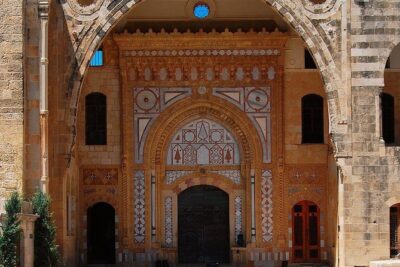
Guided small group to Cedars Reserve & Beiteddine w/lunch+entries
Read our review →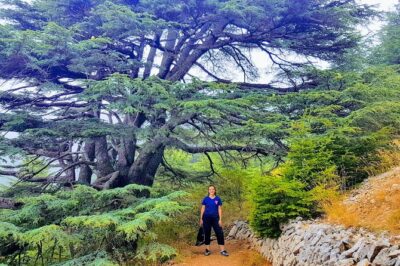
Guided Full-Day Private Trip to Cedars, Baalbek and Chateau Ksara
Read our review →
Small Group Tours to Qadisha Valley, Bcharre and Cedars with lunch and all fees
Read our review →Browse the lists this tour appears in