
Reviewed · CEDARS & QADISHA VALLEY TOURS
Beirut to Qadisha Valley, Bcharri & Cedar: Daily Tours with Lunch
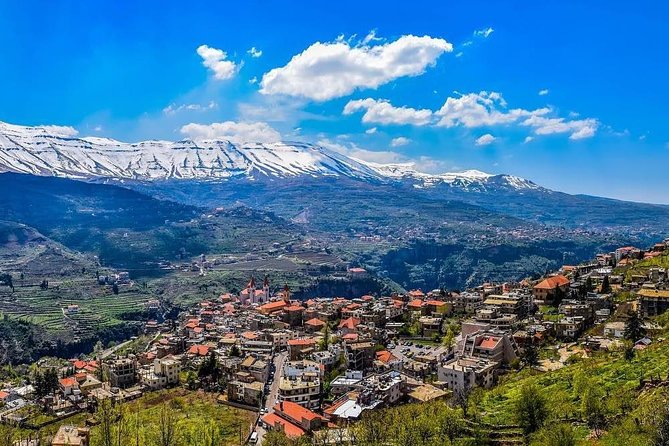
Two things make this day trip feel special right away. First, you jump from Beirut into the dramatic Qadisha Valley area, tied to early Christian monastic life. Second, the Cedars of God are not a quick photo stop, they are a real, protected forest you visit with a sense of scale and meaning.
I also love how the pace is organized for a small group, max 15, so you get time to ask questions instead of being rushed. And the front-door pickup and drop-off means you do not need to figure out intercity transport on your own.
One consideration: it is a full day, about 8 hours, and you should have moderate physical fitness. Weather matters too, since the tour requires good conditions.
Key things I’d watch for before you go
- Small group size (up to 15) keeps the day feeling personal and flexible
- Front-door pickup and drop-off makes the day trip low-stress from central Beirut
- Gibran Museum admission included saves time and gets you straight to the art and manuscripts
- Cedars of God access included focuses the visit on the protected forest, not just viewpoints
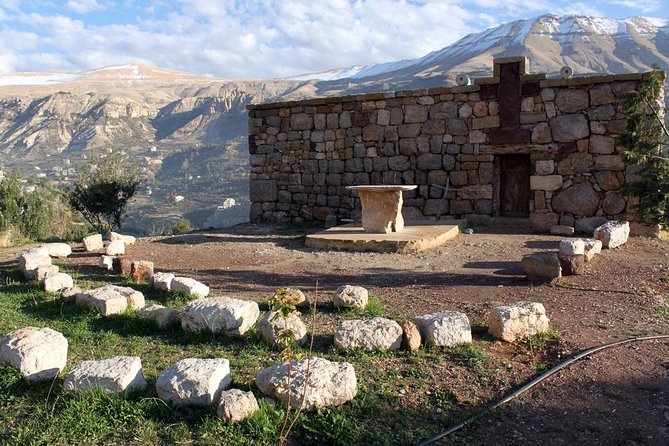
- Early monastery sites in Qadisha Valley mean rugged terrain and lots of atmosphere
- Lunch at a local Lebanese restaurant keeps you fueled for the return drive
A smooth way to see Lebanon’s spiritual heart in one day
This is the kind of day trip that works well when you want more than one big “wow” moment, but you still want it organized. You start early, ride in an air-conditioned vehicle, and return the same day, with entrance fees and lunch handled for you. With a max group size of 15, you are not stuck listening to the same history facts on repeat while sprinting from place to place.
I also like that the stops connect thematically. You are not only seeing scenery. You’re tracing ideas: faith and solitude in the Qadisha Valley, Lebanon’s artistic identity in Bcharre, and the cedar symbol that shows up in religion, culture, and even the Lebanese flag.
The value of this plan is practical. For $65 per person, you are paying for an organized route, hotel pickup and drop-off, the local guide, transportation, and the entrances you would otherwise have to plan and coordinate yourself.
Working out your Beirut base? These pair well:
- Guided Small-Group Tour to Baalbek, Anjar and Ksara with Lunch
★ 5.0 · 511 reviews - Guided Small-Group Tour to Jeita, Harissa, Byblos with Lunch
★ 5.0 · 361 reviews - Paragliding Trip Over Lebanon – Jounieh Bay
★ 5.0 · 257 reviews
Start in Beirut, then follow the route into Qadisha Valley
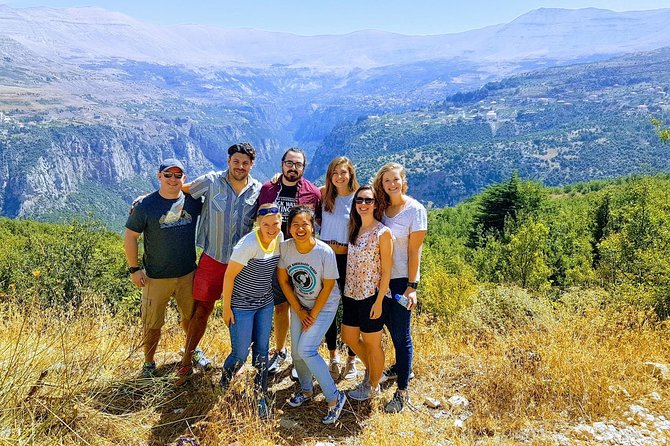
Your day begins at 8:30 am with pickup from your hotel or residence in Beirut. From there, the drive places you in a part of Lebanon known for early Christian monastic sites. Qadisha Valley is described as one of the most important settlement areas tied to the first Christian monasteries in the world, with caves, monasteries, and cultivated terraces linked to early Christian activity.
What this means for you on the ground is tone. Even if you do not know the details, the setting communicates purpose. The valley is rugged, and the monasteries sit in an area shaped by rock, altitude, and old stone work. Instead of feeling like a theme park, the place gives you that slow, reflective feeling you expect from monastic history.
A small practical note: expect the terrain to be uneven in places. Bring comfortable shoes and plan to move carefully around monastery areas. If you prefer perfectly smooth walkways, this is not that kind of outing.
Qadisha Valley monasteries, caves, and terraces: what you’re really seeing
Qadisha Valley covers the caves, monasteries, and agricultural terraces connected to early phases of Christianity. Many monasteries are very old, and they are set into an extraordinarily rugged environment. That combination, old religious sites plus hard terrain, is why the valley matters so much.
Here is how to get the most out of your time during this stop. Slow down when you arrive, and orient yourself before you start moving. Look for how the monasteries relate to the rock and the valleys around them. The point is not just the buildings, it is the way people carved out a life there.
Also, take advantage of any guidance from your tour leader. This area is easier to understand when you hear the story in plain language, not just in a signage-only format.
Bcharre, the city of churches, and the art-and-cedar town vibe
Next you reach Bcharre, a town strongly linked to Lebanon’s cedar story and also to Kahlil Gibran. Bcharre is famous for the preserved originals connected to the Cedars of God, and it is the birthplace of Khalil Jubran, whose work is honored locally.
Bcharre also has a side you might not expect: it is home to Lebanon’s oldest skiing area, Cedars Ski Resort, and the first ski lift built there dates to 1953. So even though you are visiting a religious and historical region, the town itself feels like a lived-in place, not a museum town.
One helpful detail: Bcharre is sometimes called the city of churches, and it houses about 37 churches. That gives you a sense of how layered the town is, religiously and culturally, in a way that matches the broader Qadisha region.
Your time here is set at about 30 minutes for the initial Bcharre stop. That is enough for the highlights, but you should not plan on wandering for hours. If you like independent exploration, you might keep an eye out for a few “must see” points during your guided time, then consider returning later on your own.
A different spoke from Beirut:
- Jeita Grotto,Harissa&Byblos Full-Day PRIVATE-CAR Trip from Beirut
★ 5.0 · 222 reviews - First Paragliding Club in Lebanon – Since 1992
★ 5.0 · 193 reviews - Anjar, Baalbek & Ksara Day Trip – With Lunch (4G on Board)
★ 4.5 · 181 reviews - Jeita Grotto – Harissa – Byblos Trip
★ 5.0 · 169 reviews
The Gibran Museum: art, manuscripts, and the Monastery of Mar Sarkis
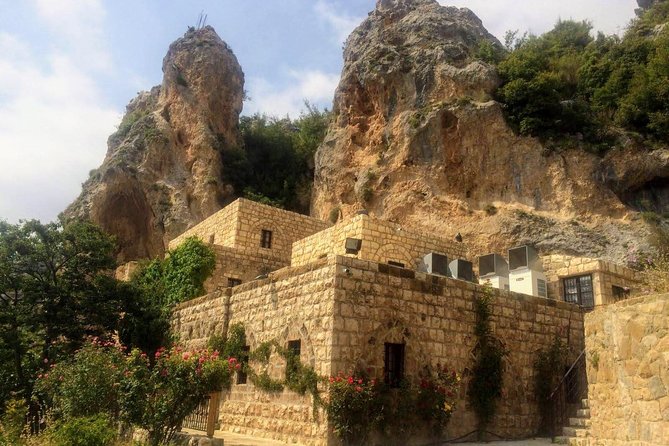
Bcharre is also where you visit the Gibran Museum, which is dedicated to writer, philosopher, and artist Kahlil Gibran. The museum has a particularly interesting backstory: it was formerly the Monastery of Mar Sarkis. So you are stepping into a place with a religious past and then seeing it filled with Gibran’s creative life.
This stop is about 30 minutes, and admission is included. Inside, you find around 440 original paintings and drawings. You also see personal items, including furniture and belongings from his studio when he lived in New York, plus private manuscripts. The museum was founded in 1935, and it includes his tomb area.
Here is what I think you should do during your short visit. Pick one or two themes to focus on before you go in. For example, look at how his drawings connect to his writing, or focus on the personal artifacts to understand the man behind the work. With limited time, focus beats scanning everything.
If you enjoy literature and art, this is often the kind of stop that makes the whole day feel more human. You are not only viewing sacred sites, you’re connecting Lebanon’s creative voice to the landscape and the family roots tied to Bcharre.
Cedars of God: walking among the last antique forest remnants
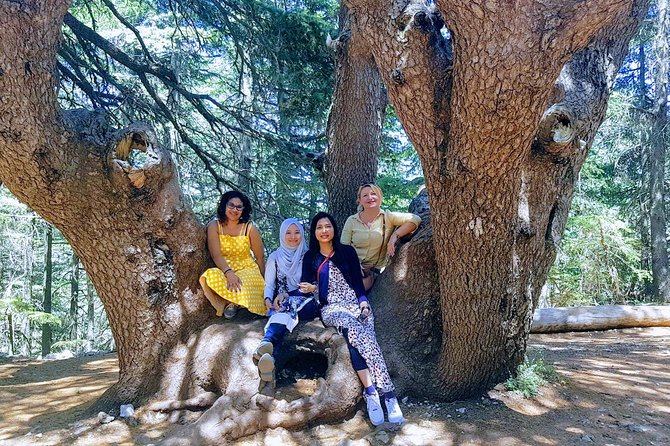
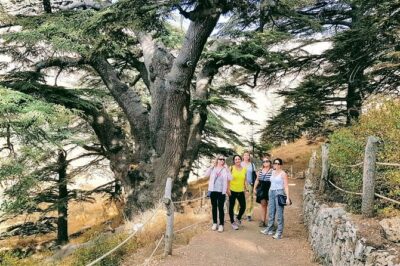
The Cedars of God visit is built around a key fact: the forest contains 375 cedar trees and is the last remains of antique forests where cedar still grows. This is a protected site, and it is also a symbol that appears everywhere in Lebanon’s identity.
You’ll hear that cedars were highly prized in ancient times and used as valuable construction materials for major religious buildings. There is also a Bible connection, with the cedar referenced 103 times. Even if you are not religious, that tells you something. The cedar mattered to empires, to faith communities, and to cultural storytelling.
Your visit is around 45 minutes, and admission is included. That longer time compared with the first Bcharre stop helps you slow down. Use it to notice scale, light, and the way the forest feels compared with open viewpoints.
One way to make your cedar time more rewarding is to keep your phone camera just for moments when you really mean it. Instead, look up and around. Cedars have a way of changing your sense of distance, and the forest does not work as well if you treat it like a checklist.
Deir Qozhaya and Saint Anthony the Great: altitude, trees, and hermit history
The last major stop is Deir Qozhaya, centered on the Monastery of Saint Anthony the Great. It sits about 950 meters above sea level in the Qozhaya Valley, surrounded by pine and oak trees. Fruit trees grow throughout the valley, and the area extends into the Qannubin Valley, which together form the larger Qadisha Valley.
This stop ties your day together, because it keeps the monastic theme going. Historians and scholars suppose the monastery began to be occupied by hermits around the beginning of the fourth century. Over time it was looted, set on fire, and razed to the ground, but vestiges remain that date back to the seventh century.
What you get in about 30 minutes here is a mix of place and story. You are not promised hours to trace every ruin detail. Instead, you get an organized visit that helps you understand why people would choose solitude in this exact environment, with trees, valleys, and altitude shaping daily life.
A practical tip: keep your jacket or layer in mind. Higher elevation can feel cooler, and even when Beirut is warm, the monastery area can be a bit different. The tour itself is by air-conditioned vehicle, but once you step out, you’re on local conditions.
Lunch in a local Lebanese restaurant: fueling the back half of the day
You get lunch at a local Lebanese restaurant, included in the price. This is more important than it sounds. After a morning connected to monasteries and museums, you want a proper break that fits the region’s food culture.
Based on the overall tone of the experience, the lunch is treated as a real meal, not a quick bite to keep you moving. Expect Lebanese flavors and a comfortable restaurant setting that lets you reset before the return drive.
If you have dietary needs, plan to communicate them when you book or when you meet your tour leader. The tour data does not list menu specifics, so the best approach is to ask early.
The value of $65: what you get beyond the headline price
At $65 per person for an approximately 8-hour day, this tour is priced like a practical package rather than a bare-bones transport service. For that cost, you typically get:
- Hotel pickup and drop-off within Beirut
- An air-conditioned vehicle
- A tour leader
- All entrance fees included
- Lunch included
- Visits that cover multiple major sites, not just one attraction
You do not only pay for access. You pay for reduced planning work. If you were doing this solo, you would likely spend time coordinating transport, paying for individual sites, and building a route that makes sense geographically. Here, the schedule already connects Qadisha Valley, Bcharre, the Gibran Museum, the Cedars of God, and Deir Qozhaya into a logical flow.
The small-group cap of 15 also matters for value. It supports a more personal experience, and it often means fewer wait times than large bus style tours.
How the day feels: timing, pacing, and the small group difference
The day starts at 8:30 am and runs about 8 hours. That schedule gives you enough time to visit several places, but it is still a full day. The stop durations are short to moderate: about 30 minutes at Bcharre, about 30 minutes at the Gibran Museum, about 45 minutes at the Cedars of God, and about 30 minutes at Deir Qozhaya, plus time for Qadisha Valley.
This pacing is a good fit if you like structure. You see a lot, but you also get guidance so the meaning lands, not just the photos.
It is also a good fit if you travel solo or in a couple. With pickup and drop-off, you do not need to figure out meeting points across town. With 15 people max, you tend to feel part of the day rather than stuck as a passenger.
And from the experience vibe, punctuality and driving comfort are clearly part of the quality. A chauffeur-guide style approach matters on longer drives, especially in areas where timing affects what you can safely see that day.
Who should book this day trip from Beirut
This tour makes sense if you want:
- A compact introduction to Qadisha Valley monastic sites
- A meaningful stop in Bcharre for Kahlil Gibran related culture
- Time in the Cedars of God forest, not just a quick photo pull-off
- A guided day with entrance fees and lunch included
It may not be the best match if you want long independent wandering at every stop. The time blocks are tight by design, and you will get the most value if you treat it as a guided overview with a few deeper moments.
If you care about comfort, you will appreciate the air-conditioned vehicle and front-door pickup. If you care about pace, the small group size helps keep the day smooth.
Should you book it? My practical take
If you are short on time in Beirut and you want a day that links faith sites, Lebanon’s cedar identity, and Gibran culture, this is a strong choice. I especially like that it bundles the big entrances and lunch into one price and keeps the group size small, so you get more attention and less waiting.
Book it if you want structure, a clear route, and a guide who can make the stops feel connected. Skip it only if you are looking for a slow, unstructured day or if you dislike the idea of moderate physical fitness on monastery terrain and a weather-dependent schedule.
FAQ
What is the duration of the tour?
The tour runs for about 8 hours.
What time does the tour start?
It starts at 8:30 am.
Is lunch included?
Yes. Lunch at a local Lebanese restaurant is included.
Does the price include entrance fees?
Yes. All entrance fees are included.
Do they pick you up from your hotel?
Yes. Front-door hotel pickup and drop-off are offered from any hotel or residence in Beirut.
How big is the group?
The tour has a maximum of 15 travelers.
What happens if the weather is bad or I cancel?
The tour requires good weather. If it is canceled due to poor weather, you will be offered a different date or a full refund. Cancellation is free, and you can cancel up to 24 hours in advance for a full refund.
Newest Beirut write-ups
- Small Group Tours to Jeita Grotto and Byblos with tickets★ 5.0 · 3 reviews
- Small-Group Tour with Lunch to Jeita Grotto, Byblos and Harissa★ 4.5 · 3 reviews
- Small-Group Tour to Sidon, Tyre and Maghdouche with Lunch and Tickets★ 4.5 · 3 reviews
- Small-Group Tour with Lunch to Baalbek, Anjar and Ksara★ 5.0 · 3 reviews
- Beirut to Sidon, Tyre and Maghdouché: Daily Tours with Lunch★ 5.0 · 3 reviews
- Private Tour: Tyre, Sidon and Maghdouche Day Trip from Beirut★ 4.5 · 3 reviews
- Exploring Beirut’s Past: A Private Guided Historical Tour★ 5.0 · 3 reviews
- Beirut Street Food Tour, Lebanon★ 5.0 · 3 reviews
Cedars & Qadisha Valley Tours, compared.
Guided Small-Group Tour to Qadisha, Bcharee & Cedars with Lunch
Read our review →
Cedars of Lebanon, Qozhaya, & Bcharre – With Lunch (4G on Board)
Read our review →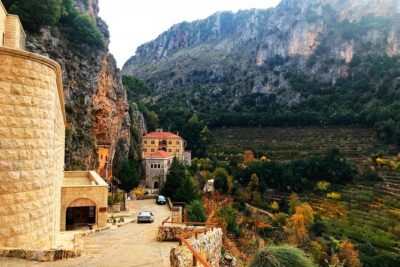
Small-Group Tour with Lunch to Qadisha Valley, Bcharre and Cedars
Read our review →
Cedars Shouf & Beiteddine w/pick-up, guide, entries+lunch
Read our review →
Guided small group to Cedars Reserve & Beiteddine w/lunch+entries
Read our review →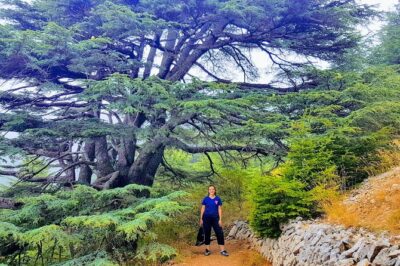
Guided Full-Day Private Trip to Cedars, Baalbek and Chateau Ksara
Read our review →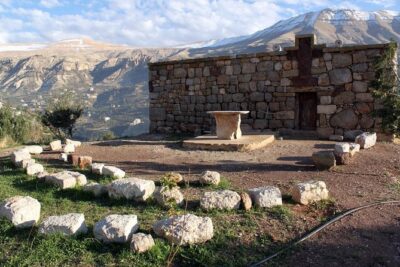
Small Group Tours to Qadisha Valley, Bcharre and Cedars with lunch and all fees
Read our review →Browse the lists this tour appears in