
Reviewed · CEDARS & QADISHA VALLEY TOURS
Guided Small-Group Tour to Qadisha, Bcharee & Cedars with Lunch
What makes this tour interesting is the way it ties together northern Lebanon’s monasteries with Lebanon’s most famous cedar story, all in one long, well-paced day. I love the Qadisha Valley part because the caves, monasteries, and terraces feel tied to the earliest rhythm of Christian monastic life. I also love that it runs as a true small group, capped at 15, so you get real answers as you move through the sites.
One thing to keep in mind: some stops have limited time and not every ticket is included. The Gibran Museum admission is not included, so you may want to budget a little extra if you want to spend time with Khalil Gibran’s art and personal items.
Key highlights you should care about
- Qadisha Valley caves and terraces: an early phase of Christianity, in a rugged setting.
- Bcharre’s cedar and church concentration: a town known as the city of churches, with about 37 churches.
- Khalil Gibran at the museum in Bcharre: 440 original paintings and drawings, plus his studio items from New York.
- Cedars of God forest access: the last remains of antique cedars, with 375 trees and biblical significance.
- Deir Qozhaya at 950 meters: a monastery tied to hermit life that scholars connect to the start of the fourth century.
- A guide who makes it click: I saw how effective guides can be on this route, with standouts like Mike and Georgette in the experience.
A morning drive into Qadisha Valley’s monastery caves
You start at 8:30 am from Beirut, and you do it comfortably, by air-conditioned private minibus. The big win here is that you are not stuck figuring out routes or parking. You just ride, look out the windows, and let your guide set the context as the day unfolds.
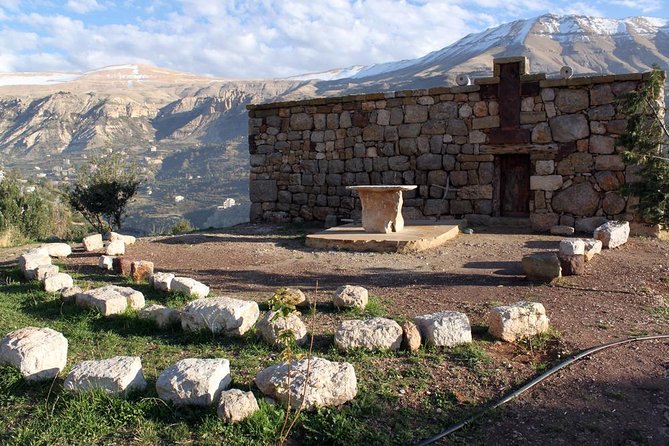
The first stop is the Qadisha Valley, one of the most important early Christian settlement areas tied to the first monasteries. What you are seeing is not a single museum building, it is a whole system of caves, monasteries, and cultivated terraces linked to the very early phase of Christianity. The rugged terrain is part of the story, because these sites were built for isolation and devotion, not for crowds.
If you enjoy religious history that feels physical, not abstract, this is the section you will remember. Your guide should explain why the valley mattered, and why monasteries here are such a strong symbol of endurance in Lebanon’s spiritual landscape. Time is limited at each stop, but the setting helps you understand everything faster than just reading about it.
Other days out of Beirut to consider
- Guided Small-Group Tour to Baalbek, Anjar and Ksara with Lunch
★ 5.0 · 511 reviews - Guided Small-Group Tour to Jeita, Harissa, Byblos with Lunch
★ 5.0 · 361 reviews - Guided Private Full Day Tour to Baalbek, Anjar and Chateau Ksara
★ 5.0 · 60 reviews
Bcharre and the Gibran Museum, plus churches and cedar lore
Next you head to Bcharre, a town with a lot packed into its altitude and stone streets. It is especially tied to two themes you can’t really separate here: cedar identity and Khalil Gibran.
Bcharre is where the only remaining and preserved original Cedars of God are located. That means you get the feeling of cedar heritage not only as a legend, but as something rooted locally. And it is also the birthplace of poet, painter, and sculptor Khalil Gibran, with a museum in town honoring him.
Bcharre is sometimes called the city of churches, and the number given for the area is about 37 churches. That detail matters because it signals what kind of day you are having. This is not just one viewpoint and one photo stop, you are moving through a town where Christian architecture shows up again and again.
You also get time for the Gibran Museum, in a building that was formerly the Monastery of Mar Sarkis. The museum is dedicated to Gibran and is described as holding 440 original paintings and drawings, along with his tomb and his studio belongings and furniture from when he lived in New York City. There are also private manuscripts included, so if you like seeing an artist as a whole person, not just as a famous name, you will likely enjoy this.
Two practical notes from the way this day works. First, museum time is about 30 minutes, so you cannot do everything. Second, admission here is not included, so if this is a must-do for you, plan to pay separately.
Cedars of God forest: where the Bible meets the trees
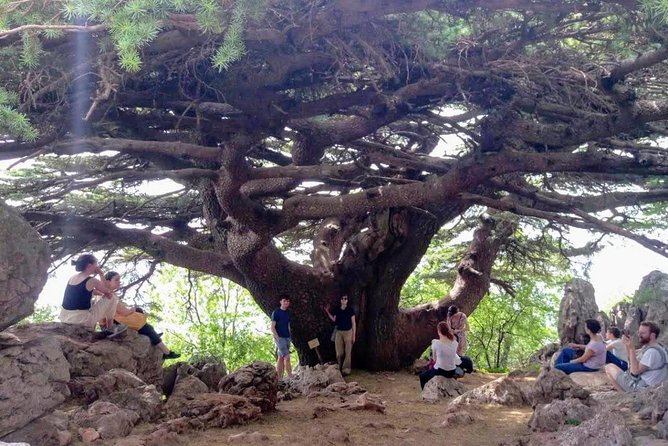
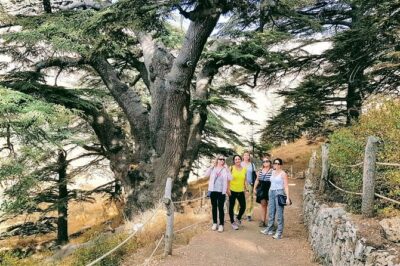
The Cedars of God stop is one of the anchors of the whole route. The forest includes 375 trees, and it is described as the last remains of antique forests where the cedar still grows. This is not about a perfect garden path. It is about the idea of survival, and the cedar’s role as Lebanon’s symbol and pride.
Your guide should also connect the cedar to its religious and cultural meaning. It has been highly prized since ancient times and was one of the valued construction materials for major religious buildings. And it is cited 103 times in the Bible. That number is the kind of detail that turns a photo stop into an actual understanding of why cedars became a national symbol, including their prominence on the Lebanese flag.
There is about 45 minutes here, and admission is included. That combination is rare value in a day tour: an included ticket plus enough time to slow down and look at what is in front of you. If you are the type who likes to take in small details, you will appreciate that this is a living site, not just a viewpoint.
The main drawback? If you have already been traveling hard and your legs are tired, you might feel the walk and uneven ground more than you expect. This is still manageable for most people, but it helps to wear comfortable shoes you trust on rocky terrain.
Deir Qozhaya monastery at 950 meters, tied to hermit life
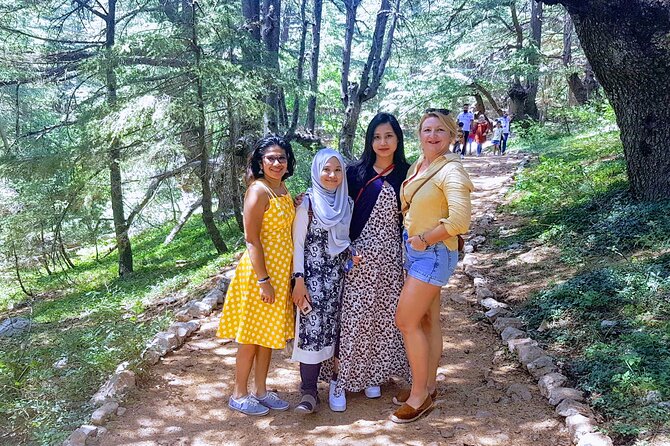
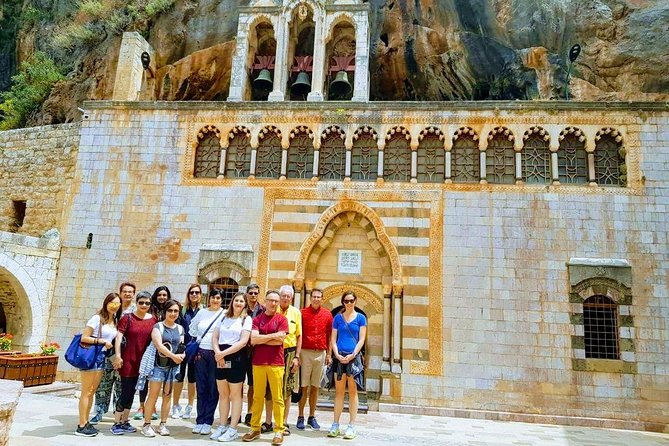
After Bcharre and the cedars, the day climbs into Deir Qozhaya. The monastery here, Saint Anthony the Great, sits at 950 meters above sea level. Once you get there, the setting supports the story it represents: pine and oak trees cover the hills around it, and fruit trees grow across the valley.
One reason this stop works is that the tour connects Deir Qozhaya to the larger Qadisha Valley system. The valley extends into the Valley of Qannubin to form the great Qadisha Valley, so your guide can connect the monastery to a broader geography, not just a single building. It also gives you a sense of how people lived and farmed alongside their religious routine.
Scholars are described as supposing the monastery was first built and occupied by hermits at the beginning of the fourth century. You also learn it was looted, set on fire, and razed more than once, with vestiges still remaining from as far back as the seventh century. That mix of devotion and damage gives you a sharper picture of why these sites are meaningful today.
Admission is free here, and the visit is about 45 minutes. You will likely have enough time to take photos and to listen without feeling rushed. If you like calm places and you want something spiritual that is more than a quick stop, this is the part that usually delivers.
A different spoke from Beirut:
- Paragliding Trip Over Lebanon – Jounieh Bay
★ 5.0 · 257 reviews - Jeita Grotto,Harissa&Byblos Full-Day PRIVATE-CAR Trip from Beirut
★ 5.0 · 222 reviews - First Paragliding Club in Lebanon – Since 1992
★ 5.0 · 193 reviews - Anjar, Baalbek & Ksara Day Trip – With Lunch (4G on Board)
★ 4.5 · 181 reviews
Lunch that actually feels like part of the trip
You do get lunch included, and the timing helps you refuel in the middle of a long day. One of the best cues in the experience is that lunch is served at a beautiful restaurant on top of the mountains. Even if you only stay focused on food, that setting makes the break feel like a proper reset, not a checkbox.
I like included lunches on tours when they do two things. They keep the day flowing, and they help you experience local life instead of chasing your own meal. This one does both, and it also gives you a moment to look out across the views with fewer decisions to make.
Because the day is about 9 hours, you will probably want to eat with intention. Use the lunch time to plan your energy for the final stretch, and keep a light layer for the ride back, since the higher areas can feel cooler.
Price, timing, and why this small group is good value
At $65 per person, this is priced like a straightforward day trip, not a high-end private tour. What makes it feel like value is that the basics that cost money elsewhere are already wrapped in: hotel pickup and drop-off, an air-conditioned vehicle, lunch, and the small-group limit of 15.
You are also covering four major zones in one day: Qadisha Valley, Bcharre (with church concentration and Gibran Museum time), Cedars of God, and Deir Qozhaya. That kind of routing is hard to duplicate cheaply on your own if you do not know the area, because time is money when you are moving between mountain sites.
Timing is the tradeoff. You start at 8:30 am and you are out about 9 hours, which is a full commitment. Each stop has a set window, typically 30 to 45 minutes depending on the site, so it is not built for lingering. If you like slow travel, you might feel slightly rushed. If you like packing in the big essentials with expert context, this format usually hits the mark.
Also, keep in mind that not all admission is handled the same way. Cedars of God is included, Deir Qozhaya is free, Bcharre’s admission ticket is listed as free, but the Gibran Museum admission is not included. That means your final spend might be a little higher if you want the museum.
Guides who know how to make the sites intelligible
One of the most praised parts of this tour is the guide quality. I am talking about the difference between reciting facts and connecting them to what you are standing in. Guides like Mike and Georgette are specifically mentioned as being informative, eager, and focused on showing what is left of the cedar forests and explaining the historical and religious threads behind the route.
That matters because several of these places are not only scenic. They are layered. Qadisha Valley is not just caves, it is tied to early Christian monastic life. Cedars are not just trees, they are a construction material with biblical citations and a national symbol. When a guide frames those layers while you are there, the day turns from sightseeing into real understanding.
The small group format helps too. With fewer people in the vehicle, it is easier for questions to land and for the guide to adjust pacing if something grabs your attention.
Who should book this day trip, and who might prefer something else
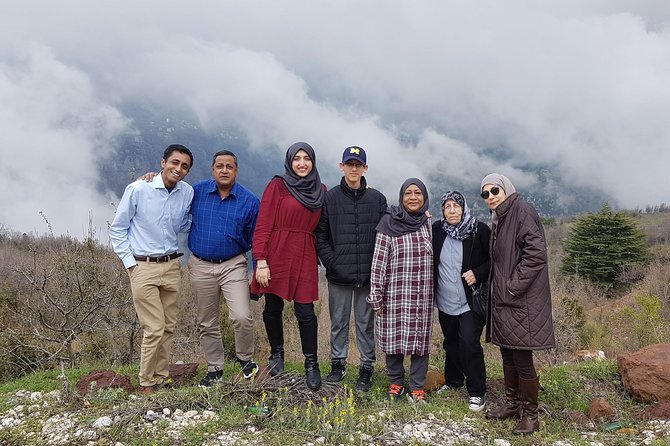
This tour is a strong fit if you want northern Lebanon highlights in one day without stress. It is ideal for people who enjoy spiritual and historical sites, and for those who like nature when it comes with meaning. The cedar stops, the monastery setting, and the hilltop views make it work for photographers too, especially if you like wide views as much as close details.
It is also a good choice if you are new to the area. You get hotel pickup, a plan that sequences the sites logically, and guidance that helps you understand why each place matters. For solo travelers, there is a bonus in a small-group cap, since the day can feel close to private when the group is lighter.
You might think twice if you are not comfortable with a packed schedule. Since time windows are fixed and the overall day is long, it may feel too fast if you want to read every plaque or spend long stretches wandering.
Should you book this tour to Qadisha, Bcharre, Cedars, and Deir Qozhaya?
I think you should book if you want a practical way to see Lebanon’s famous cedar story and the monastery spine of the Qadisha Valley, with lunch and hotel transfers handled for you. The $65 price becomes more reasonable when you remember that you are getting transportation, included meal time, and at least one paid site ticket built in, not to mention the value of having a guide explain what you are seeing.
You might skip or pair it with other planning if the Gibran Museum is your top priority, since its admission is not included and your museum time is limited. And if you dislike long days, the 8:30 am start and about 9 hours total can be a lot.
Overall, this is the kind of tour that works because it does not waste your time with random stops. You focus on the big themes, cedar and faith, and you leave with a cleaner picture of northern Lebanon than you would get from doing it alone.
FAQ
What time does the tour start in Beirut?
The tour start time is 8:30 am.
How long is the full-day tour?
The duration is approximately 9 hours.
Is hotel pickup and drop-off included?
Yes, hotel pickup and drop-off are included.
Is the vehicle air-conditioned?
Yes, the tour uses an air-conditioned vehicle.
How big is the group?
The tour has a maximum of 15 travelers.
Is lunch included?
Yes, lunch is included.
Are tickets included for each stop?
Cedars of God is listed as admission ticket included. Deir Qozhaya and Bcharre are listed as admission free. The Gibran Museum admission ticket is not included. Ticket details for Qadisha Valley are not specified in the provided information.
Does the tour use a mobile ticket?
Yes, the tour includes a mobile ticket.
What is the cancellation policy?
Free cancellation is available up to 24 hours in advance of the experience start time for a full refund.
Is this tour typically booked close to the date?
The average booking time is about 30 days in advance.
Newest Beirut write-ups
- Small Group Tours to Jeita Grotto and Byblos with tickets★ 5.0 · 3 reviews
- Small-Group Tour with Lunch to Jeita Grotto, Byblos and Harissa★ 4.5 · 3 reviews
- Small-Group Tour to Sidon, Tyre and Maghdouche with Lunch and Tickets★ 4.5 · 3 reviews
- Small-Group Tour with Lunch to Baalbek, Anjar and Ksara★ 5.0 · 3 reviews
- Beirut to Qadisha Valley, Bcharri & Cedar: Daily Tours with Lunch★ 4.5 · 3 reviews
- Beirut to Sidon, Tyre and Maghdouché: Daily Tours with Lunch★ 5.0 · 3 reviews
- Private Tour: Tyre, Sidon and Maghdouche Day Trip from Beirut★ 4.5 · 3 reviews
- Exploring Beirut’s Past: A Private Guided Historical Tour★ 5.0 · 3 reviews
Cedars & Qadisha Valley Tours, compared.
Cedars of Lebanon, Qozhaya, & Bcharre – With Lunch (4G on Board)
Read our review →
Small-Group Tour with Lunch to Qadisha Valley, Bcharre and Cedars
Read our review →
Cedars Shouf & Beiteddine w/pick-up, guide, entries+lunch
Read our review →
Guided small group to Cedars Reserve & Beiteddine w/lunch+entries
Read our review →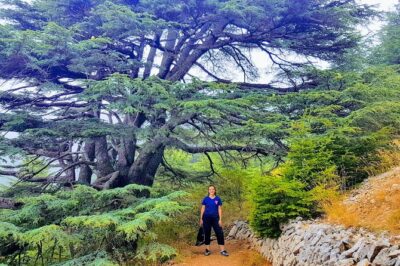
Guided Full-Day Private Trip to Cedars, Baalbek and Chateau Ksara
Read our review →
Small Group Tours to Qadisha Valley, Bcharre and Cedars with lunch and all fees
Read our review →
Deir el Qamar – Beiteddine Palace – Chouf Cedars From Beirut
Read our review →Browse the lists this tour appears in