
Reviewed · HISTORICAL TOURS
Exploring Beirut’s Past: A Private Guided Historical Tour
Beirut is a city of layered stops, where Roman ruins, Ottoman-era streets, and modern downtown life sit close enough to compare side by side. This private guided historical tour is interesting because it keeps the story straight, moving you through big landmarks without the usual guesswork.
I love the way the tour starts at the National Museum of Beirut, giving you a usable framework before you step into the streets. I also like the human touch you can get from guides such as Susan and Pierre, who were praised for being professional, funny, and full of practical, easy-to-follow context.
One consideration: the day is paced for overview, not slow wandering. Several stops are quick (around 10 minutes), and the National Museum admission is not included, so you will want to budget for that extra ticket.
Quick highlights to feel in 5 hours
- National Museum first, so the rest makes sense fast
- A guide who names dates, dynasties, and turning points clearly
- Raouche to the Corniche for quick sea views and Pigeon Rocks photos
- A sober wartime stop at the abandoned Holiday Inn and the Battle of the Hotels
- Downtown architecture mix, Mohammad Al-Amin to Al-Omari and Saint George
A 5-hour private format that keeps Beirut readable
This is a true private tour, meaning it is just your group, with a tour leader and a professional guide, plus a comfortable private vehicle with air-conditioning. The big advantage of doing Beirut this way is that you are not trying to connect the dots on your own across neighborhoods.
The schedule is built for a half-day window, running from 8:30 AM to 1:00 PM during most dates listed. With an approximate 5-hour duration, you are likely to start your day early, then move through downtown and coastal sights while energy levels are still high.
Also, this tour is designed around short, high-impact stops. That works well if you want the highlights plus solid interpretation, but it is not the best choice if you prefer long, photo-free time in one place.
Other days out of Beirut to consider
- PRIVATE Beirut Historical Walking Half Day Tour
★ 5.0 · 27 reviews - Historical Beirut Tour (AM) Half Day – (4G on Board)
★ 4.0 · 16 reviews - Temple of Eshmun – Mleeta Landmark – Beaufort Castle
★ 5.0 · 9 reviews
National Museum of Beirut, your fast education before the streets
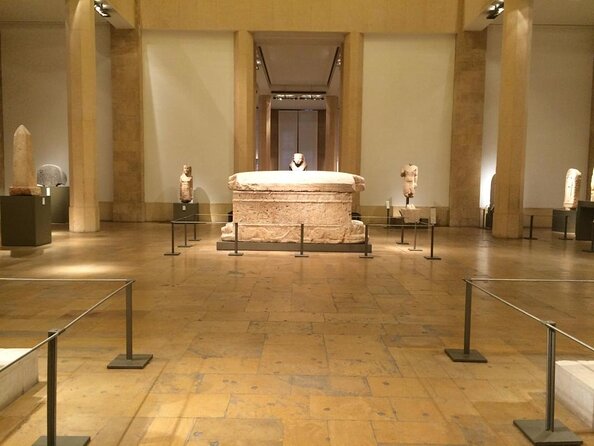
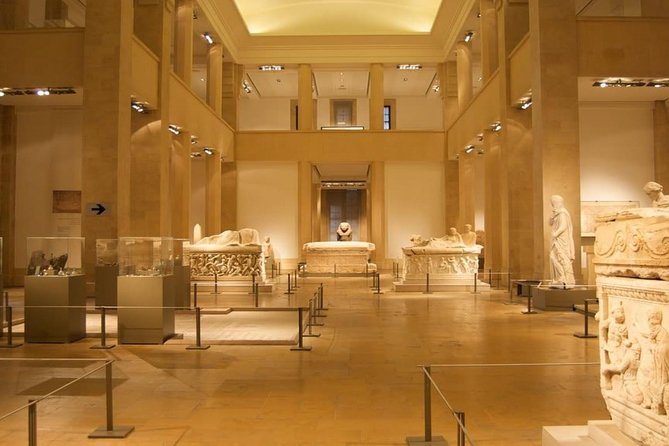
Your first stop is the National Museum of Beirut, the main archaeology museum in Lebanon. This is the kind of place that helps you stop seeing sites as random ruins and start seeing them as chapters in a bigger story.
What I like about this start is the scale. The museum houses a large collection of artifacts from across Lebanon, and the curatorial story is meant to give you an overview of Lebanese history and the civilizations that shaped this crossroads. If you are the sort of person who wants to understand what you are looking at, this is where you get the key.
You should also note the practical detail: museum admission is not included. The time given is about 2 hours, so it is not a quick glance. It is a real chance to orient yourself, then spend the rest of the morning recognizing themes the guide points out later.
Raouche and the Corniche: Pigeon Rocks plus a real Mediterranean break
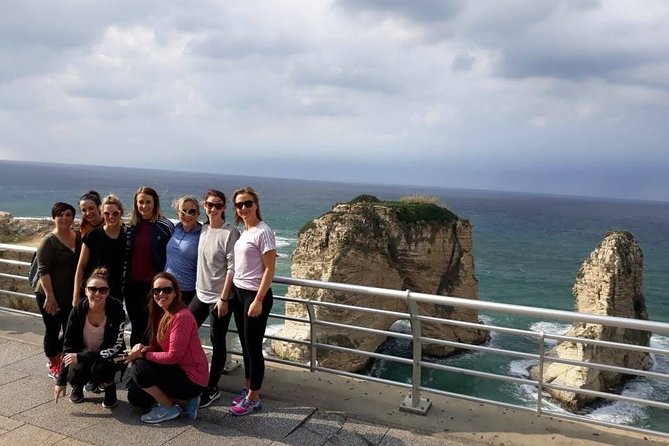
After the museum, the tour moves toward Beirut’s famous shoreline views, with Pigeon Rocks in Raouche as the first coastal hit. The rock formations are the star here, two huge shapes at Beirut’s western-most tip that people often describe as sentinels watching the sea. The stop is brief at about 10 minutes, and it is listed as free to visit.
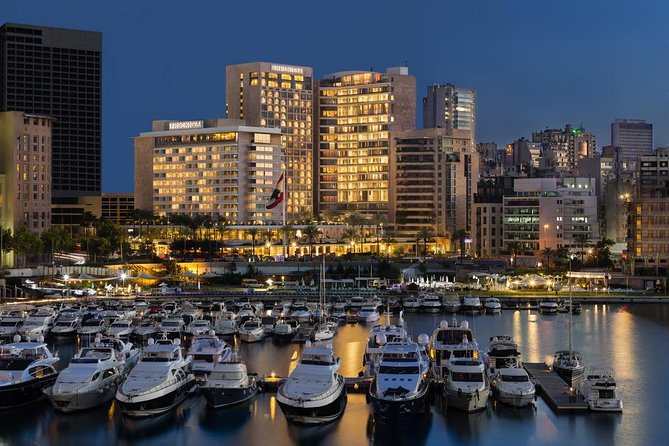
From there, you continue along the Corniche Beirut, specifically Al Manara Corniche. This is the classic seaside promenade, stretching from the Ramlet al Bayda area to Saint George marina. Even in a short stop, you get the feel of Beirut’s coast: palm-lined walking space, Mediterranean views, and, on clear days, the silhouettes and summits on the eastern side that tie the city to Mount Lebanon.
Here’s the practical upside: you get coastline photos without spending your whole morning in transit or on a long walk. The downside is that you will not have time to fully explore side streets from the promenade. If you love slow seaside strolling, you may want extra time later on your own.
Zaytouna Bay, then the abandoned Holiday Inn: two very different waterfront moods
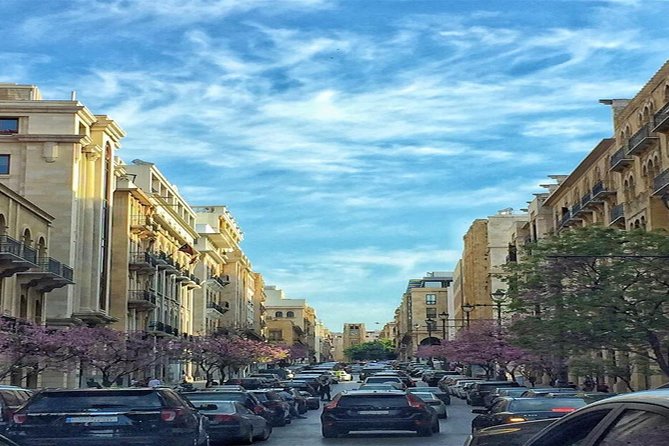
Next up is Zaytouna Bay, a newer waterfront promenade with shops and restaurants. It is only about 10 minutes, and it is listed as free. Still, it is a useful contrast to the more classic views you get at Pigeon Rocks and the Corniche. You can think of it as Beirut’s present-day leisure face, a place built for hanging out.
Then the tour pivots from waterfront calm into wartime memory at an abandoned Holiday Inn Hotel. This stop is not scenic, and that is the point. The hotel was built between 1971 and 1974, when Beirut’s economy was booming and the city drew huge numbers of visitors. It kept operating until the Lebanese civil war began in 1975.
Over time, the Holiday Inn became part of what was known as the Battle of the Hotels, a long conflict for control of luxury properties. The detail that stands out here is the scale: more than 25,000 combatants were fighting over these hotels, including the Holiday Inn and the Phoenicia hotel.
You will see an empty, untouched building left behind for decades. It is a reminder, not a story you can speed through. In a tour packed with architecture and landmarks, this is the moment that brings gravity to the whole day.
A different spoke from Beirut:
- Guided Small-Group Tour to Baalbek, Anjar and Ksara with Lunch
★ 5.0 · 511 reviews - Guided Small-Group Tour to Jeita, Harissa, Byblos with Lunch
★ 5.0 · 361 reviews - Paragliding Trip Over Lebanon – Jounieh Bay
★ 5.0 · 257 reviews - Jeita Grotto,Harissa&Byblos Full-Day PRIVATE-CAR Trip from Beirut
★ 5.0 · 222 reviews
Mohammad Al-Amin Mosque and Al-Omari, plus Saint George Cathedral downtown
Beirut’s downtown is a layered place, and the tour leans into that with multiple religious landmarks in a compact area.
Mohammad Al-Amin Mosque, the big Blue Mosque feel
The Mohammad Al-Amin Mosque, often called the Blue Mosque, is listed as the biggest mosque in Lebanon. It sits near Martyrs Square in downtown Beirut and was opened in 2008. You are looking at four minarets, each around 65 meters high, plus multiple domes covered in light blue tiles. The arches are also described as spanning multiple stories, so even a short visit tends to feel like stepping into a vertical space.
The stop is about 10 minutes, and it is listed as free. The value of doing it on a guided tour is that the guide can connect the building’s look to Beirut’s modern identity and its relationship to the city center.
Al-Omari Mosque, a site with centuries of change
Then you go to the Al-Omari Grand Mosque, with a timeline that crosses faiths and empires. Built in 635 AD during the era of Omar Bin El Khattab, it was later converted to the Church of Saint John by Crusaders in the 12th century. After that, the Mamluks transformed it back into a mosque in 1291.
The site was damaged during the civil war, and refurbishment finished in 2004. That sequence is exactly why a guided approach helps. You are not just looking at a building, you are watching history change hands.
Again, the stop is around 10 minutes and listed as free.
Greek Orthodox Cathedral of Saint George, one of the oldest Christian sites
The Greek Orthodox Cathedral of Saint George is the seat of the Greek Orthodox Metropolitan bishop of Beirut and its dependencies. It is described as the oldest church in Beirut, with the first Christian temple at that location dating to the mid sixth century AD. The cathedral is also linked with Beirut’s famous Law School.
This is a short stop at about 10 minutes, and it is listed as free. For me, it completes the day’s pattern: you keep moving between faith spaces and seeing how downtown Beirut survived, changed, and stayed important.
Martyrs Square, Nejme Square, and Roman Baths in one downtown loop
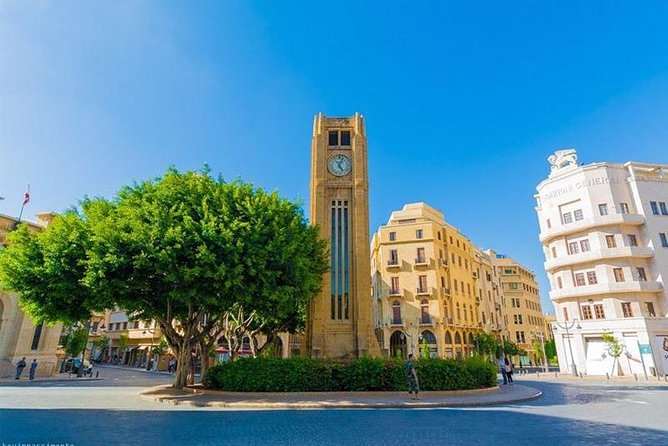
Downtown Beirut is where the tour turns from individual landmarks into a sense of city geography and memory.
Martyrs Square, Al Burj and Place des Cannons
Martyr’s Square sits at the heart of downtown Beirut and was historically known as Al Burj or Place des Cannons. The name today comes from the 6 May 1916 executions by the Ottomans of Lebanese nationalists, ordered by Jamal Pasha during World War I.
This is one of those stops where a guide makes the difference. In a place with plaques and monuments, the meaning can be easy to miss if you are not told what to focus on. The stop is about 10 minutes, and it is listed as free.
Place de l’Etoile, the 1930 four-faced Rolex clock
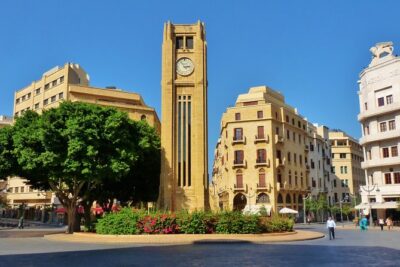
Next is Place de l’Etoile, also known as Nejme Square. It is the central square in the downtown area and it is home to the Lebanese Parliament, along with complementary buildings and two cathedrals. There is also a museum and several cafes and restaurants.
One very specific landmark is called out as part of the square’s worldwide recognition: the 1930 four-faced Rolex clock. That kind of detail helps you picture the square even if you have only seen photos.
The stop is about 10 minutes and listed as free.
Roman Baths of Berytus, ruins that still have a role
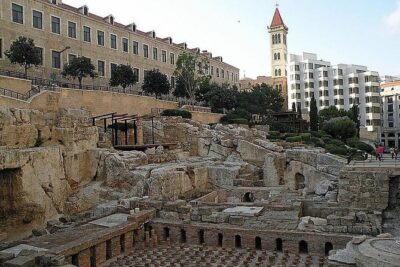
Then the tour visits the Roman Baths, described as the largest outdoor sight in downtown Beirut. The ruins were discovered in 1968-1969 and underwent major renovation in the mid 1990s.
The deeper context is what makes it worth your time. Roman Berytus had four major bath complexes, and the first was created in the early first century under Augustus. The catastrophic Berytus earthquake in 551 AD destroyed all the baths. Today, one of the baths is used as an artistic performance and concert space, which is a fascinating reminder that ruins do not have to be locked away to stay meaningful.
The stop is about 10 minutes and listed as free.
Beirut Souks: a short stop that still feels like downtown life
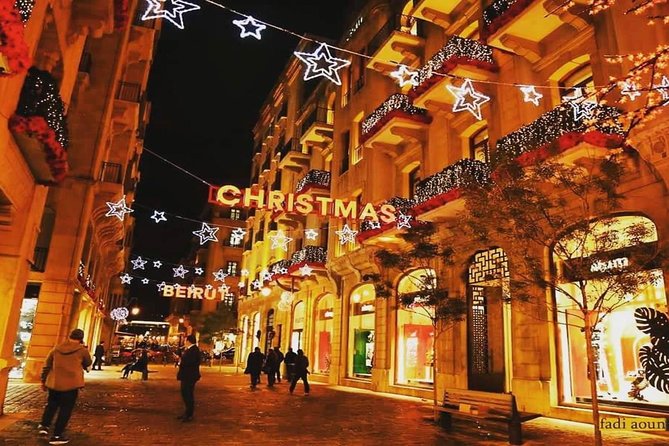
No historical tour feels complete without a place where everyday Beirut happens. The tour heads to Beirut Souks, a commercial district with over 200 shops and 25 restaurants and cafes, plus an entertainment center and a cinema complex.
The time here is about 10 minutes, and it is listed as free. In that short slot, you can get more than shopping. You can read the city’s rhythm: street-level choices, where people congregate, and how the downtown has blended heritage and modern commerce.
If you want souvenirs, food, or just a change from monuments, this stop is practical. If you prefer a calmer shopping pace, you will likely want to add extra time later.
What $75 buys, and where you might pay extra
The price is $75 per person, and the value is mainly in the setup. You get hotel pickup and drop off, a professional guide, a tour leader, and comfortable private transportation with an air-conditioned vehicle. You also get the advantage of a private tour, meaning only your group participates, plus group discounts and a mobile ticket.
What can change your total cost slightly is tickets. The National Museum admission ticket is not included, while the other listed stops are marked free for admission, including Pigeon Rocks, the Corniche, Zaytouna Bay, the mosques, Saint George Cathedral, Martyrs Square, Nejme Square, the Roman Baths, and Beirut Souks.
Meals are not included, so plan on grabbing something before or after. If your schedule is early and you want food during the day, it is smart to build time into your own post-tour plan.
Who this tour fits best
This tour fits best if you want a guided, structured way to understand Beirut’s layers without renting a car or dealing with navigation. It is also ideal if you like seeing contrasts in a single morning: museum to coast, leisure to war memory, mosques to cathedrals, squares to Roman ruins.
If you love photography, you will get several classic photo moments, especially around Pigeon Rocks and the Corniche and the downtown squares. If you are more of a deep-reading type, the short stops may feel fast, but the museum time helps balance that out.
Should you book the private historical tour?
Book it if you want a tight 5-hour structure that teaches you what you are looking at, not just where to stand. It is especially worth it if you will benefit from a guide who can explain details clearly, like Pierre or Susan, who were cited for professionalism and strong communication, plus a driver like Nasser who helps keep things smooth.
Skip it if you hate short stops and need long, unhurried wandering, or if you prefer a tour where every site is visited for an extended time. For most people, though, this is a very practical way to get the big ideas of Beirut in one morning, with a guide and vehicle handling the hard parts.
FAQ
How long is the Beirut private guided historical tour?
It lasts approximately 5 hours.
Is hotel pickup and drop-off included?
Yes. The tour includes hotel pickup and drop off.
What is included in the tour price?
The tour includes comfortable private transportation, air-conditioned vehicle, a tour leader, and a professional guide. It also offers mobile tickets and group discounts.
Are attraction tickets included?
The National Museum of Beirut admission ticket is not included. The stops listed with admission as free include Pigeon Rocks, Corniche Beirut, Zaytouna Bay, Mohammad Al-Amin Mosque, Al-Omari Mosque, Greek Orthodox Cathedral of Saint George, Martyr’s Square, Place de l’Etoile, Beirut Souks, and Roman Baths.
When does the tour run?
During 05/26/2019 to 03/31/2026, it runs Tuesday to Sunday from 8:30 AM to 1:00 PM. For 04/01/2026, it runs on Tuesday in the same time window. For 04/02/2026 to 06/18/2026, it runs Tuesday to Sunday from 8:30 AM to 1:00 PM.
What is the cancellation policy?
Cancellation is free. You can cancel up to 24 hours in advance for a full refund. If you cancel less than 24 hours before the start time, you do not get a refund.
Newest Beirut write-ups
- Small Group Tours to Jeita Grotto and Byblos with tickets★ 5.0 · 3 reviews
- Small-Group Tour with Lunch to Jeita Grotto, Byblos and Harissa★ 4.5 · 3 reviews
- Small-Group Tour with Lunch to Baalbek, Anjar and Ksara★ 5.0 · 3 reviews
- Small-Group Tour to Sidon, Tyre and Maghdouche with Lunch and Tickets★ 4.5 · 3 reviews
- Beirut to Qadisha Valley, Bcharri & Cedar: Daily Tours with Lunch★ 4.5 · 3 reviews
- Beirut to Sidon, Tyre and Maghdouché: Daily Tours with Lunch★ 5.0 · 3 reviews
- Private Tour: Tyre, Sidon and Maghdouche Day Trip from Beirut★ 4.5 · 3 reviews
- Beirut Street Food Tour, Lebanon★ 5.0 · 3 reviews
Historical Tours, compared.
Historical Beirut Tour (AM) Half Day – (4G on Board)
Read our review →
Temple of Eshmun – Mleeta Landmark – Beaufort Castle
Read our review →
Sidon & Tyre Unesco Heritage w/pick-up, guide, entries+lunch
Read our review →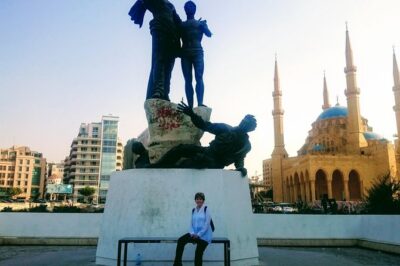
PRIVATE tour to Beirut history museum, Beiteddine & Deir elQamar
Read our review →
Baalbek, Anjar & Wine: A Journey Through Lebanon’s Heritage
Read our review →
Browse the lists this tour appears in