
Reviewed · HISTORICAL TOURS
Historical Beirut Tour (AM) Half Day – (4G on Board)
Beirut has a talent for surviving, and this 3-hour tour gives you the chain of cause and effect from Roman city-state days to modern downtown. I especially love the expert guide and the way the walk includes real-photo stops like Martyr’s Statue and Nejmeh Square. The one drawback to plan for is that a big chunk of your time is inside the National Museum, so the outdoor walking is not long.
Pickup from select central hotels makes the morning simple, and the group stays small (max 25), which helps the Q and A. In past departures, guides such as Madeline and Eliane have been highlighted for smart, fluent explanations that turn stone and street names into something you can actually picture.
Key points worth knowing before you go
- Roman-to-modern storyline in 3 hours: You get a timeline you can carry around all day.
- Martyr’s Square photo stops: Martyr’s Statue is central, and the WWII-era context is explained clearly.
- Nejmeh Square and WWI clock tower: The downtown heart is easy to understand once you hear why it looks the way it does.
- National Museum of Beirut included: One hour inside gives you a strong anchor point for everything you see outside.
- Archaeology finds tied to recent discovery: Some of what you’ll see was found as recently as 2007.
- Comfort perks: Air-conditioned vehicle, bottled water, and WiFi onboard.
The big idea: how this half-day tour helps you read Beirut
This is a “get your bearings fast” tour, but not in a lazy way. You walk through a concentrated slice of downtown and then you lock in what you learned with a museum visit. That pairing matters, because Beirut is layered. If you only see monuments without context, they feel like pretty stops. If you only read history without seeing the streets, it stays abstract.
What you’re really buying with this $50 price tag is interpretation. Entrance fees are included for the sites in the program, and you also get a professional licensed guide who speaks English and French. Add hotel pickup for select locations and you get a smooth start. Even if you end up wanting more time later, this tour gives you the framework to choose what to explore next.
Other days out of Beirut to consider
- PRIVATE Beirut Historical Walking Half Day Tour
★ 5.0 · 27 reviews - Temple of Eshmun – Mleeta Landmark – Beaufort Castle
★ 5.0 · 9 reviews - Sidon & Tyre Unesco Heritage w/pick-up, guide, entries+lunch
★ 4.9 · 6 reviews
Pickup, meeting, and the schedule you should expect
The tour runs about 3 hours, starting at 8:30 am. You can either:
- Use hotel pickup if your hotel is in Beirut city center and is one of the selected pickup hotels, or
- Meet the guide at Nakhal Tourism and Travel Beirut, Lebanon if you are not in the pickup zone.
A small point that can save you stress: pickup is for hotels only. It’s not listed for hostels, Airbnb, or private apartments. If you’re staying outside Beirut city center, you should plan to meet downtown instead.
You’ll be driven in an air-conditioned vehicle, and the tour provides bottled water plus WiFi onboard. That’s genuinely useful in a morning when you want to stay comfortable and focused.
Stop 1, Place des Martyrs: Martyr’s Square in context
Your first stop is Place des Martyrs, also known as Martyr’s Square. The visit is short, about 10 minutes, and admission is free.
This is one of those places where the statue is the headline, but the story is the real attraction. The Martyr’s Statue honors Lebanese nationalists who were murdered during World War I by the Ottomans. Once you know that, you start seeing how Beirut’s public spaces work as memory banks. The square becomes more than a landmark. It becomes a political and cultural statement, stitched into the city’s daily life.
Even with the short time, this stop pays off because it sets the tone for everything that follows. You’ll understand later why downtown Beirut matters so much in the city’s modern identity.
Nehmeh Square and downtown Beirut: the “modern heart” walk
After Martyr’s Square, the tour moves into downtown, and this is where you get the visual anchors of modern Beirut.
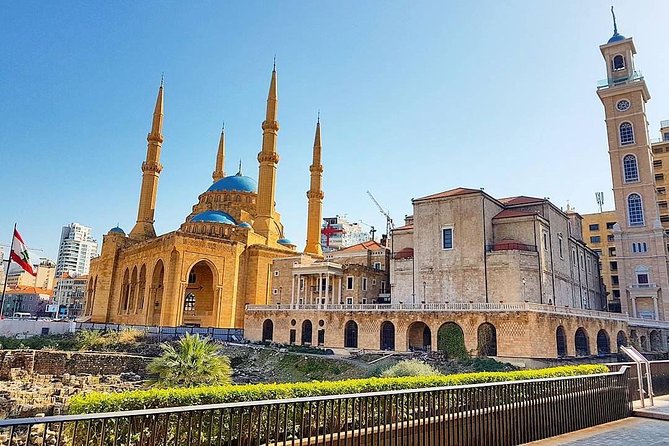
A key highlight is Nejmeh Square, described as the heart of the modern city. You’ll see it after it was renovated, which helps you understand the present-day feel of the downtown core instead of only imagining how it looked in the past.
You also visit the central clock tower, and here’s the historical detail that makes it click: it was constructed during World War I. That matters because it ties a very specific global event to a very local structure. Beirut’s story is not separate from world history. It’s shaped by it.
One more bonus from the walk: the guide’s explanations turn street-level landmarks into a timeline. Instead of just pointing, the guide connects Beirut’s liberal atmosphere through the centuries to the way different empires and governments left their imprint. It’s a theme you’ll hear again at the museum.
A different spoke from Beirut:
- Guided Small-Group Tour to Baalbek, Anjar and Ksara with Lunch
★ 5.0 · 511 reviews - Guided Small-Group Tour to Jeita, Harissa, Byblos with Lunch
★ 5.0 · 361 reviews - Paragliding Trip Over Lebanon – Jounieh Bay
★ 5.0 · 257 reviews - Jeita Grotto,Harissa&Byblos Full-Day PRIVATE-CAR Trip from Beirut
★ 5.0 · 222 reviews
Stop 3, Roman Bath and downtown Beirut: why this quick hit is worth it
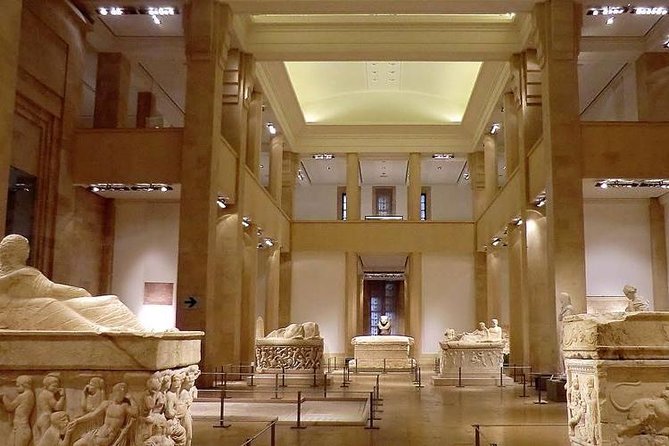
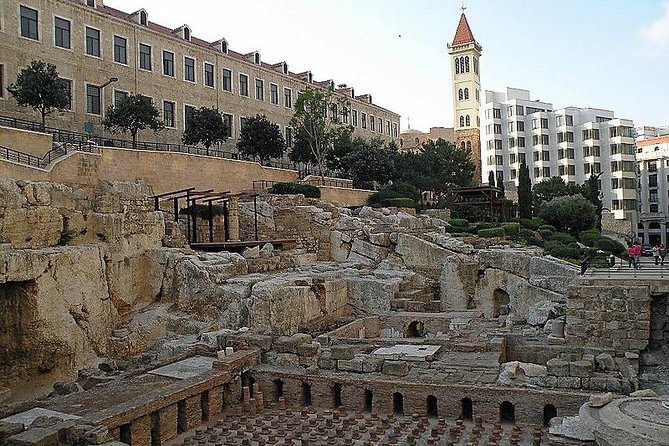
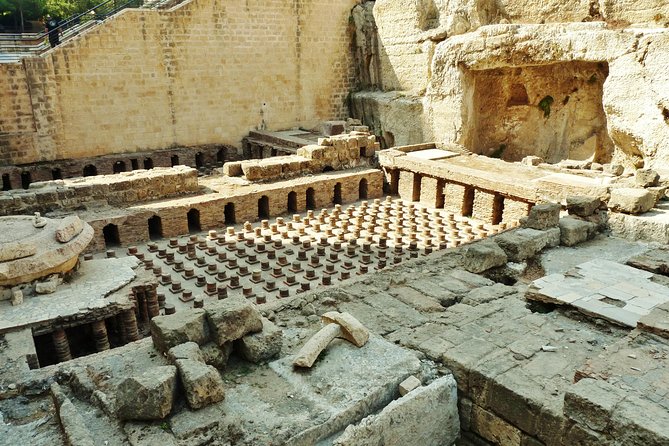
The tour’s final “outdoors” segment is roughly 30 minutes and includes the Roman Bath and downtown.
This stop is brief, so don’t expect a long guided excavation tour. But the timing works because it gives you a physical link between the Roman-era past and the modern downtown streets you’ve been walking through. Beirut is a city where layers sit close together. You can stand in one place and feel like you’re stepping across eras.
This part also helps if you like the Roman side of the story. The tour is explicitly built around Beirut’s roots as a Roman city-state, with Roman prospering dated from 15 BC in the tour narrative. Seeing a Roman-related site near the center makes that history easier to remember later.
National Museum of Beirut: your history anchor (and why the time is the trade-off)
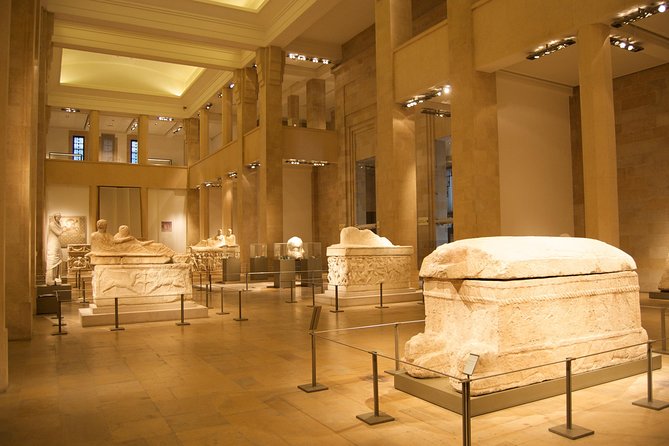
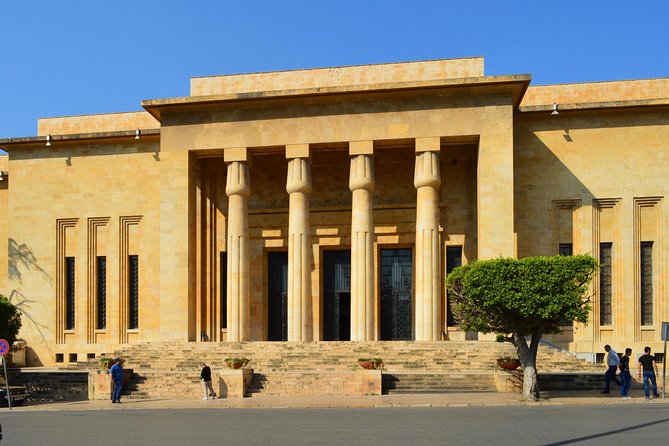
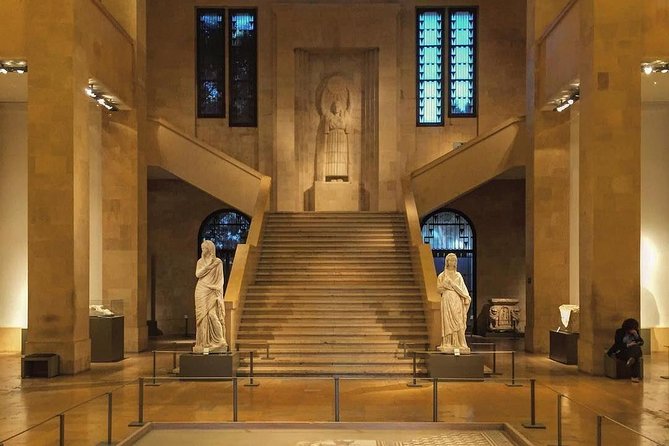
The main indoor event is the National Museum of Beirut, with about 1 hour on-site. Entrance is included.
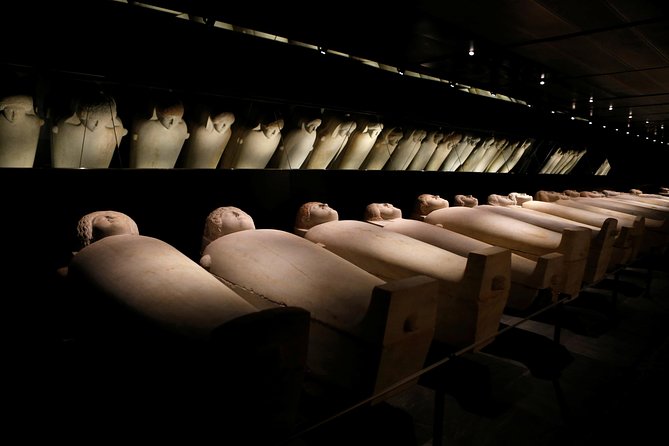
If you like archaeology and artifacts, this is the reason the tour stands out. The museum is described as a treasure trove of archaeological finds that narrate both the city’s and Lebanon’s wider history. The highlight list is specific:
- Phoenician statues
- Byzantine mosaics
- Roman pieces
And there’s a particularly memorable detail from the tour overview: some archaeological material was discovered as recently as 2007. That’s a reminder that “ancient history” isn’t frozen. New discoveries keep changing what we know.
Now, the trade-off is exactly what you should plan for. Multiple people have pointed out that the walking portion can feel short because time shifts to the museum. If you came wanting a long outdoor wander through neighborhoods and buildings, you might feel that mismatch.
If you came for an intro that makes the rest of your trip easier, the museum hour is smart. It gives you a baseline you can apply when you later see other sites around the country.
The guide experience: why Madeline and Eliane keep showing up
A huge part of value here is the guide. You’re getting a professional licensed guide, and the tour is offered with English and French speaking leaders. That alone helps in Beirut, where local history can get technical fast.
In the feedback attached to this kind of tour, guides like Madeline and Eliane are praised for knowing a lot and for making the monuments understandable, not just listed. That shows up most in the “why” behind the stops: why Nejmeh Square matters, why Martyr’s Statue is placed where it is, and how the city’s liberal atmosphere survived repeated periods of near-destruction.
Also, because the group is capped at 25 travelers, you’re not usually stuck in a giant blob. It’s easier for the guide to keep everyone aligned, and you can ask follow-up questions without shouting across the street.
What the tour includes (and what it does not)
You get more than just a walking guide.
Included:
- Air-conditioned vehicle
- Professional licensed guide (English and French)
- Pickup and drop-off if you are staying in select Beirut city center hotels
- Entrance fees to all sites in the program
- Bottled water
- WiFi on board
- Mobile ticket
Not included:
- Lunch
That last one is important because the museum takes time, and you finish back at your start point. Plan your day so you’re ready to eat after the tour ends.
Price and value: is $50 worth it for this mix?
At $50 per person for about 3 hours, the value depends on what you want from your morning.
Here’s the math in practical terms:
- You get a museum visit with paid admission included.
- You get downtown landmark guidance plus history context.
- You get hotel pickup in the selected zone, plus water and WiFi.
If you’re the type who likes to understand what you’re seeing, this price is reasonable. You’re paying for someone local to stitch the timeline together, and you’re paying for the museum portion so you’re not managing tickets while also trying to orient in a new city.
If you want an all-out, wander-for-maximum-mileage street tour, the short walking segments may feel pricey per step. The museum time is the key pivot. The tour’s structure is built for people who want history clarity more than long outdoor time.
Safety note you should take seriously, even if the tour runs
The tour information includes a note that the US Department of State has issued a warning against travel to Lebanon due to safety and security concerns. It also states that Viator’s Lebanon tours continue to operate with no disruptions, with frequent contact between the operator and local guides.
That means the tour may run, but you should still check current advisories right before you go. This is one of those “don’t ignore reality” situations. History tours are great, but safety comes first.
Who this tour suits best
This tour fits you well if:
- You want a short, structured intro to Beirut downtown and the National Museum.
- You like history with tangible stops, not just a lecture.
- You want a guide who can connect Roman-era references to modern landmarks.
- You’d rather have museum context than try to assemble it alone on your first morning.
You might prefer a different style of tour if:
- You want more outdoor wandering and less time indoors.
- You’re hoping for a deeper Ottoman Beirut focus or long neighborhood exploration, because this is a compact route with a museum anchor.
Should you book the Historical Beirut Tour (AM)?
Book it if you want the fastest way to understand Beirut’s layers, especially the downtown storyline and how the National Museum frames the city’s past. I like that the tour pairs street landmarks with artifacts, because it turns what could be random monuments into a coherent narrative.
Skip it, or at least consider a different option, if your main goal is a long walking day outdoors. The museum hour is a real trade. Also double-check whether your lodging is eligible for pickup, since pickup is for select central hotels only.
If you’re visiting Beirut for the first time and you want your bearings plus a strong museum primer, this is a solid choice.
FAQ
How long is the Historical Beirut Tour (AM)?
It lasts about 3 hours.
What time does the tour start?
The start time is 8:30 am.
Is hotel pickup included?
Pickup is included only for guests staying in select hotels within Beirut city, not for hostels, Airbnb, or private apartments.
Where is the meeting point if I do not get pickup?
You meet at Nakhal Tourism and Travel Beirut, Lebanon.
What is included in the tour price?
Entrance fees to the sites in the program, bottled water, WiFi on board, an air-conditioned vehicle, and a licensed English and French speaking guide. Pickup and drop-off are included if you are in the eligible hotel area.
Are there any meals included?
No lunch is included.
Is admission required for the stops?
Admission for the National Museum of Beirut is included, and the other stops listed include free admission.
How big is the group?
The tour has a maximum of 25 travelers.
Can I get a full refund if my plans change?
Yes. You can cancel up to 24 hours in advance for a full refund. If you cancel less than 24 hours before the experience starts, the amount you paid will not be refunded.
Newest Beirut write-ups
- Small Group Tours to Jeita Grotto and Byblos with tickets★ 5.0 · 3 reviews
- Small-Group Tour with Lunch to Jeita Grotto, Byblos and Harissa★ 4.5 · 3 reviews
- Small-Group Tour with Lunch to Baalbek, Anjar and Ksara★ 5.0 · 3 reviews
- Small-Group Tour to Sidon, Tyre and Maghdouche with Lunch and Tickets★ 4.5 · 3 reviews
- Beirut to Qadisha Valley, Bcharri & Cedar: Daily Tours with Lunch★ 4.5 · 3 reviews
- Beirut to Sidon, Tyre and Maghdouché: Daily Tours with Lunch★ 5.0 · 3 reviews
- Exploring Beirut’s Past: A Private Guided Historical Tour★ 5.0 · 3 reviews
- Private Tour: Tyre, Sidon and Maghdouche Day Trip from Beirut★ 4.5 · 3 reviews
Historical Tours, compared.
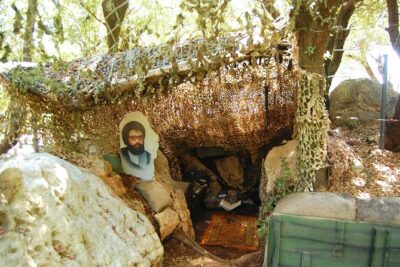
Temple of Eshmun – Mleeta Landmark – Beaufort Castle
Read our review →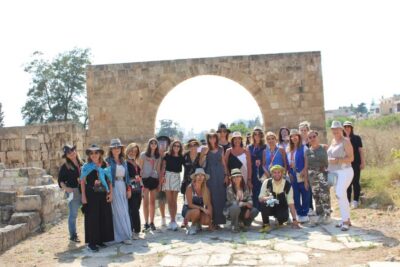
Sidon & Tyre Unesco Heritage w/pick-up, guide, entries+lunch
Read our review →
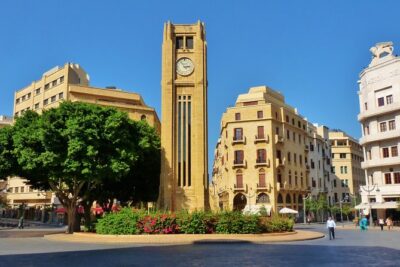
PRIVATE tour to Beirut history museum, Beiteddine & Deir elQamar
Read our review →
Baalbek, Anjar & Wine: A Journey Through Lebanon’s Heritage
Read our review →

Exploring Beirut’s Past: A Private Guided Historical Tour
Read our review →Browse the lists this tour appears in