
Reviewed · HISTORICAL TOURS
Guided Half-Day Private Beirut Historical Tour
Beirut is a city of layers, where empires, earthquakes, and faiths all leave marks. This guided half-day private tour is interesting because it gets you from the National Museum to downtown squares, churches, and mosques, then out to the sea views without you having to figure out logistics. I especially like the front-door hotel pickup and drop-off, and I also enjoy the private guide who ties the sights together so they make sense instead of feeling like a checklist.
My second favorite part is how it balances big-name landmarks with the kind of details that explain the city’s identity, from Roman Berytus to Ottoman-era executions at Martyr’s Square. You’ll get it all by air-conditioned private transportation, with short timed stops that keep the pace manageable.
One consideration: it’s a tight, packed 5-hour loop. Also, the National Museum admission isn’t included, so you’ll want to budget for that ticket while the other major stops on the route are free.
Key highlights that make this tour worth your time
- Hotel pickup and drop-off save you the hassle of sorting out downtown transport for just a few hours.
- A private guide gives context for the mix of archaeological remains and religious sites.
- Roman Baths of Berytus are one of the city’s easiest “wow” stops because they sit right in downtown life.
- Multiple worship sites in one route (mosques and an Orthodox cathedral) show Beirut’s layered story fast.
- Beirut Souks, Zaitouna Bay, and the Corniche add modern day energy and Mediterranean views to the history.
- The abandoned Holiday Inn war landmark adds a sobering perspective you might not find on your own.
Why a 5-hour private history route works in Beirut
Beirut can be rewarding, but it can also be mentally loud. Streets, neighborhoods, and traffic can make self-guided days feel like you’re spending more time transferring than exploring. This is built for people who want the big highlights in one go, with the benefit of a guide explaining what you’re seeing as you go.
The tour is private, meaning it’s only your group. That matters because you can ask questions, adjust how you move, and take a breath when the day gets busy. Even the pacing helps: many stops are short, so you’re not stuck for an hour in one place while the rest of Beirut passes by in your head.
With most stops being free, you mostly pay for the tour itself plus the National Museum ticket. Lunch isn’t included, so plan to eat either before you start or after you finish.
Other days out of Beirut to consider
- PRIVATE Beirut Historical Walking Half Day Tour
★ 5.0 · 27 reviews - Historical Beirut Tour (AM) Half Day – (4G on Board)
★ 4.0 · 16 reviews - Temple of Eshmun – Mleeta Landmark – Beaufort Castle
★ 5.0 · 9 reviews
National Museum of Beirut, your shortcut to Lebanon’s deep timeline
The National Museum of Beirut is where the city’s story becomes more than street-level impressions. This museum is described as the principal archaeology museum in Lebanon, with a major collection of artifacts from across the country. If you want to understand why Beirut has been a crossroads for centuries, this is the place to start.
You’ll spend about 2 hours here. Admission is not included, so you’ll need to purchase the ticket separately. That might sound like a drawback, but it’s actually a plus for value. You’re paying for a guide-led, focused museum time, not just walking past a building.
Practical note: museum time can stretch faster than you expect. If you like reading labels and looking closely, you’re in good shape here. If you prefer skimming, tell your guide early so you can hit the key collections without feeling rushed.
Roman Baths of Berytus, downtown ruins with a living afterlife
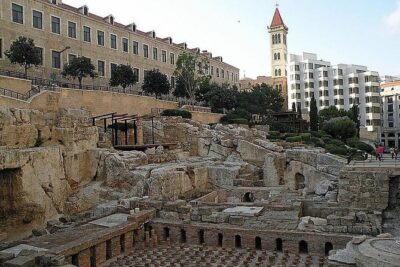
Next up are the Roman Baths, the largest outdoor sight in downtown Beirut. They were discovered in 1968 to 1969 and renovated in the mid 1990s, which means you’re not seeing a random excavation site. You’re seeing a protected, usable public space with structure.
Here’s what makes this stop memorable: the Roman Berytus Baths had four major bath complexes. The first one dates to the early first century under Augustus. Then history punches back, because a major earthquake in 551 AD destroyed the baths. Today, the site reflects ancient traditions, and one bath area is used as an artistic performance and concert space.
You’ll have about 15 minutes. That’s short, but enough time to orient yourself, spot the scale of the outdoor ruins, and understand why people build cultural events around these stones instead of treating them like dead leftovers.
Admission is free. That makes the stop an easy “yes” even if you’re trying to keep costs down.
Martyr’s Square, where names turn into meaning
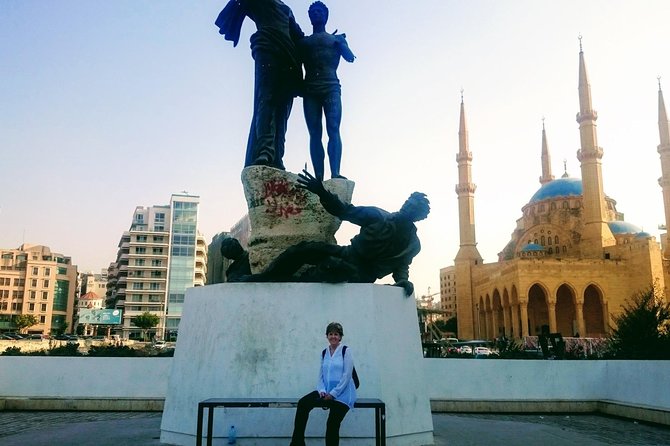
Martyr’s Square sits in central downtown Beirut and has long been known by other names, including Al Burj and Place des Cannons. The main point, though, is the meaning behind the name Martyrs’ Square.
It’s named after executions on 6 May 1916, when the Ottomans carried out Lebanese nationalists ordered by Jamal Pasha during World War I. Even if the square looks like a typical downtown gathering place, this story gives it weight.
You’ll spend about 15 minutes. This is one of those stops where you don’t need long. You need context, and a guide helps you connect the location to the events, rather than just passing by another big city junction.
Free stop, and a good breather between more visually intense sights.
A different spoke from Beirut:
- Guided Small-Group Tour to Baalbek, Anjar and Ksara with Lunch
★ 5.0 · 511 reviews - Guided Small-Group Tour to Jeita, Harissa, Byblos with Lunch
★ 5.0 · 361 reviews - Paragliding Trip Over Lebanon – Jounieh Bay
★ 5.0 · 257 reviews - Jeita Grotto,Harissa&Byblos Full-Day PRIVATE-CAR Trip from Beirut
★ 5.0 · 222 reviews
Mohammad Al-Amin Mosque (Blue Mosque), modern grandeur in downtown
Then you’re at Mohammad Al-Amin Mosque, also known as the Blue Mosque. It’s the biggest mosque in Lebanon and sits near Martyr’s Square, so it feels like the city’s story turns from a World War memory into a modern symbol.
This mosque opened in 2008 and has four minarets that rise about 65 meters. The domes and details use light blue tiles for the domes, and the mosque includes multiple domes and arches that stretch up multiple stories.
You’ll have about 10 minutes. That’s brief, but it’s enough to see the massing, the tile tones, and the way the space dominates the skyline at street level.
Admission is free. Because it’s an active mosque, you’ll want to be respectful and move carefully, especially if worshipers are coming and going during your visit. (Your guide can also clue you in on what’s appropriate at that time.)
Al-Omari Grand Mosque and Saint George, how one city changes names
Al-Omari Mosque is a layered story you can read in architecture and dates. Built in the age of Omar Bin El Khattab in 635 AD, it was converted to the Church of Saint John by the crusaders in the 12th century. Then it was retransformed into the city’s Grand Mosque by the Mamluks in 1291. During the civil war it was damaged, and refurbishment was completed in 2004.
That “built, converted, reconverted, repaired” rhythm is exactly why Beirut works as a history destination. This stop is about transitions, not just monuments.
You’ll also visit the Greek Orthodox Cathedral of Saint George. The cathedral is described as the oldest church in the city of Beirut and one of the oldest in the region. It’s the seat of the Greek Orthodox Metropolitan bishop for the Greek Orthodox Archdiocese of Beirut and its dependencies.
The first Christian temple on this site dates to the mid sixth century AD. It’s also closely associated with Beirut’s famous Law School, which helps link this church to the city’s intellectual life, not just religion.
Both stops are free and timed around 10 minutes each. That means you’ll likely do a quick visual survey with your guide’s commentary rather than a slow, in-depth tour. Still, the effect can be strong: you see how the same kind of sacred space can shift identity over time, with layers still visible.
Place de l’Etoile, the Rolex clock, and downtown power
Place de l’Etoile, also called Nejme Square, is the central square of Beirut’s Downtown area. It’s home to the Lebanese Parliament and complementary buildings, plus two cathedrals and a museum. In other words, it’s a square where civic and religious life overlap.
What catches your eye fast is the 1930 four-faced Rolex clock, plus the square’s architecture. Even if you don’t care about timepieces, you’ll see how a clock face anchored to a major square becomes part of a city’s visual language. It helps you orient yourself in the city too, because everything else feels organized around this kind of core.
You’ll have about 15 minutes. Use that time to step back for a few photos and then look for how the square’s edges line up with the surrounding landmarks.
Free stop.
Beirut Souks, shopping as social space
Beirut Souks is a commercial district with over 200 shops and around 25 restaurants and cafes. It’s also described as an entertainment center, plus a cinema complex. The place is presented as the largest and most diverse shopping and leisure area in Beirut.
You’ll have about 15 minutes here. That’s not enough time to shop deeply, but it is enough to understand the vibe. Think of it as a chance to see how downtown Beirut feels when it’s not in “history mode.” If you want a drink or a snack, this is the area where it makes sense.
Admission is free. For many people, that makes the Souks the easiest “break stop” on the day.
Zaitouna Bay to Raouche Corniche, sea views that reset your brain
After the dense downtown sightseeing, you’ll shift to the waterfront.
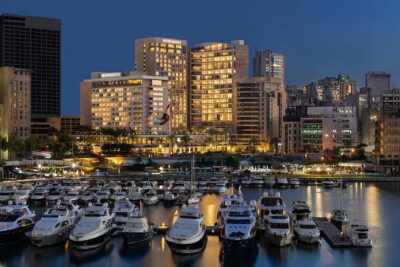
Zaitunay Bay is described as Beirut’s finest leisure destination. It’s a newer waterfront promenade with shops and restaurants. You’ll spend about 10 minutes. For most people, this is a quick walk-and-look stop, a chance to get fresh air and shift your perspective from buildings and religious landmarks to open sea space.
Then you head to the Corniche Beirut, specifically Al Manara Corniche. This is described as the most renowned seaside promenade, stretching from the Ramlet al Bayda area to the Saint George marina. Expect palm-lined views of the Mediterranean, including famous Pigeon Rock and the summits of Mount Lebanon on the eastern side.
You’ll have about 15 minutes. And if you’re the type who likes photographing coastlines, you’ll be happy here. If you’re not, you’ll still appreciate the visual break, because it makes the earlier stops feel connected rather than exhausting.
Both Zaitunay Bay and the Corniche are free stops.
Pigeon Rocks in Raouche, Beirut’s postcard geology
Finally, you’ll reach Pigeon Rock, also known as the Rock of Raouché. This is one of Beirut’s most popular tourist destinations, and it’s famous for its two huge rock formations that rise like sentinels from the sea.
You’ll have about 15 minutes. In that time, you can get photos from one angle, then move a bit based on where the best view lines up with your shot. Your guide can help point out what to look for and how the location fits into the city’s geography.
Free stop.
The abandoned Holiday Inn Hotel, a war landmark you can’t ignore
One of the most powerful moments on the day is the abandoned Holiday Inn Hotel. This isn’t treated as entertainment. It’s a reminder.
The hotel was built between 1971 and 1974 during a time when Beirut’s economy was booming and the city was one of the more visited tourist hubs in the Middle East. It operated until the Lebanese civil war began in 1975. Then it became part of a longer conflict known as the Battle of the Hotels, where more than 25,000 combatants fought for control of luxury hotels, including the Holiday Inn and the famous Phoenicia hotel.
Today, the Holiday Inn remains untouched and abandoned, empty for decades. It’s still there for a reason, because it reflects the scale of what changed and how ordinary places became wartime territory.
Because the tour description doesn’t mention entry or access details, plan for this as an exterior, story-driven stop. Even from outside, the atmosphere can feel heavy. I like including this because it balances the daylight postcard views with a reality check.
Price and value: is $75 for a private half day fair?
At $75 per person for a private tour, you’re paying for a few things at once: a professional guide, comfortable private transportation, and pickup and drop-off. You’re also getting a route that includes a mix of paid and free sights, where the National Museum requires an extra ticket, but many of the other key stops are free.
For value, the biggest question is simple: do you want context and convenience, or do you want to spend your day navigating? If you’re only in Beirut for a short window, this kind of half-day structure is a practical way to get your bearings and make better choices for the rest of your trip.
Also, since it’s private, you’re not fighting over audio, pacing, or where to stand for photos. Group discounts are available too, which can make the price feel more comfortable if you’re traveling with friends or family.
The main cost you might add is the museum admission, plus your own lunch since it’s not included.
Who should book this Beirut historical tour
This tour fits best if you:
- Have limited time and want to see major downtown highlights without stress.
- Want a guide to connect Beirut’s past to what you’re looking at today.
- Like a balanced day, including archaeological remains, faith landmarks, and waterfront scenery.
- Prefer private transportation, especially when moving between clustered sites.
It might feel less ideal if you want a slow, deep, spend-the-morning-inside-everything style of sightseeing. The stop times are short. It’s built for momentum.
Quick FAQ for planning your half-day
FAQ
How long is the Guided Half-Day Private Beirut Historical Tour?
It runs for about 5 hours.
Is hotel pickup and drop-off included?
Yes. Front-door hotel pickup and drop-off are included.
What does the tour cost?
The price is $75.00 per person.
Is lunch included?
No, lunch is not included.
Are tickets included for the stops?
Admission for the National Museum of Beirut is not included. The Roman Baths, Martyr’s Square, Mohammad Al-Amin Mosque, Al-Omari Mosque, the Greek Orthodox Cathedral of Saint George, Place de l’Etoile, Beirut Souks, Zaytouna Bay, and Corniche Beirut are listed as free.
Is this tour private?
Yes. It’s a private tour/activity, and only your group participates.
Is transportation included?
Yes, you travel in an air-conditioned vehicle with private transportation.
Is there a mobile ticket?
Yes, it includes a mobile ticket.
Can I cancel for a full refund?
Yes, free cancellation is available. You can cancel up to 24 hours in advance for a full refund.
Should you book this tour or go on your own?
If you want to get your bearings fast, this is a strong pick. You get hotel pickup, air-conditioned comfort, and a guide who can explain why sites like Martyr’s Square, the Blue Mosque, and the Roman Baths matter, not just where they are. Add the waterfront viewpoints and the sobering Holiday Inn war landmark, and you get a day that feels balanced, not one-note.
I’d skip it only if you have plenty of time for independent exploring and you already know exactly what you want to see inside each stop. With a half-day, the value comes from avoiding decision fatigue, saving time, and getting a coherent story while you’re on the move.
Newest Beirut write-ups
- Small Group Tours to Jeita Grotto and Byblos with tickets★ 5.0 · 3 reviews
- Small-Group Tour with Lunch to Jeita Grotto, Byblos and Harissa★ 4.5 · 3 reviews
- Small-Group Tour with Lunch to Baalbek, Anjar and Ksara★ 5.0 · 3 reviews
- Small-Group Tour to Sidon, Tyre and Maghdouche with Lunch and Tickets★ 4.5 · 3 reviews
- Beirut to Qadisha Valley, Bcharri & Cedar: Daily Tours with Lunch★ 4.5 · 3 reviews
- Beirut to Sidon, Tyre and Maghdouché: Daily Tours with Lunch★ 5.0 · 3 reviews
- Exploring Beirut’s Past: A Private Guided Historical Tour★ 5.0 · 3 reviews
- Private Tour: Tyre, Sidon and Maghdouche Day Trip from Beirut★ 4.5 · 3 reviews
Historical Tours, compared.
Historical Beirut Tour (AM) Half Day – (4G on Board)
Read our review →
Temple of Eshmun – Mleeta Landmark – Beaufort Castle
Read our review →
Sidon & Tyre Unesco Heritage w/pick-up, guide, entries+lunch
Read our review →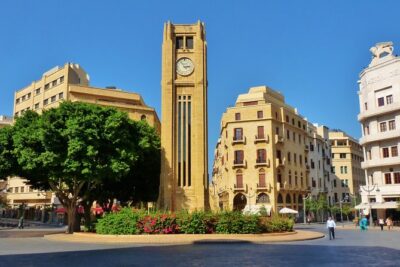
PRIVATE tour to Beirut history museum, Beiteddine & Deir elQamar
Read our review →
Baalbek, Anjar & Wine: A Journey Through Lebanon’s Heritage
Read our review →
Exploring Beirut’s Past: A Private Guided Historical Tour
Read our review →Browse the lists this tour appears in