
Reviewed · WINE TOURS
Wine Tasting and Culture
This is an unusual, very Lebanon-style day trip because you’re pairing Roman Baalbek with real wine time in the Beqaa Valley. You get big-sky views, colossal ruins, and then proper winery culture, not just a quick photo stop. In the best moments, your guide ties it all together, so the wine tasting feels connected to the place you’re standing in.
Two things I really like: first, you’ll have a strong, guided run through Baalbek’s Temple of Bacchus and Temple of Jupiter, with enough context to understand what you’re seeing. Second, the wine side gets explained clearly, including the science of making and tasting wine by Kefraya, with Hassane providing a calm, helpful guide experience throughout. One thing to consider is that lunch isn’t included, and at least one of the Baalbek temple areas has admission not included, so you’ll want some extra cash for on-the-ground costs.
Key things to know before you go
- Baalbek UNESCO setting: The complex is tied to major Roman imperial architecture and was inscribed as a UNESCO World Heritage site in 1984.
- Two major temple highlights: You spend time on the Temple of Bacchus and the Temple of Jupiter areas.
- Wine tastings at two wineries: You’ll visit both Château Ksara and Château St Thomas and taste Lebanese wine in the Beqaa.
- Strong guide impact: Hassane, plus winery explanation from Kefraya, can make the day feel much more personal and understandable.
- Plan for a full day: It runs about 8 hours starting at 8:30 am, so comfortable pacing matters.
Baalbek and Beqaa: a day with real contrast (and real meaning)
If you only do one kind of sightseeing in Lebanon, you miss a big part of the country’s texture. This tour mixes two worlds that both shape local identity: the ancient stone world of Baalbek and the grape-growing landscape of the Beqaa. The best part is that it never feels random. Standing among those Roman columns, then driving into vineyard country, you can feel how people have used this region for centuries, for worship, trade, and agriculture.
I also like the balance of this approach. Baalbek is the heavy-hitter, but the day doesn’t stop at ruins. You get the chance to taste Lebanese wine while you’re in the vineyards’ home region, and that turns the day into something you can actually remember with your senses, not just your camera roll.
Other days out of Beirut to consider
- Lebanon Wine Tasting Tour From Beirut
★ 4.5 · 25 reviews - PRIVATE Wine Tasting Tour to the Bekaa Valey Fabulous Wineries
★ 5.0 · 7 reviews - Full-Day Private Wine Tasting Tour
★ 5.0 · 6 reviews
From Beirut at 8:30 am: your ride makes it easier
The day starts at 8:30 am, with hotel pickup and drop-off included. That matters in Beirut, where traffic can be chaotic and parking can eat up time. You’re in an air-conditioned vehicle, and the tour includes private transportation plus a tour leader and professional guide. Translation: you spend less time figuring things out and more time paying attention.
This is also a private tour/activity, meaning only your group participates. That tends to make the explanations better, because your guide can adjust pace and questions to your comfort level. If you want a day that feels organized but not rigid, this setup helps.
Stop 1 and 2 at Baalbek: Temple of Bacchus plus Jupiter’s sanctuary
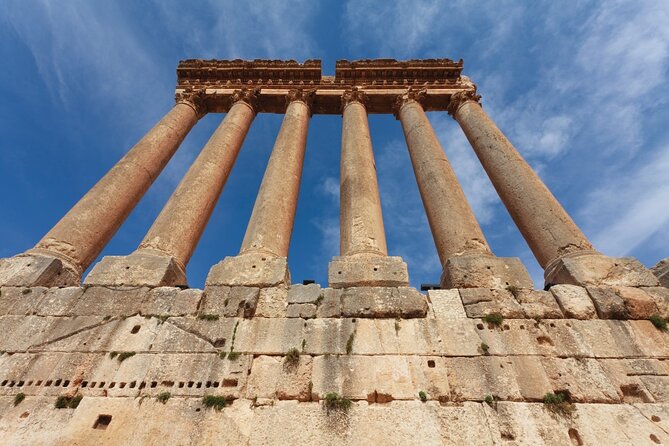
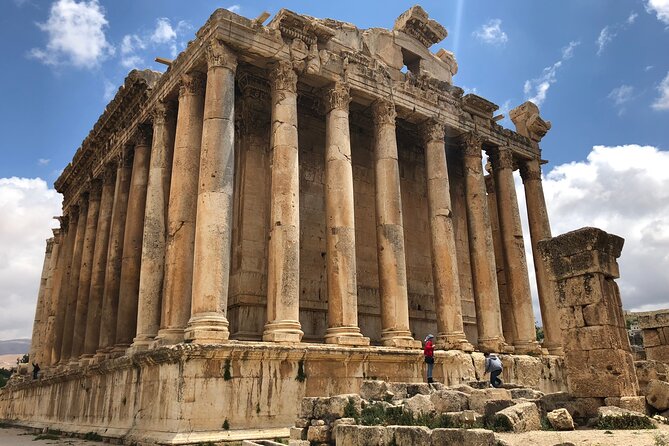
Baalbek is the star of the day, and it’s a place you understand faster with a guide than by wandering alone. You’ll be in the Baalbek temple complex, home to two of the most impressive Roman temple ruins in the region: the Temple of Bacchus and the Temple of Jupiter.
Temple of Bacchus and the Roman scale you can’t fake
You spend about 1 hour 30 minutes at the main Baalbek area, and admission is listed as free for that first stop. The guide framing really helps here. Baalbek wasn’t just Roman in spirit. The site connects to an earlier Phoenician city known as Heliopolis during the Hellenistic period. Under the Romans, the sanctuary stayed in religious use and drew pilgrims to the Heliopolitan Jupiter.
Here’s what makes it worth your time: the complex is a top example of Imperial Roman architecture at its apogee. You’re not looking at small, tidy ruins. You’re looking at structures built with confidence and resources, and you can feel the scale even after centuries.
A different spoke from Beirut:
- Guided Small-Group Tour to Baalbek, Anjar and Ksara with Lunch
★ 5.0 · 511 reviews - Guided Small-Group Tour to Jeita, Harissa, Byblos with Lunch
★ 5.0 · 361 reviews - Paragliding Trip Over Lebanon – Jounieh Bay
★ 5.0 · 257 reviews - Jeita Grotto,Harissa&Byblos Full-Day PRIVATE-CAR Trip from Beirut
★ 5.0 · 222 reviews
The second temple section and the role of the Heliopolitan triad
You also spend about 1 hour 30 minutes on the broader Temples of Baalbek portion, and for this segment the admission is listed as not included. This is where the “why these temples mattered” part comes into focus.
The temples relate to a Romanized triad of deities associated with Heliopolis: Jupiter, Venus, and Bacchus. The guide’s job is to connect the names on stone to the lived religious function of the place. Also, the building story is part of what you’re seeing: the colossal constructions were built over more than two centuries, and the complex is often described as a model of Imperial Roman architecture.
One practical note: since that admission is not included for this segment, you should expect to pay for entry on the day if you want to cover everything in that part of the complex.
Stop 3: the Stone of the Pregnant Woman, a quick hit with big visuals
After the main temple areas, you get a short but memorable stop at the Stone of the Pregnant Woman. It’s listed as 15 minutes and admission is free.
This is a worked Roman monolith, plus a nearby companion block, among the largest monoliths ever quarried. The tour keeps it efficient, but it’s the kind of stop that makes you look twice. Even if you’re not a stones-and-engineering nerd, the sheer scale hits you. You’re also told the stones were presumably intended for the nearby Roman temple complex, with a style of construction described as monolithic gigantism.
If you’re worried the day might be too heavy on temples, this short stop is a nice break. It’s not a long detour, but it adds a “how did they do this” moment.
Château Ksara: Jesuit origins and Lebanon’s first dry wine
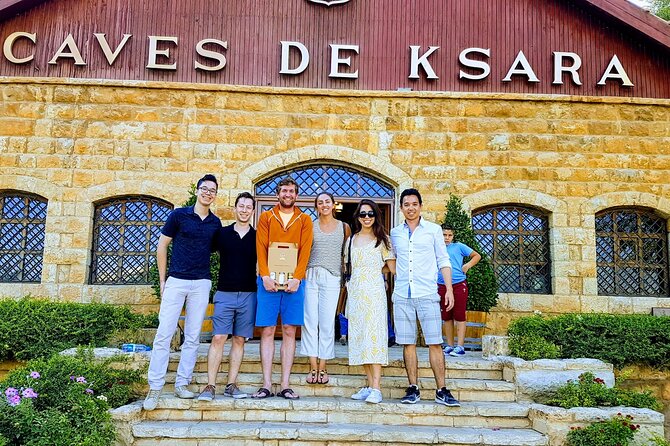
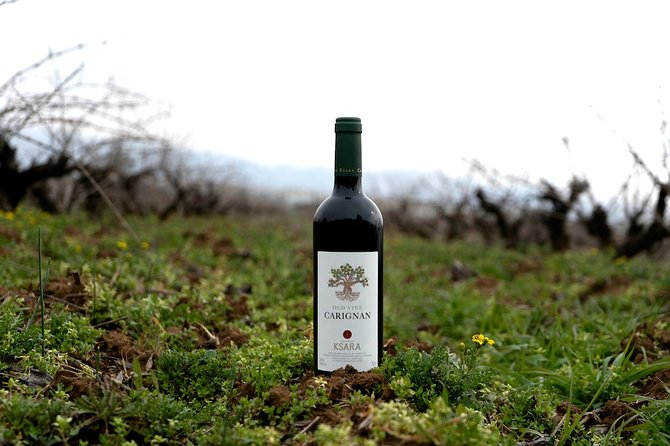
Then you shift from stone to grape country. You’ll visit Château Ksara in the Beqaa Valley. The stop is listed as 1 minute, and admission is not included, which suggests it’s more of a winery visit-and-tasting stop than a long formal tour. Still, the winery’s story is a big part of why it’s included.
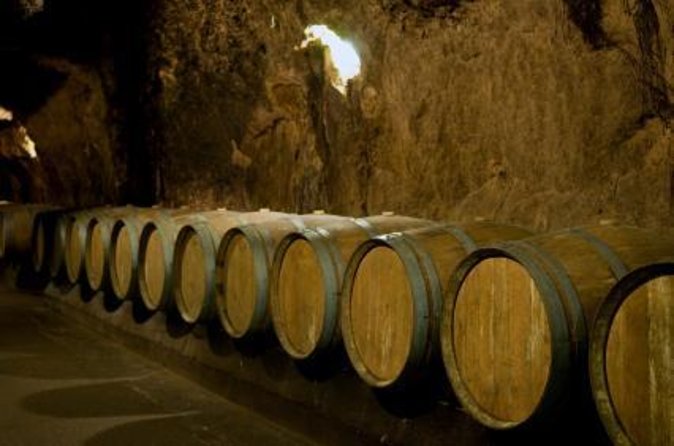
Château Ksara was founded in 1857 by Jesuit priests. It’s also described as developing the first dry wine in Lebanon. That is exactly the kind of detail that turns tastings from “this tastes good” into “this has a lineage.” You’re tasting something that sits inside a timeline, not just a current menu.
The winery produces about 3 million bottles annually and exports to over 40 countries. So even though you’re on a personal guided day trip, the wine you’re tasting has scale behind it. That matters if you’re trying to understand how Lebanese wine fits into a broader market.
Château St Thomas: vineyards on a hill and a quieter, scenic side
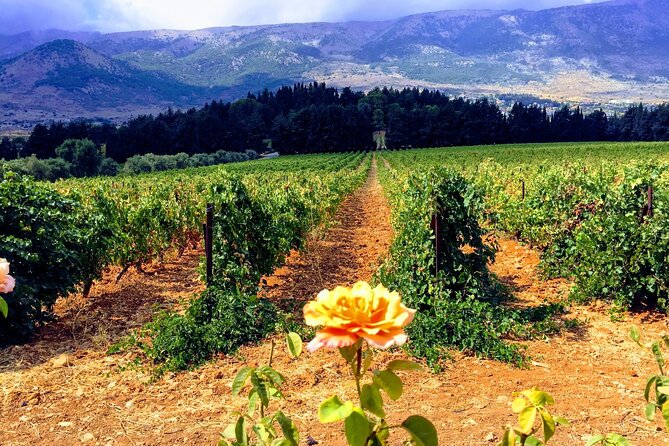
Your second winery stop is Château St Thomas, established in 1990. This one comes with a longer visit, about 1 hour, and admission is not included. The location is part of the point. It sits on a hill overlooking the Beqaa Valley, and the vineyard performance is credited to the fertility of the Beqaa soil.
This is a useful contrast to Ksara. Even if both wineries are part of the same region, different wineries can highlight different approaches to production and taste. The longer time at St Thomas also gives you a chance to slow down, ask questions, and focus on what you actually like.
And based on what I took from the wine-focused explanations you get on this tour, you won’t just be handed glasses. You’ll have the why behind the wine, including how the process shapes what ends up in your glass. That kind of context is where Kefraya’s explanation really lands: the tasting becomes more methodical, less guesswork.
Wine tasting: what you should pay attention to during the pours
I like wine tastings most when they are structured enough that you learn something, but relaxed enough that you can enjoy. Here, the strongest sign is that the wine experience includes an explanation of the scientific process of making and tasting wine. That turns the whole session into a skill builder, not a passive activity.
During your tastings, try focusing on three things:
- How acidity and balance show up as you sample different styles.
- How the aroma changes from one glass to the next, even before you take a sip.
- What you reach for twice, because that often predicts what you’ll want later if you shop locally.
If you’re worried about drinking too much, pace matters. A full-day itinerary means you still have temples to enjoy and roads to handle. Sip, taste, and stay aware that wine is part of a long day, not the whole day.
Lunch timing: plan for food, not just photos
Lunch isn’t included. Still, you should expect there will be a stop or time built in, because this is an 8-hour cultural tour and you’ll need a real break. One of the strongest practical signals from the experience is that the lunch location can be enjoyable, so you’ll want to treat lunch as part of the day’s comfort, not an afterthought.
Bring some patience if you’re sensitive to timing. This day combines multiple sites, and road travel around Beirut and into the Beqaa can affect flow. The good news is your ride is organized and air-conditioned, so waiting time is less uncomfortable than on a do-it-yourself day.
Price and value at $100 per person
At $100 per person for about 8 hours, this is priced in a way that makes sense only if you take the included pieces seriously. Here you’re paying for a full-day package that includes air-conditioned vehicle, private transportation, a tour leader, and hotel pickup and drop-off. That bundle is often where value appears, especially if you’d otherwise need taxis, entrance ticket coordination, and a guide for context.
Now for the fine print that affects value: some admissions are not included. Baalbek’s first listed admission segment is free, and the Stone of the Pregnant Woman is also free. But the Temples of Baalbek segment is not included, and both wineries are not included for admission. So your total day cost may be higher once you add entry fees and whatever you choose for lunch.
Still, the value argument holds for most people because you get two big anchors, Baalbek and wine culture, plus professional guiding. This isn’t just a scenic drive with occasional stops. When Hassane is giving lots of information and Kefraya is explaining the tasting process, you’re buying interpretation, not just access.
Who this tour is best for (and who might want something else)
This works well if you:
- Want a guided Baalbek day, not a self-guided wander.
- Like wine but also enjoy learning the how and why, not only the flavor.
- Prefer a private format where your group can move at a comfortable pace.
It may not be ideal if you:
- Want a long, slow winery tour with lots of free time. The itinerary shows more time at St Thomas than Ksara, and both winery visits include admissions not included, so the pace is structured.
- Hate walking in outdoor ruins for extended periods. You’ll spend several hours at Baalbek temple areas, with real steps and open-air exposure.
Should you book this Baalbek and wine day?
If you’re trying to experience Lebanon beyond one theme, I’d book it. The strongest reason is the pairing: Roman Baalbek gives you scale and story, then the Beqaa wineries give you a tasting that feels connected to land and tradition. The tour also has good “human value,” with guides like Hassane and wine explanation by Kefraya making the day more understandable and less generic.
My call comes down to one question for you: do you want a day where you leave with both a better sense of place and a better sense of wine? If yes, this is a strong choice. If you mainly want downtime or you’re trying to keep costs tightly controlled, you’ll want to budget extra for the non-included admissions and lunch.
FAQ
Is hotel pickup and drop-off included?
Yes. Hotel pick up and drop off are included, along with private transportation and an air-conditioned vehicle.
How long is the tour?
The tour is listed as approximately 8 hours, starting at 8:30 am.
What admissions are included versus not included?
Admission at Baalbek (Stop 1) and the Stone of the Pregnant Woman (Stop 3) are free. Admission for Temples of Baalbek (Stop 2) and the winery stops at Château Ksara and Château St Thomas are not included.
Is lunch included?
No. Lunch is not included.
Does the price include a guide?
Yes. The tour includes a tour leader and a professional guide.
Can I cancel for a refund?
Yes, you can cancel for a full refund up to 24 hours before the experience’s start time.
Newest Beirut write-ups
- Small Group Tours to Jeita Grotto and Byblos with tickets★ 5.0 · 3 reviews
- Small-Group Tour with Lunch to Jeita Grotto, Byblos and Harissa★ 4.5 · 3 reviews
- Small-Group Tour with Lunch to Baalbek, Anjar and Ksara★ 5.0 · 3 reviews
- Small-Group Tour to Sidon, Tyre and Maghdouche with Lunch and Tickets★ 4.5 · 3 reviews
- Beirut to Qadisha Valley, Bcharri & Cedar: Daily Tours with Lunch★ 4.5 · 3 reviews
- Beirut to Sidon, Tyre and Maghdouché: Daily Tours with Lunch★ 5.0 · 3 reviews
- Exploring Beirut’s Past: A Private Guided Historical Tour★ 5.0 · 3 reviews
- Private Tour: Tyre, Sidon and Maghdouche Day Trip from Beirut★ 4.5 · 3 reviews
Wine Tours, compared.
Guided Small-Group Tour to Baalbek, Anjar and Ksara with Lunch
Read our review →
Anjar, Baalbek & Ksara Day Trip – With Lunch (4G on Board)
Read our review →
Guided Private Full Day Tour to Baalbek, Anjar and Chateau Ksara
Read our review →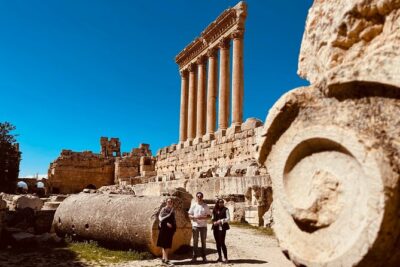
Lebanon tour Baalbek ruins & Ksara w/pick-up, lunch,guide+entries
Read our review →
Baalbek Temples & Ksara Caves w/pick-up,guide, entries+lunch
Read our review →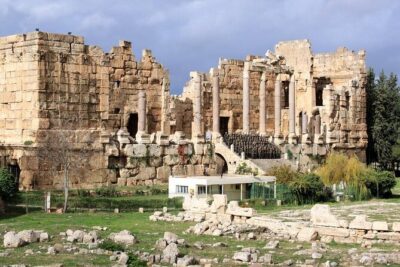
Small Group Tours to Baalbek, Anjar & Chateau Ksara with lunch and Tickets
Read our review →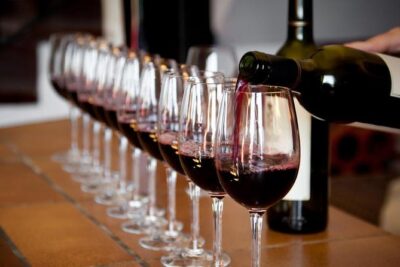
Browse the lists this tour appears in