Guided Small-Group Tour to Tripoli and Batroun with Lunch

Reviewed · LUNCH EXPERIENCES

Guided Small-Group Tour to Tripoli and Batroun with Lunch

5.0 · 16 reviews From $65 Operated by Lebanon Tours & travels · Bookable on Viator
Book on Viator →

What makes this day trip interesting is that you get two of Lebanon’s older, more character-filled cities, Tripoli and Batroun, without taking on the stress of self-driving. I really like the door-to-door hotel pickup plus the fact the group stays small, max 15.

I also like the food anchor built into the route: you get an authentic Lebanese lunch instead of hunting for something last minute. The rest of the day is packed with stops that feel practical, not just photo stops.

One thing to factor in is pacing and extra costs: the Citadel Saint Gilles has admission that is not included, and the schedule is tight with many short visits.

Key Things You Will Like Most

Guided Small-Group Tour to Tripoli and Batroun with Lunch - Key Things You Will Like Most

  • Small-group setup (max 15) keeps the guide conversation personal, not radio-style
  • Hotel pickup and drop-off removes the hardest part of a Lebanon day trip
  • Tripoli’s multi-stop route hits hammams, mosques, khans, and souks in one sweep
  • Lunch is included so you can budget the day without guessing
  • Batroun’s Phoenician sea wall gives you a strong sense of how old this coast really is
  • Many sites are free entry, so you only likely pay for the Citadel

From Beirut to Tripoli and Batroun, Without the White-Knuckle Part

If you’ve ever tried to self-drive around Lebanon, you already know that the “just follow the road” plan can turn into an endurance sport. This tour is built for real people with real morning schedules. You start in Beirut, ride in an air-conditioned vehicle, and the guide handles the route and timing.

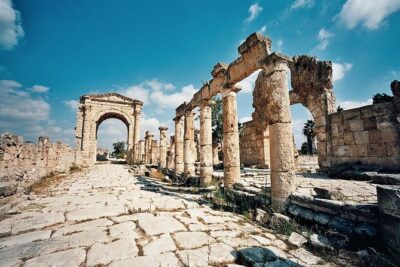
Tripoli is the big draw here, and not just because it’s famous. The day is designed so you move through different layers of the city, from Phoenician-era roots to Mamluke and Ottoman-era architecture, then into the markets and public bath culture. Batroun adds a calmer finish, with that ancient coastline feeling that’s hard to replicate anywhere else.

Price and Logistics, What $65 Really Buys

Guided Small-Group Tour to Tripoli and Batroun with Lunch - Price and Logistics, What $65 Really Buys
At $65 per person for an 8-hour guided outing, this is value based on three things you actually feel in real life: transport, guide time, and lunch. You’re not just paying to be shown a couple landmarks, you’re paying to avoid the logistics mess of coordinating your own route.

Most of the stops listed are free entry. The one clear exception on the route is the Citadel Saint Gilles, where admission is not included, so it’s smart to set aside a little extra budget for that one. If you want the day to stay smooth, bring some flexibility for short visits that move you from place to place.

Also helpful: you get a mobile ticket, and the tour is door-to-door with hotel pickup and drop-off. That kind of convenience matters when the day starts at 8:30 am and you want to spend time at the sites, not in transit arguments with your phone and maps.

A Small Group Day That Starts at 8:30 am

Guided Small-Group Tour to Tripoli and Batroun with Lunch - A Small Group Day That Starts at 8:30 am
The start time is 8:30 am, which means you’ll likely want an early breakfast. The schedule is built around the idea that you’ll see a lot in one day, but that doesn’t mean it has to feel frantic. Small-group tours help because your guide can slow down when people have questions.

The group maximum is 15 travelers. That matters because you’re less likely to end up ignored while everyone else files past the sights. I like tours where you can ask, and the guide can actually answer, not just move you along.

And there’s a human element here. In past experiences with this operator, guides like Albert have been praised for making visitors feel welcome and for offering real explanations, including discussion of current situations in Lebanon and beyond. Even if your guide is different, the key point is that this is the kind of day where conversation is part of the package, not an afterthought.

Tripoli First: From Historic City Fabric to Saint Gilles Views

Guided Small-Group Tour to Tripoli and Batroun with Lunch - Tripoli First: From Historic City Fabric to Saint Gilles Views
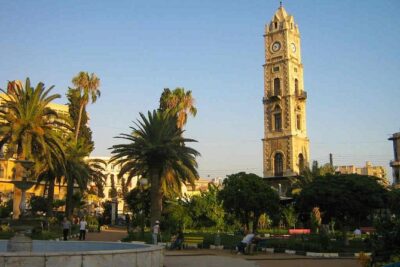
Tripoli is your first major stop, and you spend about 3 hours getting your bearings in a city that stretches back to the Phoenician era. This is one of Lebanon’s oldest cities along with Byblos, Tyre, and Sidon, and it shows in the mix of buildings and surviving monuments. The city also has a strong recorded footprint: dozens of buildings, including many dating from the 14th century, have been registered as historical sites.

A quick reality check, though: Tripoli is an active living city. That’s the point. It means you’ll see trade areas, mosques, and public architecture functioning in a real neighborhood context, not a sanitized “museum zone.” If you like street-level history, that’s a win.

Citadel Saint Gilles (Qal’at Sinjil): The Big Fortress Overlooking the City

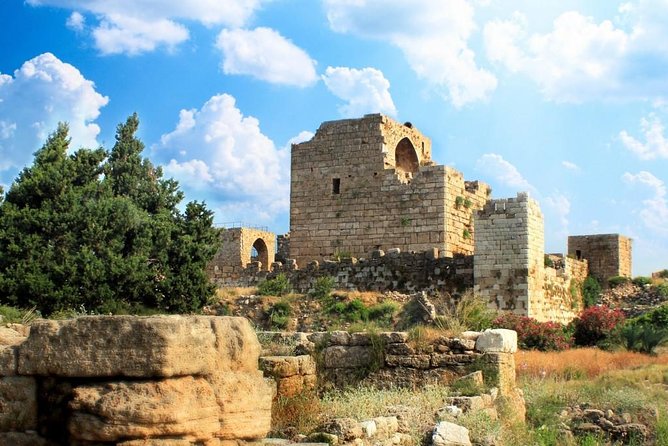
After the initial city time, you head up to the Citadel of Tripoli, known as Qal’at Sinjil (Saint Gilles). This stop is around 30 minutes. The fortress is huge, about 140 meters long and 70 meters wide, and it has been rebuilt and repurposed many times over centuries.

Here’s what makes the Citadel worthwhile, even if you’re not a hardcore fortification person: you’re looking at a layered story in stone. The main features include octagonal Fatimid construction that was later converted by the Crusaders, plus Crusader-era structures from the 12th and 13th centuries. Then come Mamluke additions from the 14th century, and later Ottoman additions in the 16th century.

You also get context for why what you see today exists. The present condition owes a lot to restoration work by Mustafa Barbar Agha, governor of Tripoli at the start of the 19th century. Entrance admission is not included here, so plan for that one extra cost if you want the Citadel moment.

Mamluke-Era Mosques and Reused Crusader Elements You Can See With Your Own Eyes

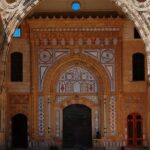
Tripoli’s religious architecture is a centerpiece of the day. You’ll stop at multiple mosques, each with its own architectural story, mostly with free entry.

Al Mansouri Great Mosque: A Courtyard and a Converted Past

You’ll visit Al Mansouri Great Mosque, started in 1294 and completed in 1315. This mosque was built on the ruins of a 12th-century Crusader cathedral dedicated to St. Mary of the Tower. So even if you don’t care about dates, you’ll be standing on a site that has switched religious roles over time.

The mosque’s large courtyard is surrounded by a vaulted prayer hall. Inside, you can still see Western architecture elements from the older church, including the northern entrance and a Lombard-style bell tower that was transformed into a minaret. I love stops like this because it gives you a visual “how did that happen” moment.

Foundation plaques and decrees inscribed in the mosque also reveal details of daily life during the Mamluke period. It’s the kind of detail you can only get when you’re physically there, not reading a summary at home.

Taynal Mosque: Reused Columns and a Mausoleum

Next is Taynal Mosque, built in 1336 by Saif Ed-Dine Taynâl on the site of a ruined Crusader church. This stop includes a small mausoleum with the founder’s tomb.

A key architectural clue is reuse. Some original elements were repurposed, including two rows of granite columns with late Roman capitals inside the first prayer hall. The second prayer hall’s entrance is described as a unique example of Mamluke-era architectural decoration. It’s a short stop, but it’s the kind where a guide can help you notice what you might otherwise miss.

Tripoli Souks, Khans, and the Real Market Mood

Then you move into the souks and trading spaces, and this is where Tripoli stops feeling like a list of monuments and starts feeling like a living city.

Souk Al-Harajb: A Theater of Streets, Smells, and Sound

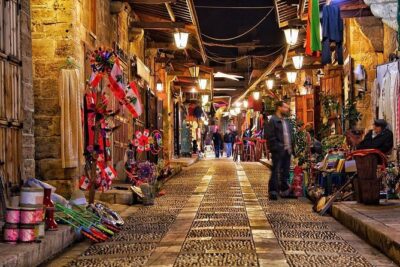
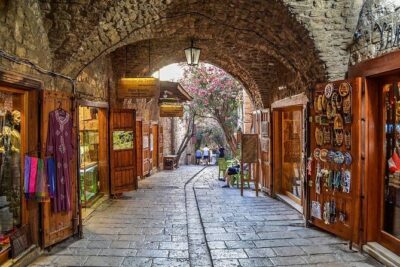
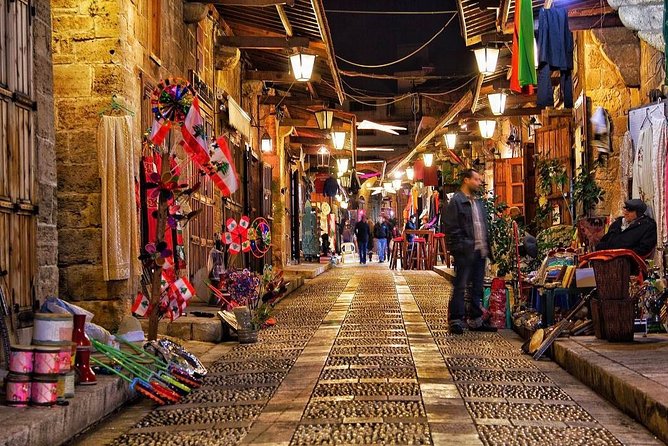
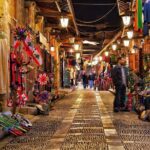
Souk Al-Harajb is a highlight, and it’s easy to see why. Tripoli souks are described as busy, colorful, and packed with centuries-old traditions. You’ll wander passageways and small hidden alleys, with smells and sounds part of the experience.

The souk area includes nine souks in total: Attareen, Bazerkan, Haddadin, Haraj, Kameh, Koundarjiyeh, Nahhasin, Samak, and Sayyaghin. There’s also a food souk where you can find fresh produce plus meat and fish. This is also where you get a sense of how the city’s economy shapes the day.

You only spend about an hour here, so keep your expectations realistic. You won’t master the whole market, but you will get a strong first feel for how Tripoli trades.

Khan Al-Khayyatin: Tailors and a Covered Trade Courtyard

Next comes Khan Al-Khayyatin. This khan is part of the Tripoli souks and is a long rectangular building, about 40 by 80 meters, with a covered central courtyard. Shops line either side.

The trade focus matters: as the name suggests, khan housed and still houses tailors and related crafts like needles, thread, and sewing machines. This kind of stop is valuable because it connects “history” to “work.” It’s not only architecture, it’s a continuity of purpose.

Hammams in Action, and Hammams That Feel Like Museums

Public baths matter in this itinerary because they’re a window into daily life. You’ll hit several hammam stops, mostly short, but each one has a different status.

Hammam El-Abed: The Only Functioning Hammam

One stop is Hammam El-Abed, described as the only functioning hammam in Tripoli. It likely dates to the end of the 17th century and has the typical pierced domes of Mamluke and Ottoman public baths.

The interior is described as a living museum, with cushions, a central fountain, and traditional fittings. This is the rare kind of stop where you can feel the difference between a building that’s preserved and a building that still serves a role.

Hammam Al-Jadid: New Bath, Faded Grandeur

You’ll also visit Hammam Al-Jadid, built around 1740 and called the New Bath. It’s described as the largest hammam in Tripoli, but it hasn’t been in operation since the 1970s.

That means your experience here is more imagined than active. You’re standing in faded grandeur and letting your brain fill in the everyday rhythm that used to happen here. I find this contrast fascinating because it shows how a city’s public spaces evolve over time.

Ezzeddine Hammam: Restoration in Progress

Finally, Hammam Izz ed-Dîne (spelled Ezzeddine Hammam in the stop list) is a public bathing-house given to Tripoli by its Mamluke governor Izz ed-Dîne Aybak. The governor died in 1298, and he’s buried in a mausoleum beside the hammam.

This one is under restoration now. It’s still a meaningful stop because it connects architecture, governance, and a specific person. Even if the building isn’t fully “in use,” the story is intact.

Quirky Stops That Add Texture: Soap, Sweets, Fairgrounds, and the Port

Guided Small-Group Tour to Tripoli and Batroun with Lunch - Quirky Stops That Add Texture: Soap, Sweets, Fairgrounds, and the Port
Tripoli isn’t only religion and markets on this route. You’ll also see trade buildings, iconic local food culture, and a surprising modernist leftover.

Khan As Sabon (Soap Khan): Two Stories Around a Fountain Courtyard

The Tripoli soap factory stop is Khan As Sabon, also described as a Soap Khan. It was built at the beginning of the 17th century and originally planned to serve as a military barracks to garrison Ottoman troops.

It was positioned at the center of the city so the pasha could control any uprising. That’s a heavy backstory for what looks like a functional trade complex, and it’s exactly the point of these khans. You spend about 5 minutes here, but you’re likely to remember the idea that production spaces were also political control tools.

The structure is a large rectangular building with two story arcaded corridors running around a fountain courtyard.

Rachid Karami International Fair: Niemeyer’s Unfinished Vision

Then you stop at the Rachid Karami International Fair grounds. Here’s the standout detail: the fairgrounds include one of the five largest exhibition centers in the world, with 15 structures designed by Brazilian architect Oscar Niemeyer in 1963.

These structures remain unfinished due to project abandonment during the civil war in 1975. It’s a short photo-and-context stop, but it’s a powerful one. You get a reminder that Lebanon has been shaped by modern ambition as well as ancient layers.

Hallab 1881: Kasr El Helou, a Landmark for Lebanese Sweets

You’ll also stop at Hallab 1881. It traces back to Abdul Rahman Hallab, described as a pioneer in the world of Lebanese sweets since 1881.

Today, Kasr El Helou is considered one of Tripoli’s renowned landmarks, visited by thousands from all parts of the globe. This is one of those stops that turns the day from “sights” into “taste culture,” even if your time is brief.

El Mina Port: Islands, Natural Reservations, and Fish-Breeding Habitat

Next is El Mina Port, a coastal town that acts as the harbor city for modern neighboring Tripoli. It occupies the location of the old Phoenician city of Tripoli.

The port area is described as having nine islands, four of them declared natural reservations to help breed fish and preserve natural habitat. That’s a quick stop, but the details are useful because they show that “coast” here is not only scenic, it’s part of an ecological system.

Batroun’s Sea Wall and the Slow-Coast Feeling After a Busy Morning

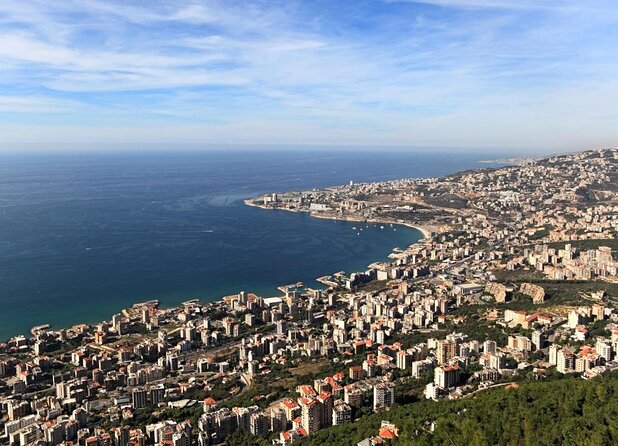
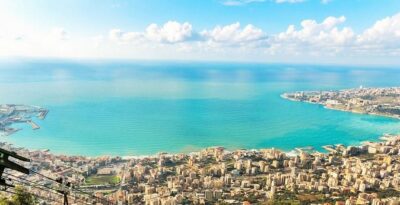
After the heavier Tripoli portion, Batroun gives you a more open, coastal reset. Batroun is described as one of the world’s oldest cities, on the Mediterranean coast in northern Lebanon. It’s known for ancient castles and churches, citrus fruits, beaches, and modern nightlife, and it was established more than three millennia ago.

You spend about 30 minutes in Batroun before moving to the Phoenician Wall.

Phoenician Wall: A Coast Defense Still Shaping the Present

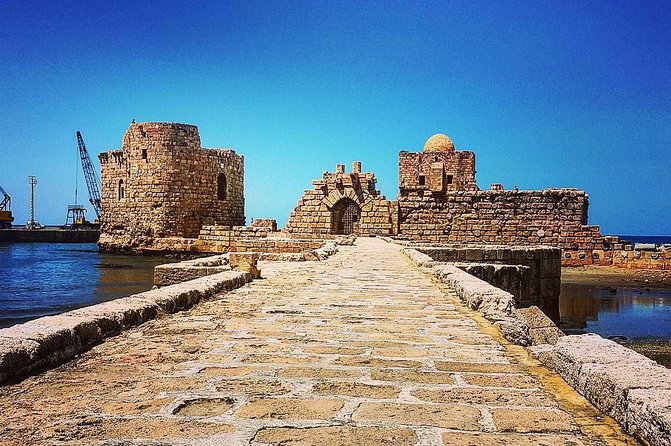
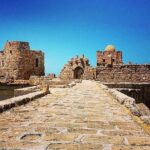
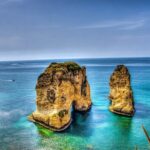
The Phoenician Wall is the signature stop in Batroun. It began as natural petrified sand dunes. The Phoenicians reinforced it gradually with rocks, and the wall as it stands today took its present shape in the first century BC.

This wall was used for protection against sea storms and invaders. During Roman times, it functioned again as a quarry. The wall is described as 225 meters long and 1 to 1.5 meters thick, with parts crumbled but the remaining sections acting as a bulwark against the sea.

This is the kind of stop I like because it connects you to long-term coastal reality. You can stand there and feel how construction was a response to weather, ships, and danger, not just a planned landmark.

Lunch Stop: Why Included Food Makes the Whole Day Better

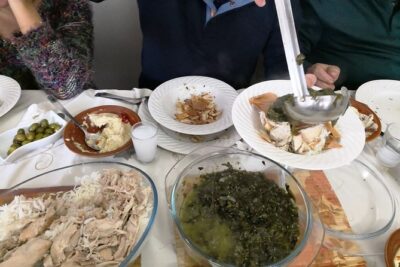
Lunch is included, served at an authentic Lebanese restaurant. This matters more than it sounds. When lunch isn’t included, you end up trading away time, or choosing something quick and forgettable, because you’re navigating a foreign-city hunger spiral.

With lunch included, you can keep your energy up through the morning and still enjoy the later stops. It also makes budgeting easier since the day already includes free-entry sites and only one clearly flagged admission not included.

One practical note: because you’re seeing many places with short visits, you want lunch to be a real pause. I’d plan to slow down there, eat well, and then switch back into sightseeing mode after.

Who Should Book This Trip to Tripoli and Batroun

This tour fits best if you want a guided day with strong structure and you prefer efficiency. You’re not only checking off two city names, you’re getting a route that mixes architecture, trade spaces, public baths, and coastal antiquity.

You’ll likely enjoy it if you like:

  • Old city neighborhoods where you can see living tradition in the souks and khans
  • Architecture that shows layers, Crusader elements reused in later buildings, and centuries of changes in the Citadel
  • A day built around small-group guide interaction, not a bus full of people

You might reconsider if you dislike fast-moving schedules. The itinerary includes many short stops, and you spend a lot of your time transitioning between sights. Also, if you strongly want the Citadel, remember admission is not included for that one.

Should You Book This Tour?

Yes, if you want a well-paced, guided day that feels like Lebanon beyond the usual postcard stops. The strongest reason to book is the combination of small-group size, hotel pickup, and lunch included, then topped with Tripoli’s mix of souks, mosques, hammams, and khans.

If you hate any chance of extra fees, budget for the Citadel admission since it’s the one clearly flagged as not included. If you’re good with that, this is a smart way to see Tripoli and Batroun in one day without turning your morning into a logistics puzzle.

FAQ

What is the price per person?

The tour costs $65.00 per person.

How long is the tour?

The duration is about 8 hours.

When does the tour start?

The start time is 8:30 am.

How big is the group?

The tour has a maximum of 15 travelers.

Is hotel pickup and drop-off included?

Yes, hotel pick up & drop off is included.

Is lunch included?

Yes, lunch is included at an authentic Lebanese restaurant.

Is a mobile ticket provided?

Yes, the tour includes a mobile ticket.

Are admission tickets included for every stop?

Most stops list admission as free, but the Citadel Saint Gilles has admission not included.

What is the cancellation window?

Free cancellation is available, and you can cancel up to 24 hours in advance for a full refund.

Where does the tour go?

It visits Tripoli first and then Batroun, including stops such as the Phoenician Wall and multiple sites around Tripoli.

More like this

Lunch Experiences, compared.

The full Lunch Experiences list →
Guided Small-Group Tour to Baalbek, Anjar and Ksara with Lunch
★★★★★★★★★★5.0· 511 reviews· from $65

Guided Small-Group Tour to Baalbek, Anjar and Ksara with Lunch

Read our review →
Guided Small-Group Tour to Jeita, Harissa, Byblos with Lunch
★★★★★★★★★★5.0· 361 reviews· from $60

Guided Small-Group Tour to Jeita, Harissa, Byblos with Lunch

Read our review →
Anjar, Baalbek & Ksara Day Trip – With Lunch (4G on Board)
★★★★★★★★★★4.5· 181 reviews· from $95

Anjar, Baalbek & Ksara Day Trip – With Lunch (4G on Board)

Read our review →
Byblos, Jeita Grotto & Harissa Day Trip -With Lunch (4G on Board)
★★★★★★★★★★4.5· 145 reviews· from $98

Byblos, Jeita Grotto & Harissa Day Trip -With Lunch (4G on Board)

Read our review →
Semi-Private Tour to Jeita Grotto, Harissa & Byblos with Lunch
★★★★★★★★★★5.0· 52 reviews· from $55

Semi-Private Tour to Jeita Grotto, Harissa & Byblos with Lunch

Read our review →
Sidon, Tyre & Maghdouche Day Trip – With Lunch (4G on Board)
★★★★★★★★★★4.5· 44 reviews· from $95

Sidon, Tyre & Maghdouche Day Trip – With Lunch (4G on Board)

Read our review →
Guided Small-Group Tour to Sidon, Tyre & Maghdouche with Lunch
★★★★★★★★★★5.0· 41 reviews· from $65

Guided Small-Group Tour to Sidon, Tyre & Maghdouche with Lunch

Read our review →
Guided Small-Group Tour to Qadisha, Bcharee & Cedars with Lunch
★★★★★★★★★★5.0· 39 reviews· from $65

Guided Small-Group Tour to Qadisha, Bcharee & Cedars with Lunch

Read our review →

Browse the lists this tour appears in

Scroll to Top

Explore Lebanon

Every road out of Beirut, and the best-reviewed way down each.