Guided Small-Group Tour to Beirut, Beiteddin & Deir elQamar

Reviewed · GUIDED

Guided Small-Group Tour to Beirut, Beiteddin & Deir elQamar

5.0 · 7 reviews From $99 Operated by Lebanon Tours & travels · Bookable on Viator
Book on Viator →

Beirut plus Mount Lebanon is an excellent combo when you want a full day that feels like two different worlds. You start with Beirut’s iconic seaside rocks and promenades, then you move inland to Deir el Qamar and finish at Beiteddine Palace, a top example of early 19th-century Lebanese architecture. I especially like the way this itinerary strings together religious landmarks (mosques and churches) and war-era memory (the abandoned Holiday Inn) without feeling like a lecture.

One possible drawback to keep in mind: it is a lot of stops in about 8 hours, so the site time is short at many locations, typically 10 to 15 minutes. If you hate quick photo stops and prefer long museum time, you’ll need to be okay with moving at a steady pace.

Key Highlights You’ll Feel Immediately

Guided Small-Group Tour to Beirut, Beiteddin & Deir elQamar - Key Highlights You’ll Feel Immediately

  • Pigeon Rocks and the Al Manara Corniche for classic Beirut views right from the start
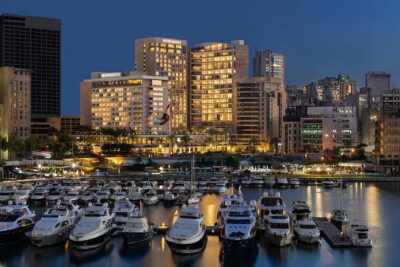
  • Zaytouna Bay waterfront for a modern stroll with shops and restaurants
  • The abandoned Holiday Inn as a direct, sobering war landmark
  • Downtown faith stops including the Mohammad Al-Amin Mosque and Al-Omari Mosque
  • Roman Baths in the center of town plus Souks and Roman-era traces close together
  • Beiteddine Palace as the clear architecture payoff at the end of the day

Planning Your Day: An 8-Hour Loop with Pickup and Lunch

Guided Small-Group Tour to Beirut, Beiteddin & Deir elQamar - Planning Your Day: An 8-Hour Loop with Pickup and Lunch
This is an 8-hour, small-group tour built around one simple idea: you see a lot of Beirut’s core sites, then you get out of the city to Mount Lebanon. You get hotel pickup and drop-off, plus an air-conditioned vehicle, which matters in summer and also for comfort when the day runs tight.

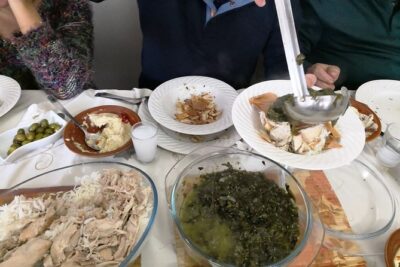
The tour starts at 8:30 am, so you’ll want to have breakfast ready and your phone charged. You’ll also have a mobile ticket, which keeps check-in painless. Lunch is included, and it’s described as a fresh, authentic Lebanese meal, so you’re not forced to hunt for food while you’re sightseeing.

Because the day covers both downtown Beirut and Deir el Qamar, you should expect a schedule that moves. Most of the Beirut stops are short visits, often around 10 minutes, meaning the guide’s narration and quick walks are part of the value.

Beirut Seaside Icons: Pigeon Rocks, Al Manara Corniche, and Zaytouna Bay

Guided Small-Group Tour to Beirut, Beiteddin & Deir elQamar - Beirut Seaside Icons: Pigeon Rocks, Al Manara Corniche, and Zaytouna Bay
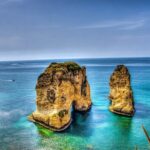
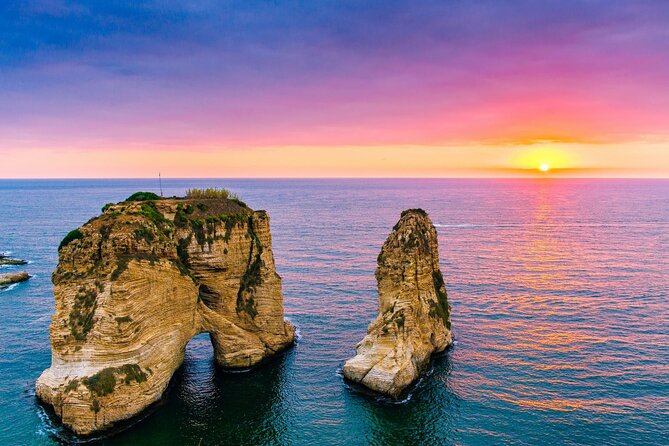
You kick off at Pigeon Rocks in Raouche, also called the Rock of Raouché. Two enormous rock formations rise out by the western-most tip of Beirut, and the whole scene is a mix of dramatic geology and seaside atmosphere. Even if you’ve seen photos before, the scale feels bigger in person, and it’s the kind of start that gives you quick context for why Beirut became a coastal draw.

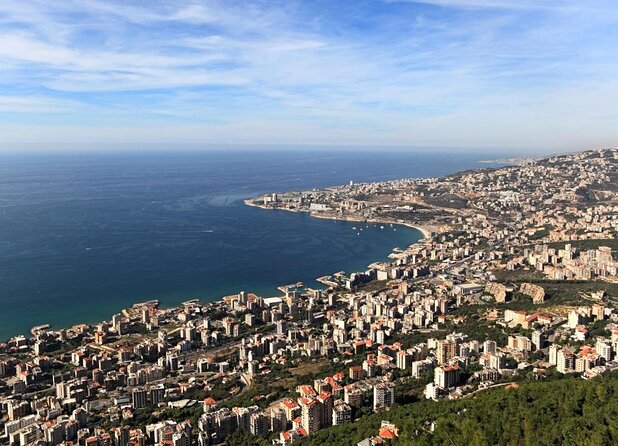
From there, you continue along Al Manara Corniche, stretching from the Ramlet al Bayda area to Saint George marina. This promenade is palm-lined and built for views of the Mediterranean, with Pigeon Rock anchoring the ocean view and Mount Lebanon showing on the eastern side. It’s a smart early sequence because you’re getting orientation fast: where the city sits, where the coast runs, and where the mountains begin.

Next is Zaytouna Bay, described on its official site as Beirut’s finest leisure destination. It’s a newer waterfront promenade with shops and restaurants, so it feels more modern than the older downtown streets you’ll see later. This stop is short, so think of it as a reset point before you head into the deeper historic layers of the city.

Practical takeaway: these seaside segments are quick but high-impact. If you only have one morning in Beirut, this is the kind of start that helps you understand the city’s geography and mood.

The Holiday Inn War Landmark: A Pause You Should Not Skip

Guided Small-Group Tour to Beirut, Beiteddin & Deir elQamar - The Holiday Inn War Landmark: A Pause You Should Not Skip
One of the most striking stops is the abandoned Holiday Inn Hotel, a war landmark left untouched for decades. The building period matters here: it was built between 1971 and 1974 when Beirut’s economy was booming and the city was a major tourist destination in the Middle East.

Then the Lebanese civil war begins in 1975, and the hotel becomes part of a longer struggle known as the Battle of the Hotels. The story goes that more than 25,000 combatants fought for control of luxury properties, including the Holiday Inn and the Phoenicia hotel.

Standing there is different from reading about it. You’re looking at empty, quiet structure after a conflict that visibly reshaped the city’s fortunes. This stop is also a reminder that architecture can capture both ambition and damage.

Time is limited, but I’d still treat this as one of your priority stops. It’s one of the places where the tour’s educational value feels real, not just scenic.

Downtown Beirut Faith Circuit: Mohammad Al-Amin Mosque, Al-Omari, and St George Cathedral

Guided Small-Group Tour to Beirut, Beiteddin & Deir elQamar - Downtown Beirut Faith Circuit: Mohammad Al-Amin Mosque, Al-Omari, and St George Cathedral
Downtown Beirut is where the tour shifts from waterfront and memorial to religion and older urban layers. The first major faith stop is the Mohammad Al-Amin Mosque, sometimes called the Blue Mosque. It is the biggest mosque in Lebanon, located near Martyr’s Square, and it opened in 2008. The mosque is amber colored with four minarets that rise 65 meters high.

Inside, the domes are described as light blue tiles, and the arches are multiple stories high. Even with a brief visit, the guide’s points about its scale and materials help you see it as a living modern institution, not only a photo stop.

You then head to Al-Omari Grand Mosque. This one has a layered timeline. It was built in 635 AD, then converted to a Church of Saint John by the crusaders in the 12th century. Later, the Mamluks retransformed it into the city’s Grand Mosque in 1291. After damage during the civil war, refurbishment was completed in 2004.

That long list of changes is the hidden theme of this whole tour: Beirut and Mount Lebanon have been crossroads for centuries. You’re literally seeing how power, faith, and governance can rewrite a site’s purpose without erasing it completely.

The next stop is the Greek Orthodox Cathedral of Saint George. It is the seat of the Greek Orthodox Metropolitan bishop, and it is also described as the oldest church in Beirut and one of the oldest in the region. The first Christian temple at this location dates back to the mid sixth century AD, and it’s closely associated with Beirut’s famous Law School.

If you like architecture with long timelines, this cluster is where you get the payoff. The time spent at each site is short, but the guide’s framing makes the changes feel connected.

Martyr’s Square and Nejme Square: Political Memory in Plain Sight

Martyr’s Square sits in the heart of downtown Beirut and it has a heavy name for a reason. Historically it was known as Al Burj or Place des Cannons. It was named for events tied to World War I, specifically the executions on 6 May 1916 by the Ottomans of Lebanese nationalists ordered by Jamal Pasha.

This stop is quick, but the value is in understanding why the square is named as it is, and how modern Beirut still carries those older political scars in its public spaces.

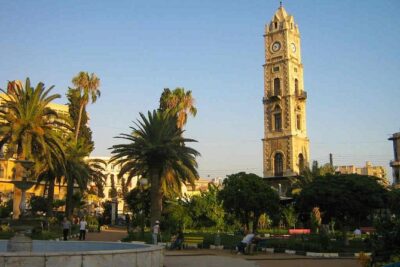
Then the tour moves to Place de l’Etoile, also called Nejme Square. This is the central square in the Downtown area and it is home to the Lebanese Parliament and complementary buildings, plus two cathedrals, a museum, and cafés and restaurants. One detail that sticks is the 1930 four-faced Rolex clock, tied to the square’s recognizable skyline.

This is another smart time-saver on the itinerary. You’re seeing a government hub, religious buildings, and a landmark clock face in one place, so even with limited time, you come away with a mental map of downtown.

Beirut Souks and Roman Baths: Shopping Streets with Ancient Layers

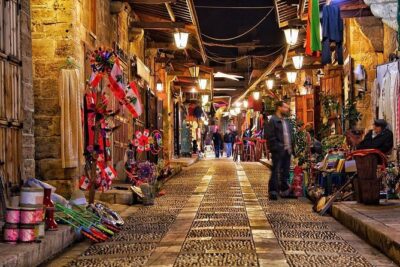
Next comes Beirut Souks, a commercial district in the city center with over 200 shops and 25 restaurants and cafés, plus an entertainment center and cinema complex. This is the spot you can use to do a quick browse or snack plan. It’s also the kind of area where you’ll feel how Lebanon mixes old city identity with modern consumer energy.

Right after that, you visit the Roman Baths of Berytus. This is the largest outdoor sight in downtown Beirut, discovered in 1968 to 1969 and renovated in the mid 1990s. The Roman Berytus baths had four major bath complexes, with the first created in the early first century under Augustus.

Then comes the earthquake factor: the terrible Berytus earthquake in 551 AD destroyed the baths. Today, the baths reflect ancient traditions of the site, and one bath area is used as an artistic performance and concert space.

I love this pairing because it shows you the layering effect in one walk. You can be thinking about errands or cafés at the Souks, then you turn and see Roman-era remains just sitting there in the modern city.

Deir el Qamar: Monastery of the Moon and Its Multi-Faith Village Core

Guided Small-Group Tour to Beirut, Beiteddin & Deir elQamar - Deir el Qamar: Monastery of the Moon and Its Multi-Faith Village Core
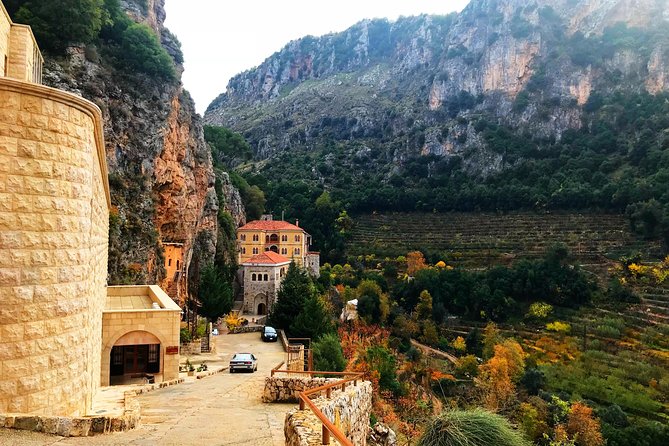
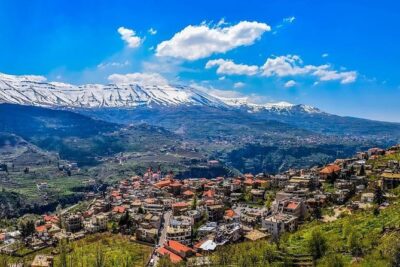
Once the day leaves Beirut behind, the scenery changes in tone. Deir al-Qamar means Monastery of the Moon, and the village is about five kilometers outside Beiteddine Palace in the Chouf District of Mount Lebanon.

Deir el Qamar is also framed here as a village with a multi-faith story. The tour notes that people from all religious backgrounds lived there, and the town had a mosque, synagogue, and Christian churches. It was also the first village in Lebanon to have a municipality in 1864.

Then the hard break: in 1860, Deir al-Qamar was destroyed during the civil war between Druze and Christians, and the town was set ablaze. Napoleon III sent a French contingent to rebuild it, which adds a European connection to the local rebuilding story.

You get a 30-minute stop at the municipality area, which is enough time to absorb the village setting and see why this place matters beyond photos.

Fakhreddine Mosque and Saydet El Talle: Smaller Stops with Deeper Stories

Guided Small-Group Tour to Beirut, Beiteddin & Deir elQamar - Fakhreddine Mosque and Saydet El Talle: Smaller Stops with Deeper Stories
After the municipality stop, you visit two religious sites that emphasize Deir el Qamar’s age and shifting beliefs.

First is Fakhreddine’s Mosque, with its octagonal minaret. Built in 1493 and restored in the sixteenth century by Fakhreddine 1st, it’s described as the oldest mosque in Mount Lebanon. Even without a long visit, the name and minaret shape make it easy to picture why it became a reference point for the region.

Then you go to Saydet El Talle Church, translated as Our Lady of the Hill. This dates to the 15th century, and it was built by Monk Nicolas Smisaati over ruins of an older Phoenician temple dedicated to the goddess Astarte. The old temple was destroyed by an earthquake in 859.

The church also comes with legend included in the tour’s background. The story describes a Druze Emir in Baakline looking at the hill of Dar El Kamar, seeing a light coming out of the hill, then ordering soldiers to dig. The clue is that if an Islamic symbol was found, a mosque would be built, tying the hill’s spiritual narrative to the broader region.

Time here is 15 minutes, but these are the stops that often stick with people. They connect layers: Phoenician roots, later Christian placement, and local legend.

Beiteddine Palace: Early 19th-Century Power, Now a Museum and Festival Venue

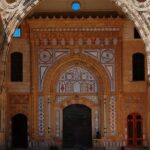
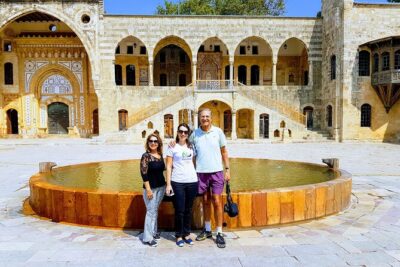
Your day culminates at Beiteddine Palace, described as the House of Faith. It’s a 19th-century palace and one of the best examples of early 19th-century Lebanese architecture.

The palace was built between 1788 and 1818 by Emir Bashir Chehab II, later ruler of the Mount Lebanon Emirate. After 1840, the Ottomans used the palace as a government building. During the French Mandate, it served as a local administrative office.

Then the modern political chapter: in 1943 it was declared the president’s official summer residence. During the Lebanese Civil War, it was heavily damaged. Today, parts of the palace are open to the public, while the rest remains the president’s summer residence.

This stop lasts about 1 hour 30 minutes, and the admission ticket is not included. That detail matters for value. With the rest of the day’s stops listed as admission free, Beiteddine is the one place where you should plan a little extra budget and time.

What makes it worth it is that you’re not only seeing pretty rooms. You’re seeing a palace that held multiple regimes, then survived war damage and partial reopening.

Price, Value, and What Makes This Tour Feel Worth It

At $99 per person for an approx 8-hour day, this tour aims for solid value by stacking two big targets in one go: core Beirut downtown sights and the Mount Lebanon palace and village atmosphere.

Here’s where the value comes from, based on what’s actually included:

  • Hotel pickup and drop-off saves time and reduces stress, especially in a city where parking and navigation can be annoying.
  • Lunch is included, so your “day cost” isn’t a moving target.
  • An air-conditioned vehicle helps the long transition from Beirut to the Chouf area.
  • Small-group size with a maximum of 15 people means you can hear what the guide says and you’re less likely to get lost in a crowd.
  • Many stops are marked admission free, so you’re not paying repeatedly throughout the day.

The one cost consideration is Beiteddine Palace admission, which is not included. If you know you care about palace architecture and indoor museum-style viewing, you’re more likely to feel like that extra ticket cost is worth it.

Also note the tour time rhythm: a lot of 10 to 15-minute visits. That can be a plus if you like variety, and a minus if you love lingering.

Who Should Book This Beirut to Beiteddine Day, and Who Might Want a Different Plan

I think this fits best if you want a day that covers a lot of ground without feeling like you’re rushing solo. The combination of Downtown Beirut landmarks and the Deir el Qamar and Beiteddine end works well for first-time visitors who want a strong overview.

You’ll likely enjoy it if you like:

  • architecture and sacred sites with layered timelines
  • seeing modern Beirut alongside Roman-era remains
  • a guided structure that keeps you moving and informed

You might want a different plan if you:

  • want long time inside one museum or one site
  • dislike schedules that move every few stops
  • are hoping for a fully admission-covered day at every major attraction, since Beiteddine Palace admission is not included

Should You Book This Small-Group Tour?

If you want one ticket that connects Beirut’s waterfront icons, downtown memorial sites, and the Mount Lebanon palace finale, this is a strong choice. The included lunch, pickup and drop-off, and small-group cap add up to real convenience, and the itinerary includes both scenic highlights and heavier context like the abandoned Holiday Inn.

I’d book it if you’re the type who likes variety and wants to build a mental map of Lebanon in a single day. If you only want slow travel and deep time at one attraction, you may feel shortchanged by the quick stop structure.

FAQ

How long is the tour?

The tour is listed as approximately 8 hours.

What is included in the price?

Hotel pickup and drop-off, lunch, an air-conditioned vehicle, professional guides, comfortable transportation, and small group sizes are included. A mobile ticket is also provided.

Is lunch included?

Yes, lunch is included.

Is admission included for Beiteddine Palace?

No. The Beiteddine Palace admission ticket is not included.

Does the tour have a group size limit?

Yes, it has a maximum of 15 travelers.

What time does the tour start?

The start time is 8:30 am.

What is the cancellation policy?

You can cancel for a full refund up to 24 hours in advance of the experience’s start time.

More like this

Guided, compared.

The full Guided list →
Guided Small-Group Tour to Baalbek, Anjar and Ksara with Lunch
★★★★★★★★★★5.0· 511 reviews· from $65

Guided Small-Group Tour to Baalbek, Anjar and Ksara with Lunch

Read our review →
Guided Small-Group Tour to Jeita, Harissa, Byblos with Lunch
★★★★★★★★★★5.0· 361 reviews· from $60

Guided Small-Group Tour to Jeita, Harissa, Byblos with Lunch

Read our review →
Guided Private Full Day Tour to Baalbek, Anjar and Chateau Ksara
★★★★★★★★★★5.0· 60 reviews· from $100

Guided Private Full Day Tour to Baalbek, Anjar and Chateau Ksara

Read our review →
Private Guided Tour to Jeita Grotto through Harissa and Byblos
★★★★★★★★★★5.0· 48 reviews· from $75

Private Guided Tour to Jeita Grotto through Harissa and Byblos

Read our review →
New Guided Semi-Private Tour to Jeita Grotto, Harissa & Byblos
★★★★★★★★★★5.0· 47 reviews· from $55

New Guided Semi-Private Tour to Jeita Grotto, Harissa & Byblos

Read our review →
Guided Small-Group Tour to Sidon, Tyre & Maghdouche with Lunch
★★★★★★★★★★5.0· 41 reviews· from $65

Guided Small-Group Tour to Sidon, Tyre & Maghdouche with Lunch

Read our review →
Guided Small-Group Tour to Qadisha, Bcharee & Cedars with Lunch
★★★★★★★★★★5.0· 39 reviews· from $65

Guided Small-Group Tour to Qadisha, Bcharee & Cedars with Lunch

Read our review →
Lebanon tour Baalbek ruins & Ksara w/pick-up, lunch,guide+entries
★★★★★★★★★★5.0· 35 reviews· from $130

Lebanon tour Baalbek ruins & Ksara w/pick-up, lunch,guide+entries

Read our review →

Browse the lists this tour appears in

Scroll to Top

Explore Lebanon

Every road out of Beirut, and the best-reviewed way down each.