Reviewed · SIDON & TYRE TOURS
Lebanon Unveiled: Exclusive Private Tours to Sidon & Tyre
This is an interesting way to see Lebanon’s layered past without adding stress to your day. You get door-to-door private transport with a driver, then step through Phoenician, Crusader, Ottoman, and Roman echoes in places like Sidon and UNESCO-listed Tyre. It feels like you’re doing your own itinerary, just with the hard parts handled.
I particularly like two things: the chance to combine Sidon’s old-city sights (sea castle, souks, and the soap workshop) with Tyre’s Roman hippodrome and tombs in one full day. I also like that you’re not stuck figuring out timing between locations, because the tour includes a tour leader plus a local guide in Tyre.
The one potential drawback is that it is a packed 9-hour day, with some stops timed tight. Also, a few key admissions are not included, and lunch is not on the plan, so you’ll want to budget a little extra and be flexible.
Key things I’d plan around before you go

- Private, air-conditioned transport means less friction on the road and a calmer start to a long day.
- Sidon plus Tyre gives you two major historic port cities, not just one.
- Soap Museum in Saida includes a traditional olive oil soap-making demonstration.
- Crusaders Sea Castle and Khan al-Franj cover two very different 1600s to 1300s storylines in Sidon.
- Al-Bass at Tyre focuses on the best-preserved Roman hippodrome features, including sarcophagi and a triumphal arch.
- Guide energy matters: Hassan (an archaeologist) is one example of how the explanations can make the ruins easier to read.
A 9-hour Sidon, Tyre, and Maghdoucheh day with private driving

This is built for people who want history without the constant logistics. You start at 9:00 am with hotel pickup, then spend the day moving by comfortable private vehicle with round-trip transport back to where you began. That matters here because you’re covering three clusters of sights, not just one walking zone.
The tour runs about 9 hours total, and the “time math” is part of the experience. On-site visits range from 15 minutes to 1 hour. If you enjoy lingering, you’ll still get plenty to look at, but you’ll have to accept that this tour is designed for coverage, not slow wandering.
You’ll also have human help along the way. A tour leader travels with you, and there’s a local guide in Tyre to connect the archaeology to what you’re seeing. In past days, the guiding style has been praised for energy and clear explanations, including an archaeologist named Hassan, and a guide named Georgette. That’s a good sign if you like your ruins with context, not just photos.
Other days out of Beirut to consider
- Jeita Grotto,Harissa&Byblos Full-Day PRIVATE-CAR Trip from Beirut
★ 5.0 · 222 reviews - Private Anjar and Baalbek Tour from Beirut with Departure Ticket
★ 5.0 · 79 reviews - Guided Private Full Day Tour to Baalbek, Anjar and Chateau Ksara
★ 5.0 · 60 reviews
Sidon first: Phoenician roots, Crusader remains, and souk energy

Sidon is one of the oldest Phoenician cities, with roots going back to the 3rd millennium BC and prosperity in the 2nd. On this day, you’re not just passing through. You get a solid block of time to feel the city’s commercial pulse and its historical weight.
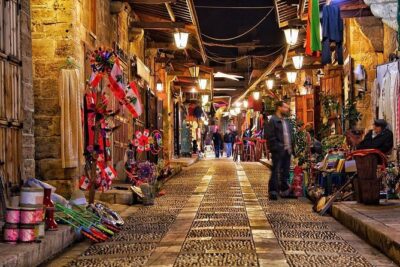
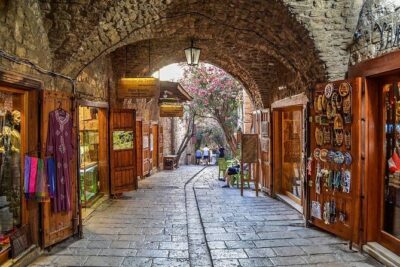
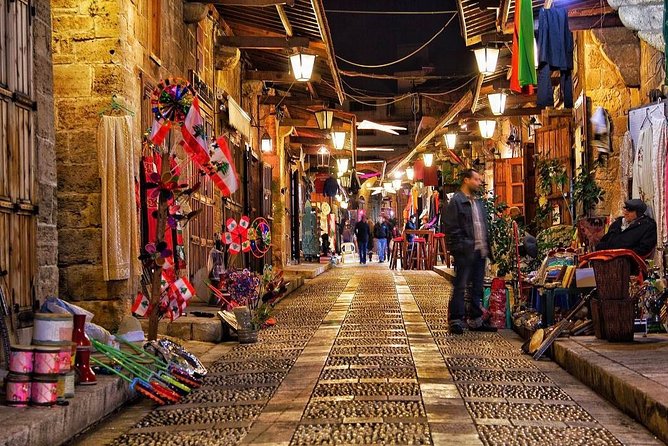
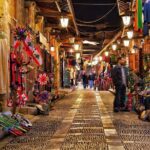
A highlight in Sidon is the mix of big-name moments and everyday texture. You’ll see references to Sidon’s famous purple dyes and glassware, and the area is also linked to early Christian tradition. Then you get practical human-scale time in the Sidon souks, a maze of narrow alleys with small kiosks, cafes, and specialist shops like jewelers and tailors.
Two things to keep in mind when you’re there. First, the souks are active, so wear shoes that handle uneven pavement and quick turns. Second, your time is limited at each stop, so go with a simple game plan: pick a couple lanes to browse, then return to your meeting point without wandering too far. That keeps you from losing time to the city’s own labyrinth.
Crusaders Sea Castle: big setting, limited surviving detail
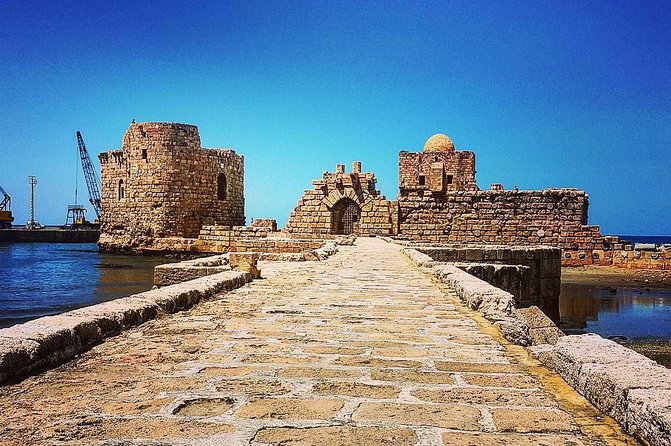
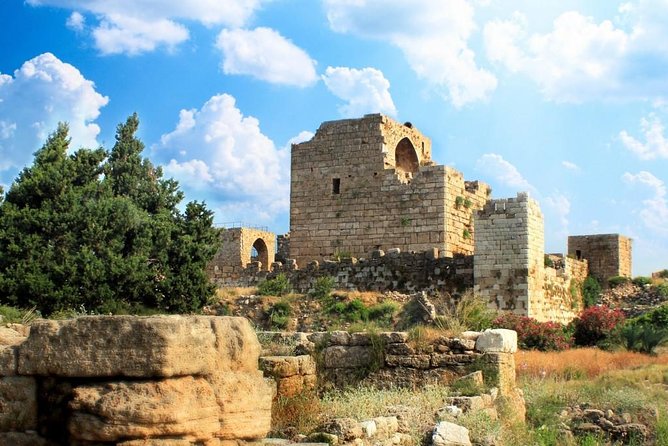
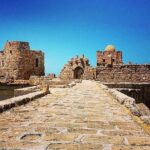
In Sidon, the Crusaders Sea Castle is one of those places where the setting does a lot of the talking. It was built by the Crusaders in the 13th century on a small island, connected to the mainland by a causeway. That alone helps you picture how it functioned as a fortress guarding movement through the port.
You’ll also learn the “why it looks the way it looks” story. The castle was largely destroyed by the Mamluks in 1291, and later restored by Fakhr el-Dine Maan II in the early 17th century. If you’re hoping for perfectly preserved walls and ornate rampart details, you may find it more atmospheric than flashy. Old prints suggest it once looked more beautiful than what survives today.
Still, it’s worth your time because the core ideas remain readable: a coastal fortress, built for power projection, tied to control of the sea route. Spend the 30 minutes the tour gives you by stepping back and looking at the structure before you focus on close-up features. That’s how you’ll keep your bearings fast.
Khan al-Franj: courtyard commerce, ambassadors, and galleries

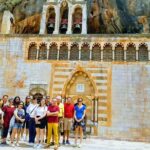
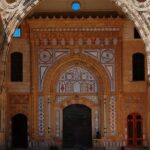
Next up is Khan al-Franj, a classic khan layout with an easy-to-understand purpose. It was built in the beginning of the 17th century by Emir Fakhreddine II, described as a hotel for ambassadors and a center for commercial exchange between Lebanon and France.
What you can actually picture in your head matters here. Think of a large rectangular courtyard with a central fountain, ringed by covered galleries. It’s the kind of place where history feels architectural, not just textual.
Your time is short, so focus on the spatial cues: the courtyard center, the rhythm of the arcades, and how the galleries would have supported both visitors and merchants. Even in 15 minutes, you’ll understand why this style of building worked. It created a protected public space for negotiation, hospitality, and daily exchange.
A different spoke from Beirut:
- Guided Small-Group Tour to Baalbek, Anjar and Ksara with Lunch
★ 5.0 · 511 reviews - Guided Small-Group Tour to Jeita, Harissa, Byblos with Lunch
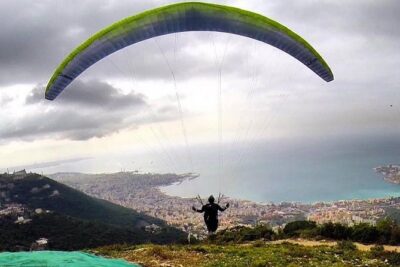
★ 5.0 · 361 reviews - Paragliding Trip Over Lebanon – Jounieh Bay
★ 5.0 · 257 reviews - First Paragliding Club in Lebanon – Since 1992
★ 5.0 · 193 reviews
Soap Museum in Saida: traditional olive oil soap making in real time
If you like hands-on culture, the Soap Museum is the stop that turns history into something you can watch. This Sidon museum focuses on Levantine soaps, and it’s not a generic souvenir factory. The soap workshop traces roots to the Hammoud family in the 17th century, and the museum explains how traditional olive oil soaps are made.
The core experience here is the demonstration of the process, tied to regional bath traditions. You’ll hear about the hammam, because soap-making isn’t just a craft. It is part of a daily ritual history.
You also get a layer of archaeology and material evidence. The museum includes a historical section with artifacts found during onsite excavation, including clay pipe heads dating from the 17th to 19th centuries, plus pottery fragments. The building itself is an old soap factory, reportedly with parts thought to date back even earlier.
Plan for this stop as a “slow it down” moment in an otherwise busy day. You’ll appreciate it more if you keep your questions ready. The demo is the kind of thing you remember because you saw it happen, not because you read a label.
Maghdoucheh and Our Lady of Mantara: faith, a tower, and a sacred cave
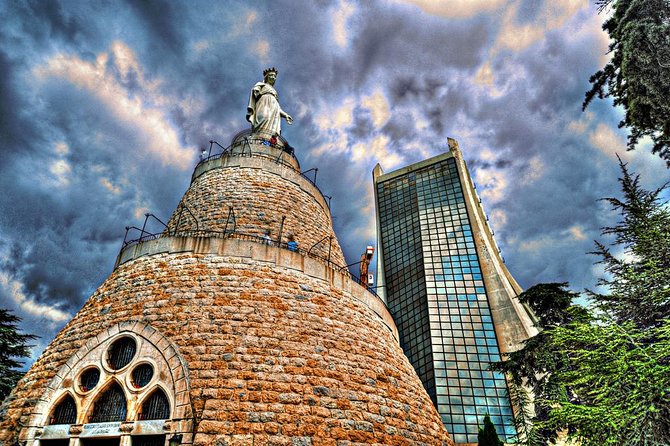
After Sidon, the day shifts tone for a pilgrimage stop in Maghdoucheh at Our Lady of Mantara, also known as Our Lady of Awaiting. This is a Melkite Greek Catholic shrine with several elements you can clearly identify.
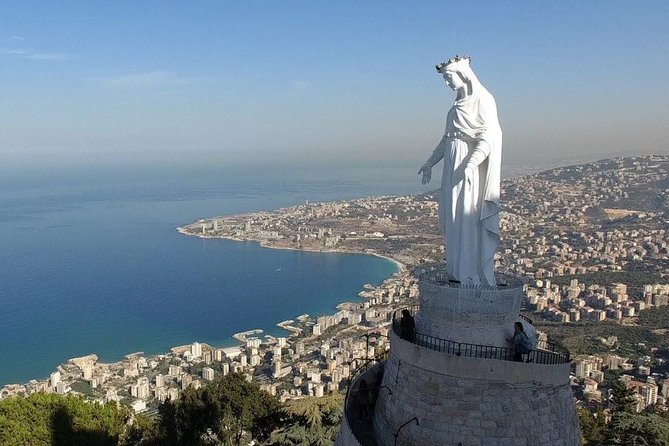
The shrine includes a tower crowned with the statue of the Virgin and Child, a cathedral, a cemetery, and a sacred cave. The cave is believed to be the one where the Virgin Mary rested while she waited for Jesus. The story attached to the site says the shrine was discovered on 8 September 1721 by a young shepherd.
In 15 minutes, you’re not going to experience this like a full religious visit. But you can still use the short time well. Look first, then walk slowly through the main elements. Notice how the tower and statue act as the visual anchor. Then, if the sacred cave area is accessible during your visit, spend a little quiet time there so the stop isn’t just a photo opportunity.
This is also a good moment to reset your head after the technical feel of Roman archaeology and Crusader fortification. It’s where the day’s history becomes lived tradition.
Tyre, UNESCO-level archaeology: purple dyes and Phoenician legends

Tyre is one of those places where you can almost feel the timeline stacked on top of itself. It’s a Phoenician port city with foundations dating to around 2750 BC, ruled at different times by Egyptians and then King Hiram, and later colonized by many powers through the centuries. The story of murex purple dye, made from sea snails, ties the city’s name to luxury trade and global fame.
You’ll also hear about Elissar, the Phoenician princess who founded Carthage. That link can help you understand why Tyre mattered beyond its immediate coastline.
This tour gives you about an hour in Tyre before you move to the main archaeological focus. Use this first hour to get your orientation, because it sets up the next stop. You’ll see how Tyre’s coastal setting connects to the port-city identity that made it important in the first place.
One practical note: Tyre is a place where you’ll want to look up as well as down. The Roman remains can look best when you understand the broader approach to the site.
Al-Bass archaeological site: Roman hippodrome, necropolis, and the triumphal arch

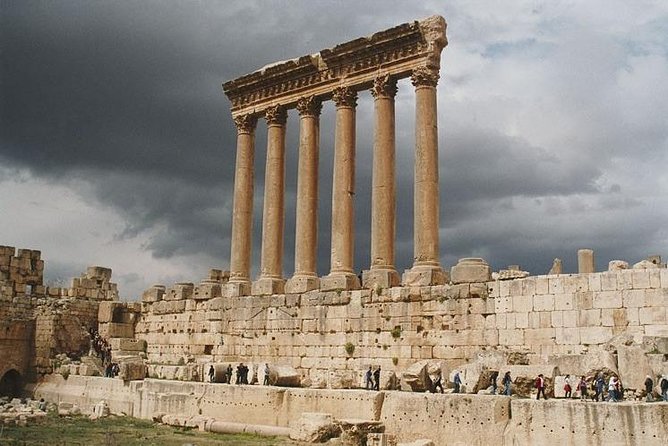
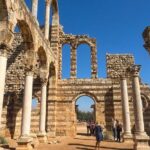
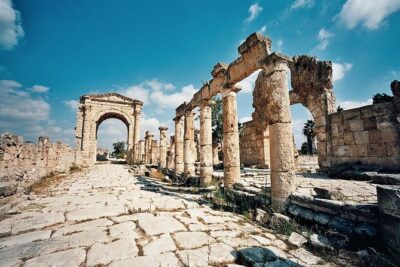
The star of the Tyre portion is Al-Bass, described as the largest and best-preserved example of a Roman hippodrome. This is not just a wall-and-stones stop. It’s a structured complex with major elements that you can actually map in your mind.
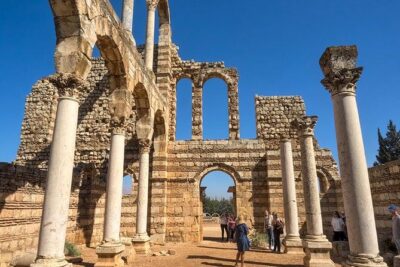
Al Bass includes the principal entrance area, historically the main gateway into town, dominated by a Roman triumphal arch dating from the 2nd century AD. Around it, you’ll find a necropolis on both sides of a wide monumental causeway, plus an aqueduct and the hippodrome itself.
The details are the reason people remember this place:
- A necropolis with several hundred well-preserved sarcophagi
- An intact Roman road
- The aqueduct system as part of the site’s functioning
- The triumphal arch as a strong visual landmark
- The hippodrome dating to the 2nd century, one of the largest of the Roman world
Your time here is about 1 hour. That’s enough if you use it efficiently. Start with the arch and the entrance logic, then move your attention to the road alignment and the necropolis distribution. When you finally reach the hippodrome remains, you’ll understand how the movement of people would have worked in real life.
Tyre Old Souk Heritage Square: quick browsing and snack possibilities
After the big Roman stop, you get a shorter break at Tyre’s Old Souk Heritage square. This is where you can switch from archaeology mode to street-life mode.
You’ll find little shops selling items like gold, copper, vegetables, fish, meat, clothing, and antiques. If you want a quick bite, sandwiches plus foul and hummus are popular options in the souk area.
Because the stop is only about 15 minutes, treat it as a reset, not a full meal plan. If you have energy for browsing, go for small, focused browsing along the most visible lanes. If you’re hungry, prioritize food first. Then, if you want souvenirs, pick items that are easy to carry and don’t require long packaging waits.
Price and value: is $75 a fair deal for this 9-hour route?
At $75 per person, this day trip can be strong value for the right traveler. You’re paying for private, door-to-door transport in an air-conditioned vehicle, plus guidance and local support in Tyre.
Where the value gets most interesting is how it replaces decision-making time. Instead of figuring out where to go, how to order tickets, and how to manage the driving between Sidon, Tyre, and Maghdoucheh, you get a pre-built route with a tour leader. If you’d rather spend your energy on the sights themselves, that’s the real payoff.
There are also a couple things that affect how you budget:
- Lunch is not included
- Admission ticket coverage varies by stop, and some of the standout sites have admission not included, including Crusaders Sea Castle, Soap Museum, and Al-Bass
So you should plan for some extra site-entry costs on top of the base price. The good news is that many other stops are free, so the extra spending is not the whole day.
If you want one practical travel rule: bring some small snacks and water, and plan your meal timing around the fact that not every stop is built for long lunch breaks.
Who this private Sidon and Tyre day trip suits best
This tour makes the most sense if you fit one of these profiles:
- You want a private driver because you prefer not to deal with Lebanese roads on your own.
- You like structure, especially for an archaeology-heavy day with multiple locations.
- You’re happy with a “best of” style day where you get highlights without a full-day deep dive at one site.
It may not be your best fit if you are the type who wants hours to wander without timing pressure. Some stops are brief by design, and you’ll likely wish for more time at the places where you feel most drawn in.
The most important factor is your interest mix. If you care about Roman remains, Phoenician port-city stories, and one hands-on craft stop like the soap demonstration, you’ll probably feel satisfied by the day’s shape.
Should you book Lebanon Unveiled to Sidon and Tyre?
I’d book it if you want a calm, guided, high-coverage day from Beirut. The private transport and door-to-door setup are the selling points, and the combination of Sidon souks, the soap-making workshop, Maghdoucheh’s shrine, and Tyre’s Al-Bass Roman hippodrome gives you a strong “timeline walk” without requiring you to be an expert on the drive.
Skip booking only if you strongly dislike tight stop times, or if you absolutely need lunch included and fixed site costs with no uncertainty. In that case, you’d be better off with a slower plan that lets you build your own pacing.
If you want one day that hits major landmarks with good guidance and minimal stress, this route is a smart choice.
FAQ
How long is the tour?
The tour is approximately 9 hours.
What does the $75 per person price include?
It includes hotel pickup and drop-off, a tour leader, a local guide in Tyre, comfortable private transportation, and an air-conditioned vehicle. A mobile ticket is also included.
Is lunch included?
No. Lunch is not included.
Are admission tickets included for all stops?
Not all stops have admission included. Some stops list admission ticket free, while others have admission ticket not included, including Crusaders Sea Castle, the Soap Museum, and the Al-Bass archaeological site.
Where does the tour start?
The tour start time is 9:00 am, with hotel pickup and drop-off as part of the experience.
Is this a private tour?
Yes. It is a private tour or activity, meaning only your group participates.
Newest Beirut write-ups
- Private Car with English Speaking Driver★ 5.0 · 6 reviews
- Baatara Gorge Waterfall, Jeita Grotto and Byblos Tour★ 4.5 · 6 reviews
- Private Trip to Qadisha Valley, Cedars Forest of God and Baalbek Temples★ 4.5 · 6 reviews
- Private Departure Transfer: Hotel to Beirut International Airport★ 4.0 · 6 reviews
- Private Trip to Qadisha Valley, Bcharri and Cedars of God★ 5.0 · 6 reviews
- PRIVATE city tour of Old Sidon & Historic Tyre★ 5.0 · 3 reviews
- Deir el Qamar – Beiteddine Palace – Chouf Cedars From Beirut★ 5.0 · 7 reviews
- Baalback , Anjar & Chateau Ksara★ 5.0 · 7 reviews
Sidon & Tyre Tours, compared.

Small-Group Adventure Tour to Sidon Tyre & Maghdouche-Day Trip
Read our review →
Sidon, Tyre & Maghdouche Day Trip – With Lunch (4G on Board)
Read our review →
Guided Small-Group Tour to Sidon, Tyre & Maghdouche with Lunch
Read our review →
Small Group Tour to Sidon, Tyre & Maghdouche with lunch
Read our review →
Lebanon tour Sidon & Tyre ruins with pick-up, guide,lunch+entries
Read our review →
Private Guided Tour to Sidon, Tyre and Maghdouche from Beirut
Read our review →Browse the lists this tour appears in