Reviewed · BAALBEK & ANJAR TOURS
Guided Full-Day Private Trip to Cedars, Baalbek and Chateau Ksara
A day like this is interesting because you get three Lebanon moods in one loop: big Roman stone at Baalbek, a real wine stop in the Beqaa Valley, and a slow hike under cedars in the Chouf mountains. It’s the kind of itinerary that makes the country feel connected, not chopped into separate sights.
I especially love how the day handles the hard parts for you. You get hotel pickup and drop-off plus an air-conditioned private vehicle with a driver, so you can focus on the places instead of logistics. My second favorite is the mix of guided time and free wandering, like having a local guide in Baalbek while you still have moments to look, pause, and take photos.
One consideration: lunch is not included, and it’s not a short day. You’ll want to plan around that gap, and bring snacks or cash just in case you end up hungry between stops.
Key Points You’ll Care About

- Private transport and hotel pickup mean fewer stress points in Beirut traffic
- Local guiding at Baalbek helps you read the temple ruins instead of just staring at them
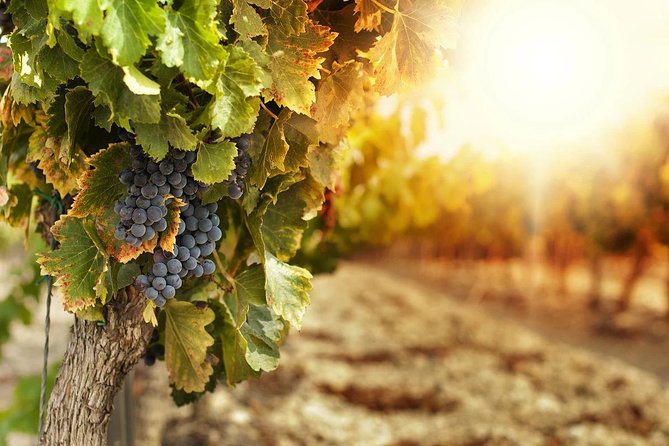
- Wine tasting at Château Ksara gives you a hands-on look at Lebanese wine culture
- Cedar forest walking in Maaser el Chouf is a genuine break from monuments and car rides
- A few stops have free entry, but some key experiences do require tickets
A Full-Day Private Circuit Through Baalbek, Chateau Ksara, and the Cedars

This is a nine-hour, approx. private day trip that starts at 8:30 am in Beirut. You’ll ride out in a comfortable private vehicle with a driver-guide, cross into the Beqaa Valley region, then move into the Chouf hills for nature time.
What makes the route feel good is the rhythm. You get at least two blocks of guided attention early on, then a break that’s more sensory than academic at the winery, and finally a hike that lets your body reset after all the stone-and-sun sightseeing. It’s also a practical format if you’re short on time in Lebanon but want more than one “single-purpose” outing.
Other days out of Beirut to consider
- Jeita Grotto,Harissa&Byblos Full-Day PRIVATE-CAR Trip from Beirut
★ 5.0 · 222 reviews - Private Anjar and Baalbek Tour from Beirut with Departure Ticket
★ 5.0 · 79 reviews - Guided Private Full Day Tour to Baalbek, Anjar and Chateau Ksara
★ 5.0 · 60 reviews
Morning Drive to Baalbek: Roman Giants and a Driver-Guide

The morning starts with pickup from your Beirut hotel. From there, the day shifts from city pace to countryside pace as you head toward Baalbek. Even if you’ve read about the site before, seeing it grow on the horizon as you drive there is a different experience than looking at photos.
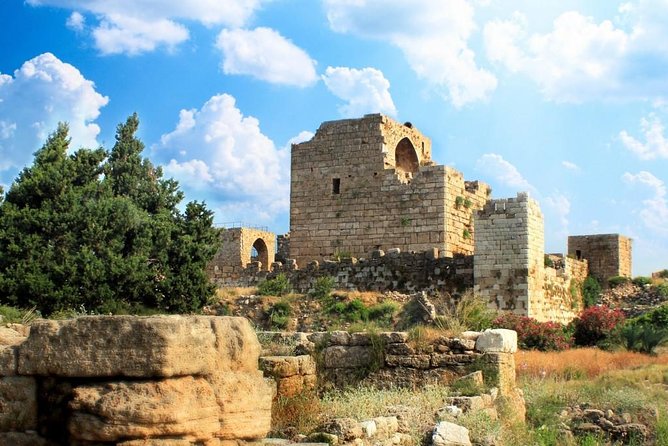
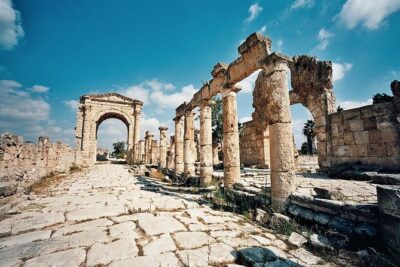
You’ll go with a driver-guide and you’ll have an added local guide once you’re in Baalbek. That matters because Baalbek is not just one ruin. It’s a complex set of layers, with Roman monumental building sitting over an older Phoenician religious landscape. When the guide points out what you’re looking at, the temples make more sense, and you stop thinking of it as random big rocks.
The downside of morning visits to big archaeological sites is the sun. Baalbek can feel exposed, so plan to cover up a bit and wear comfortable walking shoes. You do not need hiking boots, but you do want something with grip.
Entering Baalbek: Temples of Heliopolis and the Big-Picture Story

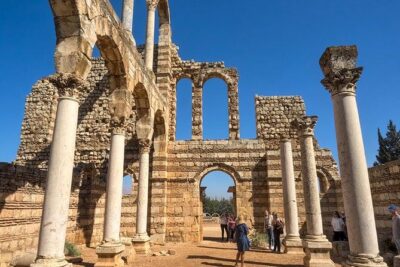
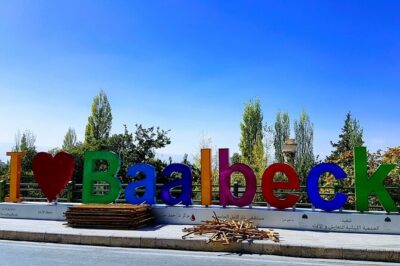
Your first substantial stop is Baalbek, tied to the ancient sanctuary of Heliopolis. During the Hellenistic period it was known as Heliopolis, and during Roman times it kept its religious role. This is one reason Baalbek attracts so many visitors, because the site wasn’t abandoned after one empire. People kept coming, kept worshiping, and kept building.
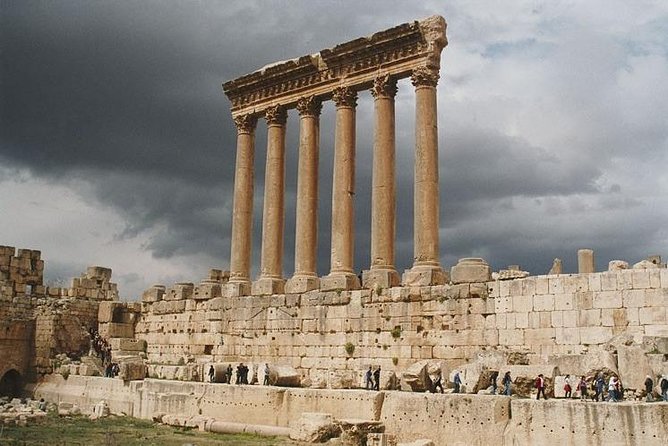
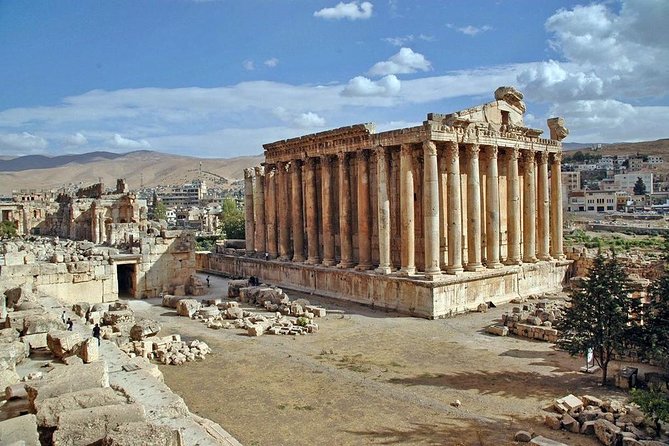
The Roman centerpiece you’re here for is part of the grand temple complex, including the Temple of Bacchus and the Temple of Jupiter. The complex was inscribed in 1984 as a UNESCO World Heritage site, and you can feel why. The structures are colossal, and the engineering scale shows up even if you only spend time looking.
Stop 1 has free admission listed, and you’ll spend about two hours here. That’s enough time to get your bearings, take photos from a few angles, and still have a calm moment instead of feeling rushed.
Practical note: this is not the stop to treat like a quick photo break. Give yourself time to stand back and then walk in closer. The scale changes everything.
Temple Complex Time: Bacchus and Jupiter With Local Context

Your itinerary continues with the temple complex area itself, including those two iconic ruins. This segment is listed at about two hours, and the admission ticket is not included for this stop.
This is where I think the local guide earns the day. The temples at Baalbek are tied to a Romanized triad of deities: Jupiter, Venus, and Bacchus. That’s not just a fun trivia list. It helps explain why so many pilgrims were drawn to the sanctuary. The site functioned as a major religious destination, not a local shrine.
Also, these colossal constructions were built over more than two centuries, and the complex is described as a model of Imperial Roman architecture at its apogee. If you like architecture, this stop feels satisfying because it’s not a single rebuild. It’s a long project, with different phases and an overall sense of planning on a massive scale.
The only drawback I’d flag is cost friction. Since admission for the temples is not included, you’ll want to budget for tickets. If you’re watching your daily expenses, this is the one part where the tour price doesn’t automatically cover everything.
A different spoke from Beirut:
- Guided Small-Group Tour to Baalbek, Anjar and Ksara with Lunch
★ 5.0 · 511 reviews - Guided Small-Group Tour to Jeita, Harissa, Byblos with Lunch
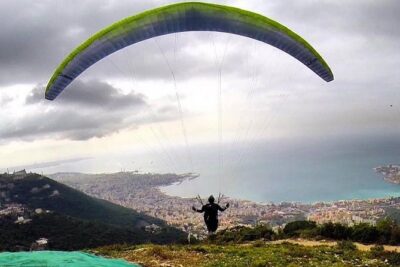
★ 5.0 · 361 reviews - Paragliding Trip Over Lebanon – Jounieh Bay
★ 5.0 · 257 reviews - First Paragliding Club in Lebanon – Since 1992
★ 5.0 · 193 reviews
Sayeda Khawla Mosque Stop: A Sacred Layer in Baalbek

Between the big Roman ruins, you also stop at the Mosque of Sayeda Khawla in Baalbek. This is built on a site believed to be associated with Sayyida Khawla, the daughter of Imam al-Hussein, grandson of the Prophet Muhammad.
The story tied to local belief is that when the caravan of captives of Karbala passed Baalbek, Khawla passed away and was buried there. Whether you’ve heard this tradition before or it’s new to you, this stop adds a human and spiritual layer that shifts the mood from imperial stone to lived faith.
This segment doesn’t include a specific time or ticket note in the details you provided, so treat it as a short, respectful pause within a busy day. It’s a good reminder that Baalbek is not only a museum-like destination. People still attach meaning to the ground beneath their feet.
The Stone of the Pregnant Woman: Quick Stop, Big Monolith Energy

Next comes a smaller, faster-feeling stop: Stone of the Pregnant Woman. It’s described as a worked Roman monolith in Baalbek, and it’s listed as about 30 minutes with free admission.
Even with only a brief time here, you get a clear sense of Roman-scale ambition. Together with another ancient stone block nearby, it is among the largest monoliths ever quarried. The two building blocks were presumably intended for the nearby Roman temple complex, and the details emphasize that the monolithic gigantism was unparalleled in antiquity.
What I like about this stop is that it changes your perspective. You’re not looking at completed walls and columns. You’re looking at the raw power of what it took to quarry, move, and shape huge stone pieces. It’s a nice contrast to the more visually dramatic temple facades.
If you’re the type who wants every minute to count, you can spend those 30 minutes doing a quick “zoom in then zoom out” loop, looking at the stone up close and then from farther away to understand how it fits the bigger site.
Chateau Ksara in the Beqaa Valley: Wine Tasting With a Long Start Date
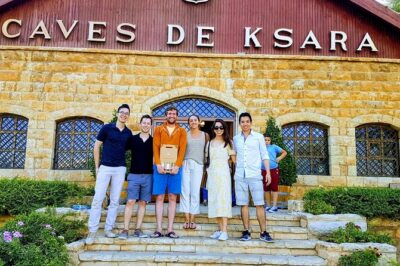
After Baalbek, you move to Château Ksara in the Beqaa Valley. This stop is listed at about one hour, and the admission ticket is not included.
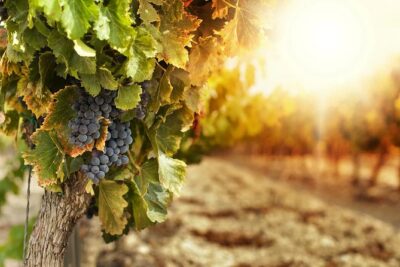
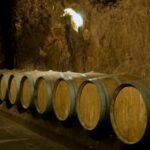
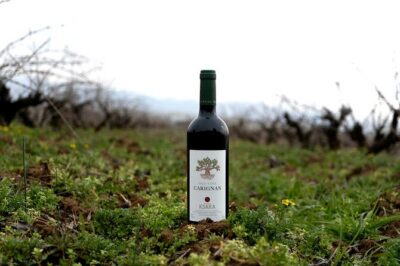
Château Ksara is a major wine name, founded in 1857 by Jesuit priests. The winery is also credited with developing the first dry wine in Lebanon. Production figures are given too, around 3 million bottles annually, and wines are exported to over 40 countries.
Why this matters to your day: wine tasting is often treated as a soft stop, but at a place like Ksara, it can also be a short lesson in how Lebanese wine became internationally connected. You’re not only tasting. You’re stepping into a business with a long timeline, and that context makes each sample feel less random.
A practical note: since the Chateau Ksara ticket is not included, expect an extra payment here. It’s worth it if you enjoy tastings, but if you don’t drink much, you may want to manage your expectations and budget.
Also, you’re in a private-vehicle setup with a driver, which is handy for timing and comfort. Still, keep things relaxed during the tasting so you’re ready for the cedar hike later.
Maaser el Chouf Cedar Nature Reserve: A Real Walk Among Lebanese Cedars

The final big experience is outside the winery zone, in the Chouf District. You’ll visit Maaser el Chouf Cedar Nature Reserve, with a listed time of about two hours. Admission is listed as free.
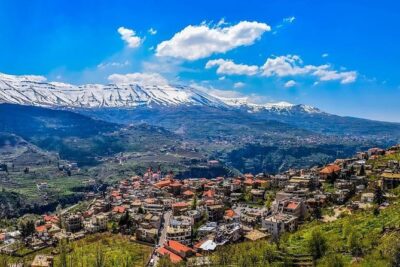
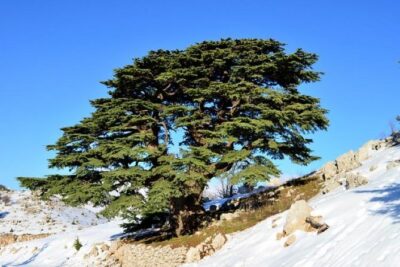
This is one of the most nature-forward parts of the day, and it’s why the tour feels balanced. After Roman stone and wine tables, you get walking time in a forest setting, and the focus is on Lebanon’s national trees, the cedars.
The reserve is described as part of the Al-Shouf Cedar Nature Reserve, which is recognized as a UNESCO biosphere reserve in 2005. The details also mention the reserve’s large size, 550 km², described as nearly 5.3% of Lebanese territory and covering 70% of Lebanon’s green area. Even if those numbers don’t mean much to you on the spot, they help explain why the cedars here are not an ornamental stop. This is a substantial protected area.
What I recommend: wear shoes you can walk in comfortably for an hour or so. Bring sun protection, since nature hikes still get bright. And if you’re someone who likes photos, the cedar setting gives you shots that don’t look like every other “ruins day” selfie.
If you prefer very structured hikes, this part might feel a bit more open-ended because “walk in the cedar forest” suggests movement rather than a fixed viewpoint tour. You’ll likely appreciate the breathing space either way.
Price and Value: Is $100 a Good Deal for This Mix?
At $100 per person for a private full-day trip, you’re paying for three things more than just entrance fees.
First, you’re paying for private, air-conditioned transportation with pickup and drop-off in Beirut. That’s the practical backbone. Getting to Baalbek and then switching to Chouf is exactly the kind of day that can go sideways if you rely on public transport.
Second, you’re paying for guidance quality in the places that need it. The tour includes a tour leader plus a local guide in Baalbek, which is the part where knowledge really affects how much you enjoy the ruins.
Third, you’re paying for a balanced set of experiences: Roman monuments, a structured wine stop, and a cedar hike. The value is strongest if you actually want all three. If you only care about one, you might feel the day is stitched together more than necessary.
Remember: lunch is not included. Also, some entries are not included, including the Baalbek temple complex ticket and the Château Ksara ticket. You do get some free entries, like the initial Baalbek stop and the Stone of the Pregnant Woman, plus free admission at the cedar reserve. But the day will still have extra spend depending on what you choose inside those ticketed areas.
So, the deal is best for: couples, families (as long as your group is okay with a 9-hour day), history-and-nature fans, and anyone who wants a stress-free day out of Beirut.
Who This Tour Fits Best (And Who Might Want to Skip It)
This tour is a strong match if you want a full-day feel without having to plan every leg yourself. I’d also say it works well if you like variety. You’re not bouncing between only ruins or only scenery. You’re pairing them in a way that keeps your eyes and your legs busy.
It can be a great fit for:
- People staying in Beirut who want countryside scenery without the hassle
- Travelers who enjoy Roman sites when someone explains what you’re seeing
- Wine lovers who want a real tasting stop at a well-known Beqaa winery
- Anyone who wants a cedar forest walk rather than just a short photo stop
It might be less ideal if:
- You hate long car days, since it’s approx. 9 hours
- You budget very tightly, because some tickets and lunch are not included
- You want a strictly museum-style itinerary with no sacred stops and no hiking
Should You Book This Cedars, Baalbek, and Ksara Day Trip?
I’d book this if you want an efficient, private day that blends the three Lebanon experiences people travel for: Roman monuments, Lebanese wine culture, and a cedar nature walk. The standout strength is the combination of local guiding at Baalbek and the fact that you still get time to see the place at your own pace.
If your travel style is comfort-first and you prefer a driver-guide to handle the road, this is exactly that. If you’re the type who enjoys reading ruins, the Baalbek time with local context is the heart of the day. And if you want the day to end with something calm and natural, the Chouf cedar reserve hike is the perfect reset.
Yes, budget for extra items. Lunch is not included, and some key admissions are not covered. Still, the overall structure and private transport make it feel like good value for a full-day outing.
FAQ
What time does the tour start, and how long is it?
The tour starts at 8:30 am and lasts about 9 hours (approx.).
Is hotel pickup and drop-off included?
Yes. Hotel pickup and drop-off are included, along with air-conditioned private transportation.
Is this a private tour?
Yes. It is described as a private tour/activity, meaning only your group participates.
Is lunch included?
No. Lunch is not included.
Do I need to pay for admission at Baalbek?
Some admission is free and some is not. Baalbek has a stop listed as free admission, but the temples of Baalbek stop shows admission not included. The Stone of the Pregnant Woman is listed as free.
Is wine tasting at Château Ksara included?
Château Ksara is listed as 1 hour, but the admission ticket is not included, so you should expect an extra cost for that stop.
Is admission included for the cedar reserve?
Maaser el Chouf Cedar Nature Reserve is listed with free admission, and the stop is about 2 hours.
What is the cancellation policy?
Free cancellation is available. You can cancel up to 24 hours in advance for a full refund. If you cancel less than 24 hours before the start time, the amount paid is not refunded.
Newest Beirut write-ups
- Private Car with English Speaking Driver★ 5.0 · 6 reviews
- Baatara Gorge Waterfall, Jeita Grotto and Byblos Tour★ 4.5 · 6 reviews
- Private Trip to Qadisha Valley, Cedars Forest of God and Baalbek Temples★ 4.5 · 6 reviews
- Private Departure Transfer: Hotel to Beirut International Airport★ 4.0 · 6 reviews
- Private Trip to Qadisha Valley, Bcharri and Cedars of God★ 5.0 · 6 reviews
- PRIVATE city tour of Old Sidon & Historic Tyre★ 5.0 · 3 reviews
- Sidon, Tyre, Maghdouche★ 5.0 · 7 reviews
- BEYOND BEIRUT★ 5.0 · 7 reviews
Baalbek & Anjar Tours, compared.

Guided Small-Group Tour to Baalbek, Anjar and Ksara with Lunch
Read our review →
Anjar, Baalbek & Ksara Day Trip – With Lunch (4G on Board)
Read our review →
Private Anjar and Baalbek Tour from Beirut with Departure Ticket
Read our review →
Guided Private Full Day Tour to Baalbek, Anjar and Chateau Ksara
Read our review →
Lebanon tour Baalbek ruins & Ksara w/pick-up, lunch,guide+entries
Read our review →
Baalbek Temples & Ksara Caves w/pick-up,guide, entries+lunch
Read our review →
Small Group Tours to Baalbek, Anjar & Chateau Ksara with lunch and Tickets
Read our review →Browse the lists this tour appears in