
Reviewed · CEDARS & QADISHA VALLEY TOURS
Private Trip to Qadisha Valley, Bcharri and Cedars of God
A private day trip like this feels interesting because it stitches together big faith sites, legendary literature, and Lebanon’s cedar symbol, all in one mountain loop. I like that it is door-to-door from your Beirut hotel, and I like how the scenery keeps shifting between rock-cut monasteries and pine-forested valleys. One thing to consider: it’s a fast full-day route, so if you want long, slow wandering, you may wish there was more time at each stop.
The best part for me is the combination of Qadisha Valley and Bcharre. You get the rare feeling of seeing early Christian monastic life carved into a rugged setting, then you switch gears to Khalil Gibran, one of Lebanon’s best-known creative voices. I also appreciate that the tour keeps the pace comfortable by using a private vehicle and a guide who can adapt.
My only caution is simple: lunch is not included, and the day runs about 8 hours. If you’re the type who hates “hangry tourism,” plan ahead so you are not searching for food at the wrong time, especially in mountain areas.
Key Highlights You’ll Actually Feel During the Day
- Front-door pickup and drop-off in Beirut saves time and stress, so your day starts sightseeing, not logistics.
- Qadisha Valley’s cave and monastery sites connect early Christianity to a truly rugged setting.
- Bcharre’s cedar connection runs from Lebanon’s cedars to the town’s longstanding skiing tradition.
- Khalil Gibran Museum is more than a photo stop, with paintings and drawings plus items from his studio life.
- Cedars of God gives you the sense of a living national icon, with 375 cedar trees.
- Deir Qozhaya sits high in the Qozhaya valley, where the monastery story reaches back to the 4th century.
A Mountain Day With Cave Monasteries and Lebanon’s Cedars
This is the kind of tour that works when you want Lebanon to feel real, not staged. You’re moving through mountain corridors where stone monasteries cling to the cliffs, then you switch to a forest that has been valued for centuries, even cited in the Bible.
I also like that the day is structured enough to feel complete, but private enough that your guide can steer the timing. You can focus on the parts that matter to you, like the monastery carvings or the Gibran angle, without being shoved into a crowd.
Other days out of Beirut to consider
- Jeita Grotto,Harissa&Byblos Full-Day PRIVATE-CAR Trip from Beirut
★ 5.0 · 222 reviews - Private Anjar and Baalbek Tour from Beirut with Departure Ticket
★ 5.0 · 79 reviews - Guided Private Full Day Tour to Baalbek, Anjar and Chateau Ksara
★ 5.0 · 60 reviews
How the 8:30 AM Route Flows: Mseilha Fort, Qadisha Valley, Bcharre, Cedars, Deir Qozhaya
The tour starts at 8:30 am in Beirut and runs about 8 hours total. You’ll use a comfortable air-conditioned private vehicle, with a professional guide and pickup and drop-off at your hotel.
The order matters because it builds momentum. You start with a fortification viewpoint, then head into the monastic region, loop through Bcharre for Gibran and the cedar town feel, spend time at the Cedars of God, and finish with Deir Qozhaya.
Mseilha Fort: Fakhreddine II’s Watchpoint Over the River Road
Before you even hit the monasteries, you get a dose of northern Lebanon’s strategic past. Mseilha Fort was built in the 17th century by Emir Fakhreddine II to guard the route between Tripoli and Beirut.
What I think is worth your attention here is the engineering detail. The fort sits on a long narrow limestone rock near the Nahr el-Jawz River, and its walls use small sandstone blocks quarried from the nearby coast. It’s the kind of stop that gives you context for why people settled and fought in these mountain passages.
Practical tip: this is a quick stop, so keep your camera ready but also take 60 seconds to look for the sightlines, the fort is meant to watch the route.
Qadisha Valley Monasteries: Walking the Christian Cave Tradition
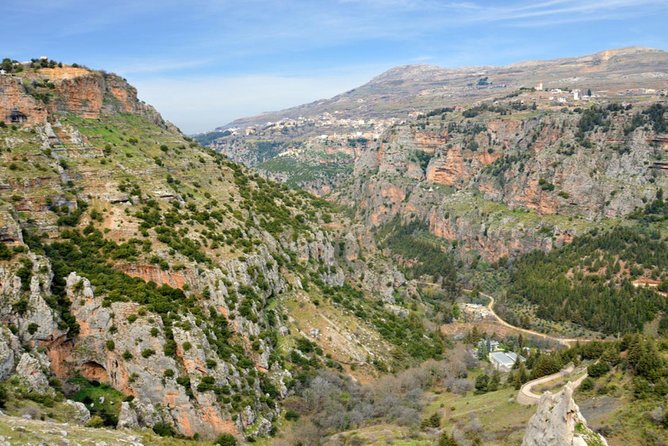
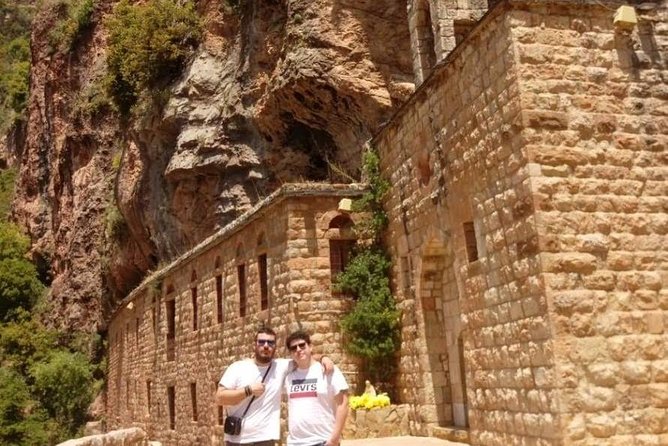
Now the main event: Qadisha Valley. This area is tied to some of the first Christian monasteries in the world, with monasteries and caves set in a rugged setting that feels carved by nature.
What you’ll be looking at are the caves, monasteries, and cultivated terraces that connect to early phases of Christianity. The sites are old, but the view is what makes them hit. You’re not just reading about history, you’re standing where faith communities lived with a demanding landscape.
Time-wise, you have about 10 minutes here, and the admission is listed as free. That short window means you should go in with a game plan. If you want the best experience, prioritize what you want to see first: the carved monastery areas versus the valley views.
A different spoke from Beirut:
- Guided Small-Group Tour to Baalbek, Anjar and Ksara with Lunch
★ 5.0 · 511 reviews - Guided Small-Group Tour to Jeita, Harissa, Byblos with Lunch
★ 5.0 · 361 reviews - Paragliding Trip Over Lebanon – Jounieh Bay
★ 5.0 · 257 reviews - First Paragliding Club in Lebanon – Since 1992
★ 5.0 · 193 reviews
Bcharre, City of Churches, and the Cedar Ski Past
Next you’ll reach Bcharre, a town famous for two things: its churches and its creative son, Khalil Gibran. The town is sometimes described as the city of churches, and it is home to around 37 churches.
There’s also a cedar-to-sport connection here that most visitors miss. Bcharre is associated with the Cedars Ski Resort, and you can link that to Lebanon’s first ski lift, built in 1953. Even if you are not skiing, the idea that winter sports grew around the cedar slopes helps you understand why locals think of this region as more than summer scenery.
In the schedule, Bcharre is a 30-minute stop and admission is free. Use that time to soak up the village energy, then get strategic with your next hour so you don’t feel rushed at the museum.
Kahlil Gibran Museum in Bcharre: Art, Letters, and a NY Studio
If you care about art and ideas, don’t treat the Gibran Museum as a quick restroom stop. It’s dedicated to Khalil Gibran, the Lebanese writer, philosopher, and artist born in Bcharre.
The museum used to be the Monastery of Mar Sarkis, which adds a quiet layer of meaning. Inside, you’ll find 440 original paintings and drawings of Gibran, plus his tomb information and parts of his life such as his studio furniture and belongings from when he lived in New York City, along with private manuscripts.
Time allocation is about 30 minutes, and admission is not included. If you want to get your money’s worth here, pick a few themes you care about before you go. For example, look at how the art and writing connect to his identity, rather than trying to absorb everything at once.
The Cedars of God Forest: 375 Trees, Bible Echoes, and Lebanon’s Flag Symbol
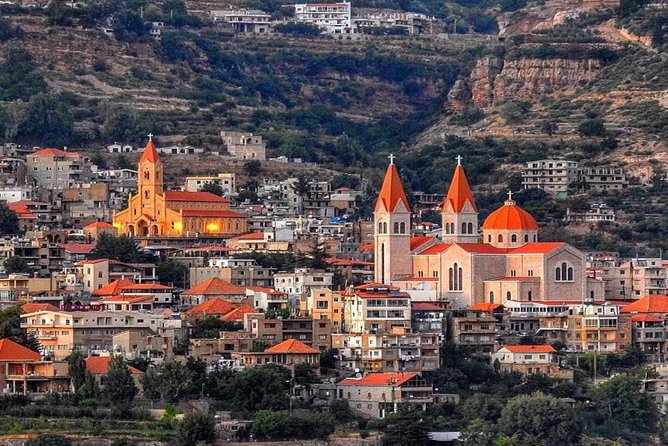
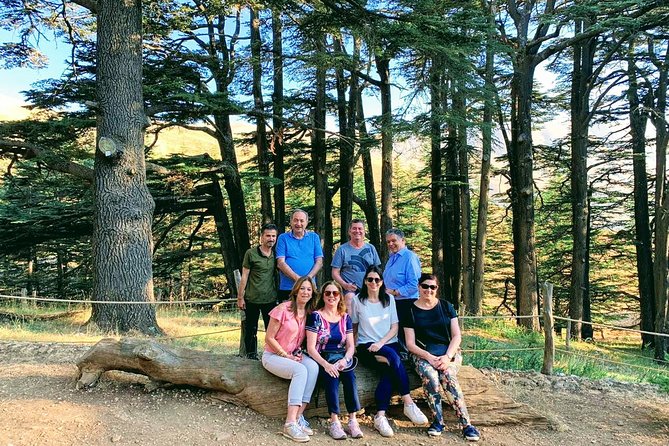
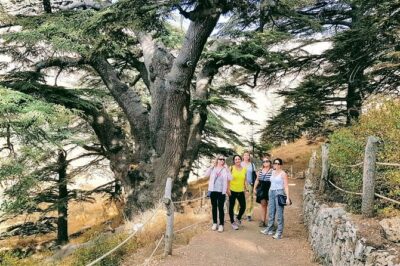
Then you get to the reason many people make this trip. The Cedars of God forest has 375 trees and is described as the last remains of antique forests where cedar still grows.
This is not just a pretty walk. Cedars were highly prized for ancient construction, including religious buildings, and they are mentioned 103 times in the Bible. Also, cedar is a national symbol and appears on the Lebanese flag, so you’re seeing something that matters culturally, not only visually.
You’ll have about 45 minutes, and admission is free. If you are visiting when weather is cooler, you might encounter snow patches near the area. One recent experience included snow still on the ground at the cedars, so plan for traction in your shoes if you’re traveling in shoulder or winter seasons.
What I recommend: take a slow loop and then stop for a couple of minutes just to look up. The scale only hits when you break your usual photo routine.
Deir Qozhaya Monastery at 950 Meters: Hermits and Ruins
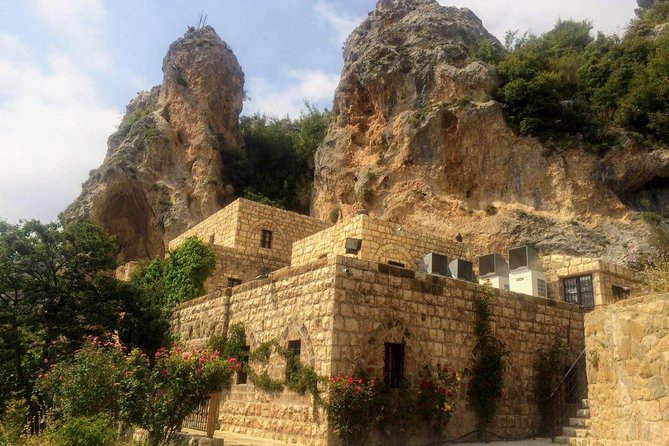
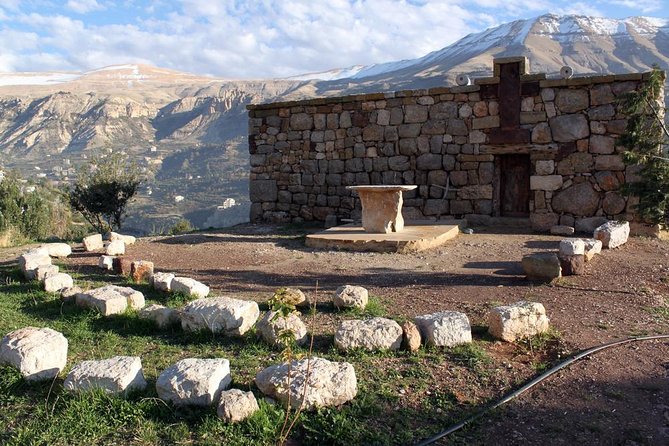
The day ends at Deir Qozhaya, the Monastery of Saint Anthony the Great. It sits about 950 meters above sea level in the Qozhaya valley.
This stop works because the region around it explains the monastery’s mood. Pine and oak trees cover the hills, and fruit trees grow across the valley that extends toward the Qannubin valley, connecting back to the larger Qadisha Valley. The setting supports the story of eremitic life and a search for holiness.
Historically, scholars suppose the monastery began as early as the start of the 4th century, with hermits occupying it. It was looted, set on fire, and razed many times, but vestiges remain dating back to the 7th century.
You’ll have about 30 minutes, and admission is listed as free. The time is short, but the height and the view make it memorable fast. If you can, ask your guide for the quick “storyline” before you start walking so you know what you are looking at.
Price and Value: What $75 Per Person Buys You in Real Time
At $75 per person, this tour is priced for a full, guided day rather than a cheap bus ride. What you get for that money is the combination of front-door pickup and drop-off in Beirut, private transportation, an air-conditioned vehicle, and a professional guide.
That is usually where value shows up. A self-guided day in this region requires timing, driving competence on mountain roads, and enough planning to avoid wasting hours. Here, you buy back time and you get interpretation for sites that are easy to overlook if you show up without context.
Two small realities to keep in mind:
- Lunch is not included, so factor in your own meal plan.
- Most sites are quick, with time windows like 10 minutes at Qadisha Valley and 30 to 45 minutes elsewhere. If you love slow travel, you might treat this as a strong “orientation day” rather than a deep study.
The Guides Matter: Albert, Hassan, Natasha, and Kasem as Examples
A private tour lives or dies by the human voice behind it. In the experiences I’ve seen with this operator, the guides are consistently praised for their attitude, timing, and how they shape the day.
For example, Albert is noted for being on time, driving well, and using good humor while sharing history. He is also credited with caring attention when food timing got tight, which tells you something about his priority list. If you get a guide like Albert, you’ll probably feel “taken care of” without it becoming stiff or staged.
Hassan stands out for keeping things relaxed and flexible, with enough time to see what you want. Natasha is described as kind and thoughtful, the type who answers questions and seems to genuinely love Lebanon. And Kasem is praised for being excellent, kind, and well informed, which again points to a practical style.
What you can do: ask your guide what they recommend you prioritize in each stop, even if you only have a few minutes. A good guide will help you pick what matters and then help you notice it.
What to Bring (So You’re Comfortable at Every Stop)
Because this is a mountain day with religious sites and outdoor sections, your comfort matters.
Bring:
- Comfortable walking shoes with grip (mountain surfaces can be uneven)
- A light layer (temperatures can shift between Beirut and the higher valleys)
- Water for the drive and the gaps between sites
- A snack plan for before lunch since lunch is not included
- Your photo battery and a small plan for which stop you want to photograph most
Also, consider that some monastery areas may involve steps or uneven footing. Even if the stops are short, you’ll move enough that footwear matters more than fashion.
Who This Tour Fits Best
This is a great fit if you want an efficient, guided sampler of northern Lebanon that still feels personal. It suits couples, friends, and small groups who care about cultural context and want to avoid complicated logistics.
It’s also a strong choice if you like mixing genres in one day: early Christian monastic architecture, a major Lebanese literary figure, and a nature icon that is tied to national identity.
If you are traveling with kids, the private vehicle and shorter stop windows can work, but you should expect walking and time on stone pathways at the monastery sites.
Should You Book This Private Tour?
Book it if you want a guided, door-to-door full-day that connects Qadisha Valley, Bcharre, and the cedars without making you plan the timing yourself. The combination of monastery sites plus Khalil Gibran plus the Cedars of God is exactly the kind of route that feels efficient and meaningful, not repetitive.
Skip it or adjust your expectations if you want long stays and slow wandering. With limited minutes at multiple stops, this is best for people who like seeing a lot and then deciding what they want to return for later.
FAQ
How long is the Private Trip to Qadisha Valley, Bcharri and Cedars of God?
The tour lasts about 8 hours.
What time does the tour start?
It starts at 8:30 am.
Where does the tour take place?
It runs in the Lebanon region from Beirut, including Qadisha Valley, Bcharre, Cedars of God, and Deir Qozhaya, with an extra stop at Mseilha Fort.
Is pickup and drop-off from my Beirut hotel included?
Yes, hotel pickup and drop-off from Beirut are included.
What’s included in the price?
Included items are hotel pickup and drop-off, comfortable private transportation, a professional guide, and an air-conditioned vehicle.
Is lunch included?
No, lunch is not included.
Are admission tickets included for all stops?
Admission is free for Qadisha Valley, Bcharre, Cedars of God, and Deir Qozhaya. The Kahlil Gibran Museum admission is not included.
What is the cancellation window for a full refund?
You can cancel for a full refund up to 24 hours before the experience’s start time. If you cancel less than 24 hours before, the amount paid is not refunded.
Newest Beirut write-ups
- Small Group Tours to Jeita Grotto and Byblos with tickets★ 5.0 · 3 reviews
- Small-Group Tour with Lunch to Jeita Grotto, Byblos and Harissa★ 4.5 · 3 reviews
- Small-Group Tour to Sidon, Tyre and Maghdouche with Lunch and Tickets★ 4.5 · 3 reviews
- Small-Group Tour with Lunch to Baalbek, Anjar and Ksara★ 5.0 · 3 reviews
- Beirut to Qadisha Valley, Bcharri & Cedar: Daily Tours with Lunch★ 4.5 · 3 reviews
- Beirut to Sidon, Tyre and Maghdouché: Daily Tours with Lunch★ 5.0 · 3 reviews
- Private Tour: Tyre, Sidon and Maghdouche Day Trip from Beirut★ 4.5 · 3 reviews
- Exploring Beirut’s Past: A Private Guided Historical Tour★ 5.0 · 3 reviews
Cedars & Qadisha Valley Tours, compared.
Guided Small-Group Tour to Qadisha, Bcharee & Cedars with Lunch
Read our review →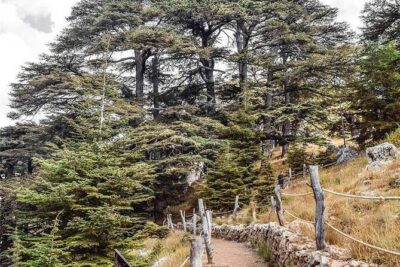
Cedars of Lebanon, Qozhaya, & Bcharre – With Lunch (4G on Board)
Read our review →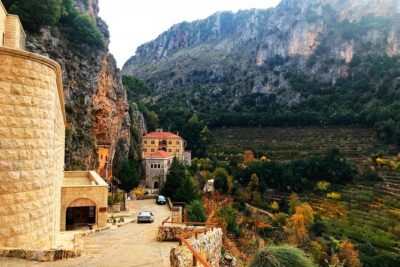
Small-Group Tour with Lunch to Qadisha Valley, Bcharre and Cedars
Read our review →
Cedars Shouf & Beiteddine w/pick-up, guide, entries+lunch
Read our review →
Guided small group to Cedars Reserve & Beiteddine w/lunch+entries
Read our review →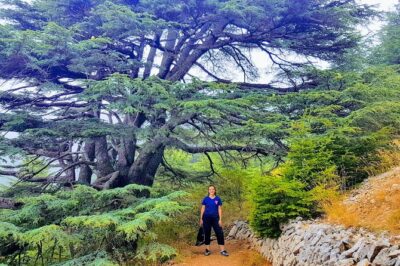
Guided Full-Day Private Trip to Cedars, Baalbek and Chateau Ksara
Read our review →
Small Group Tours to Qadisha Valley, Bcharre and Cedars with lunch and all fees
Read our review →Browse the lists this tour appears in