
Reviewed · HALF-DAY
Half-Day Private Panoramic Tour of Beirut
This private panoramic half-day through Beirut is interesting because it is built around your interests, not a rigid script. You get picked up from your hotel, roll through the city’s big landmarks, and then you are done in time to enjoy the rest of your day your way.
I especially like two things: customization that lets you steer the route, and the way the stops fit together, from seaside drama at Raouche to the deep downtown layers around Martyr’s Square. One practical bonus I noticed from a past guide experience is that Albert, a professional and flexible guide, kept the route moving while still adjusting to what the group actually wanted to see.
The main drawback is simple: half-day time. You will hit major sights, but you cannot expect full, slow dives into each neighborhood, and lunch is not included.
Key Highlights You Should Know Before You Go
- Hotel pickup and drop-off so you do not waste time figuring out transport
- A flexible route where you can tailor the day around your group’s interests
- Free-entry stops listed across the main attractions on the route
- Seaside to downtown in one sweep (Raouche, Corniche, Zaytouna Bay, and the core historic center)
- A striking war landmark visit at the abandoned Holiday Inn site tied to the Battle of the Hotels
- A guide who manages logistics so you spend your energy looking, not planning
Why This Private Half-Day Panorama Works If You Want Beirut Without Stress
If Beirut is on your list and your time is tight, this kind of private half-day makes a lot of sense. You get a set of must-see anchors across the city, but you can nudge the order and emphasis depending on what your group cares about most. That flexibility matters, because Beirut is a place where the mood changes fast, from sea views to downtown squares to sacred buildings.
I like that the tour does not pretend you will see everything. It is built to get you oriented, show you recognizable landmarks, and leave you with enough energy to continue on your own afterward.
One more thing I appreciate: you are not managing the details. Your guide and driver handle logistics in an air-conditioned private vehicle, which is a real comfort when you are moving between areas.
Other days out of Beirut to consider
- Jeita Grotto,Harissa&Byblos Full-Day PRIVATE-CAR Trip from Beirut
★ 5.0 · 222 reviews - Private Anjar and Baalbek Tour from Beirut with Departure Ticket
★ 5.0 · 79 reviews - Guided Private Full Day Tour to Baalbek, Anjar and Chateau Ksara
★ 5.0 · 60 reviews
Getting Around With Hotel Pickup and a Dedicated, Air-Conditioned Ride
The start is straightforward: round-trip transfers from your Beirut hotel, plus a comfortable private vehicle. That sounds basic, but it is the whole point of a private tour. You eliminate the guesswork of where to meet, how to get there, and how long it takes to reposition between stops.
Because it is private, you can also expect fewer delays and more direct pacing. If your group wants to linger near a view or move along faster, the guide can adapt. In the one experience where I heard the guide Albert singled out, the key praise was how he stayed professional, engaging, and flexible throughout, and how he tailored the day to the group’s priorities.
Raouche and Al Manara Corniche: Pigeon Rocks and Mediterranean Views
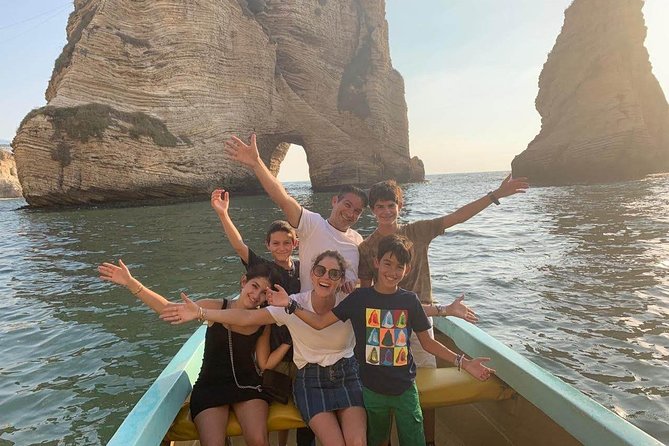
Your tour’s seaside opening takes you to Pigeon Rocks, also called the Rock of Raouché. These two huge rock formations sit like sentinels at Beirut’s western tip, and the setting is part of the show, with dramatic seaside surroundings that make the rocks easy to recognize from photos and viewpoints.
You get about 15 minutes here, and the good news is that admission is listed as free for the stop. Short timing can be a plus if you just want the iconic moment. It is long enough to get your bearings and snap a few photos without turning the whole tour into a waiting game.
Next comes the Al Manara Corniche, the famous waterfront promenade stretching from the Ramlet al Bayda area to Saint George marina. It is lined with palm trees and gives you classic Mediterranean Sea views, plus Mount Lebanon’s summits on the eastern side. You are looking at a very Beirut combination, sea on one side, mountain silhouettes on the other. Even if you do not plan to spend hours here later, it helps you understand the city’s geography in minutes.
Zaytouna Bay and the Abandoned Holiday Inn War Landmark
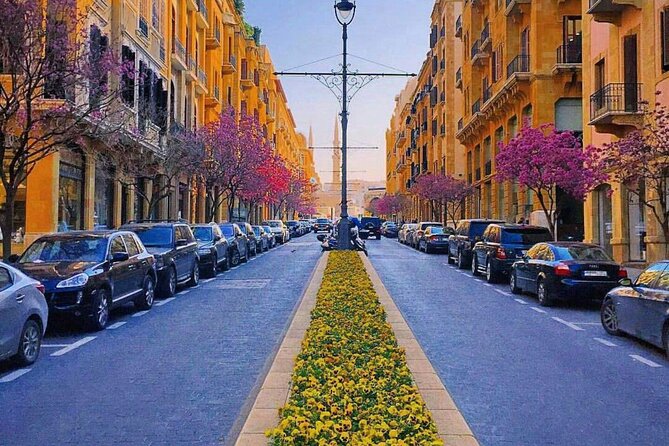
After the rocks and promenade, you head to Zaytouna Bay, described as Beirut’s finest leisure destination. This is a newer waterfront promenade area with shops and restaurants, so it works as both a sightseeing stop and a hint of where people go to relax.
You get about 15 minutes, and admission is listed as free. That quick timing is ideal if you want the vibe without turning your schedule into a restaurant search.
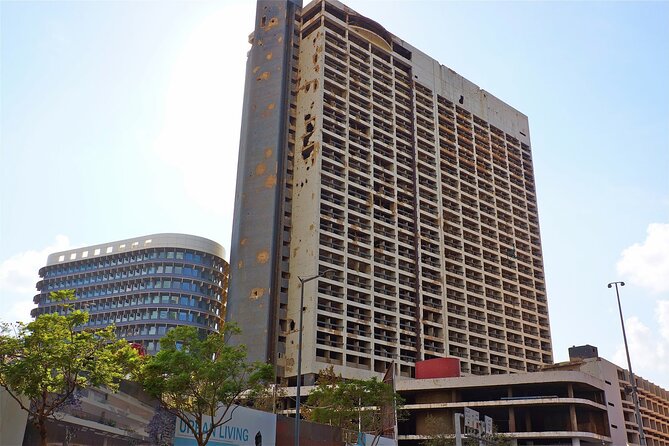
Then you pass one of the most haunting stops on the route: the abandoned Holiday Inn Hotel, a war landmark that remains untouched and empty decades after the Lebanese civil war began in 1975. The hotel was built between 1971 and 1974 during an economic boom, then it became part of a longer period of fighting known as the Battle of the Hotels.
The details here matter because the Holiday Inn is tied to the wider story of luxury hotels caught in the conflict, including references to the Phoenicia hotel and the scale of fighting, with more than 25,000 combatants involved across the struggle to control key properties. You are not meant to treat this like a casual attraction. It is a reminder, physical and still, of what war can do to places that used to feel permanent.
A different spoke from Beirut:
- Guided Small-Group Tour to Baalbek, Anjar and Ksara with Lunch
★ 5.0 · 511 reviews - Guided Small-Group Tour to Jeita, Harissa, Byblos with Lunch
★ 5.0 · 361 reviews - Paragliding Trip Over Lebanon – Jounieh Bay
★ 5.0 · 257 reviews - First Paragliding Club in Lebanon – Since 1992
★ 5.0 · 193 reviews
Martyr’s Square to Place de l’Etoile: Beirut’s Downtown Stage
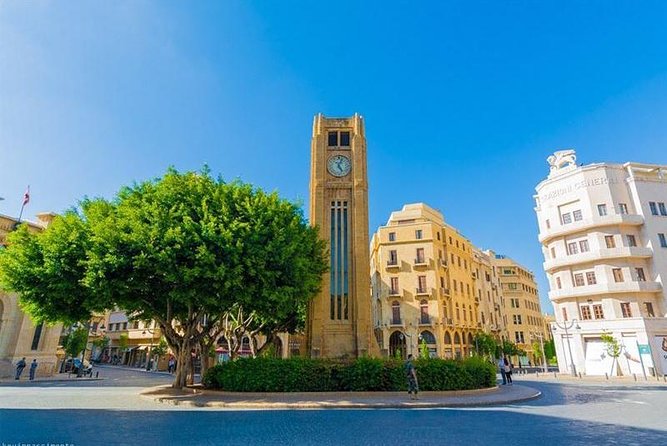
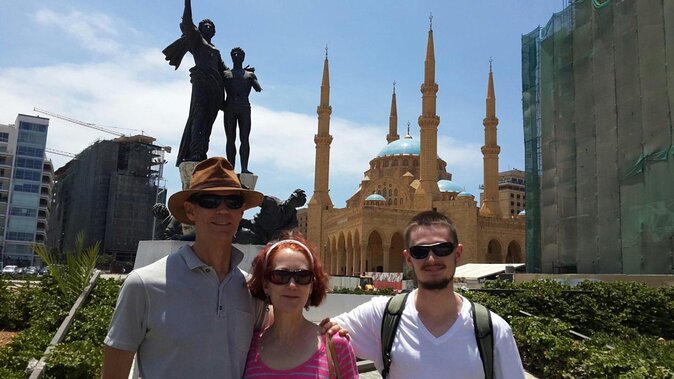
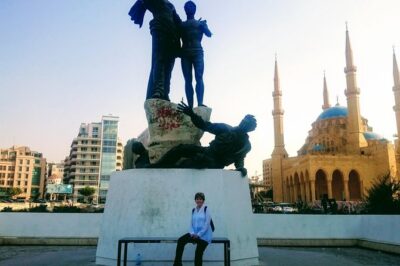
Downtown Beirut shows up next at Martyr’s Square, the central square in the historic core. The square has been known as Al Burj and Place des Cannons, and its name today connects directly to World War I executions. It was named after the 6 May 1916 executions by the Ottomans of Lebanese nationalists ordered by Jamal Pasha.
You will spend about 10 minutes here, and admission is listed as free. A short stop works because the square is open-air and you can take it in quickly. Still, it is worth paying attention to what the square tells you about Beirut’s modern identity: layers of power, changing names, and public space that holds memory.
A few minutes later, you reach Place de l’Etoile, also known as Nejme Square. This is the center of the Downtown area, with Lebanese Parliament buildings and surrounding institutions like two cathedrals and a museum, plus cafés and restaurants. One standout detail is the 1930 four-faced Rolex clock, a recognizable icon tied to the square’s architecture. You will spend about 10 minutes here, and admission is listed as free.
If you like cities where the visual cues make history feel real, this is the part of the tour that helps you connect the dots between politics, architecture, and daily life.
Mosque Stops That Show Lebanon’s Layered Timeline
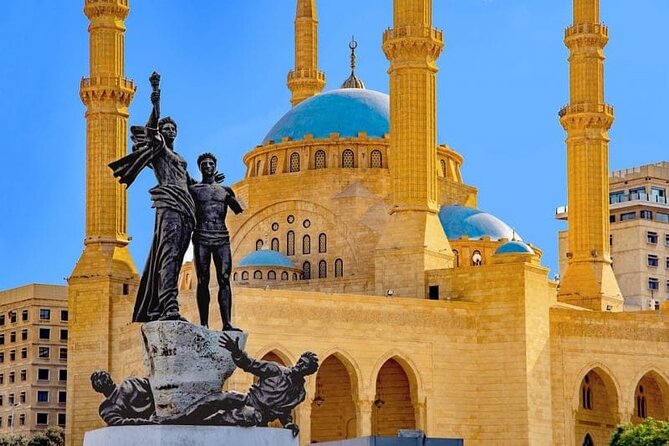
Beirut’s religious architecture can be a fast way to understand how layers of time overlap in one city. Your route includes two major mosque stops that each carry complex backstories.
First is the Mohammad Al-Amin Mosque, often called the Blue Mosque. It is the biggest mosque in Lebanon and sits near Martyr’s Square. Opened in 2008, it has four minarets reaching 65 meters, and it features multiple domes. The domes use light blue tiles, giving the building its signature look. You get about 15 minutes, and admission is listed as free.
Next is the Al-Omari Grand Mosque. This one moves through centuries in a single stop. Built in 635 AD, it is associated with Omar Bin El Khattab. Later, it was converted into the Church of Saint John by the crusaders in the 12th century. Then the Mamluks retransformed it into the city’s Grand Mosque in 1291. During the civil war it was damaged, and refurbishment was completed in 2004. You spend about 15 minutes here, and admission is listed as free.
These two stops together are useful because they show modern presence on one side, and deep historical transitions on the other. Even if you are not trying to study architecture, the contrast helps you understand why Beirut feels layered.
The Greek Orthodox Cathedral of Saint George in the City Center
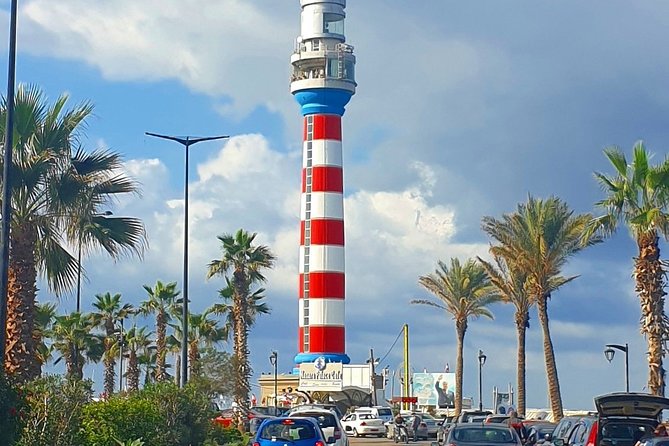
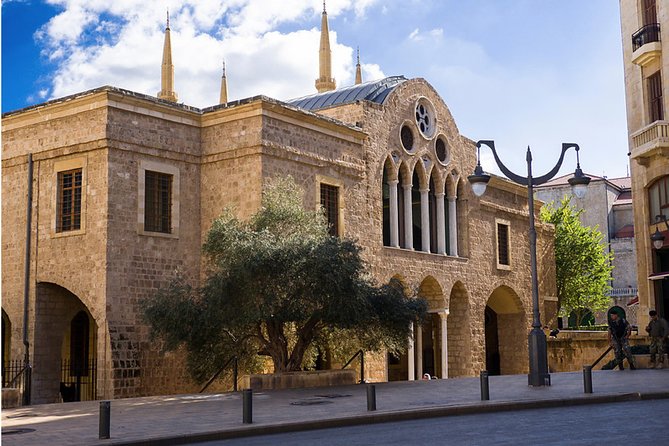
Your tour also includes the Greek Orthodox Cathedral of Saint George, the seat of the Greek Orthodox Metropolitan bishop for Beirut and its dependencies. It is described as the oldest church in Beirut and one of the oldest in the region, right in the heart of the city center.
You get about 15 minutes, and admission is listed as free. The cathedral’s location goes back to a first Christian temple on the site to the mid sixth century AD, and it is closely associated with Beirut’s famous law school. For a visitor who wants a sense of how religion and education intersect in Beirut’s downtown core, this stop gives that connection quickly.
Beirut Souks and Roman Baths: Where the Day’s Story Shifts Back to Everyday Life
After the historic downtown focus, the tour turns to places where the city feels more practical and everyday.
Beirut Souks is next, a commercial district in the city center with over 200 shops and 25 restaurants and cafés, plus an entertainment center and a cinema complex. The tour gives you about 10 minutes, and admission is listed as free. It is not the kind of stop where you need to buy anything to get value. Use it to get your bearings, spot where you might return later, and note the kind of atmosphere you like for the rest of your day.
Then you end at the Roman Baths, the Roman Berytus baths, described as the largest outdoor sight in downtown Beirut. These were discovered in 1968 to 1969 and underwent major renovation in the mid 1990s.
The Roman Baths story also connects to Beirut’s seismic past. The first bath complex was created in the early first century under Augustus, and an earthquake in 551 AD destroyed the baths. Today, you can see how ancient traditions are reflected in the site, and one of the baths is used as an artistic performance and concert space. You will spend about 15 minutes here, and admission is listed as free.
This stop is a nice way to cap the tour. You start at dramatic rocks by the sea, move through modern promenades and war scars, then you return to downtown’s mix of sacred spaces, commerce, and ancient ruins.
Price and Logistics: Is $75 a Good Value?
At $75 per person for a half-day private tour, you are paying for the mix of things that usually cost time and coordination. You get:
- Round-trip transfers from your hotel
- A private, air-conditioned vehicle
- Professional guides handling logistics
- A route that combines multiple major sights across Beirut
The best value part is how the pricing supports a full “orientation loop” in about five hours. If you are paying for a driver and guide anyway, having the itinerary organized and flexible saves you from cobbling together multiple rides, tickets, and meeting points.
One note on expectations: lunch is not included. That is common for half-day tours, but it does affect value if your plan is to snack during the day. If you want a stress-free meal, you will likely need to either eat before the tour or plan an easy lunch stop afterward.
Timing Tips for a Smooth Half-Day
The tour is listed at about five hours. That is a useful window because you get a coherent geographic arc without burning your whole day.
Here is how to make it work for you:
- Bring water, since you will be out and moving through multiple neighborhoods.
- Use the free entry stops to your advantage, since you can focus on viewpoints and walking instead of queueing or buying tickets.
- Save your long meal for later since lunch is not included, and you will probably want energy after you finish.
Also, because the itinerary can be tailored, it helps to decide ahead of time what you do not want to miss. If your group cares most about seaside scenery, you can lean more into Raouche and the Corniche. If you want the downtown story, you can emphasize Martyr’s Square, the mosques, Place de l’Etoile, and Roman Baths.
Who This Tour Is Best For, and Who Might Skip It
This tour is a strong fit if:
- You are short on time and want a fast, organized introduction to Beirut
- You want a private experience with pickup and drop-off
- Your group values flexibility, since you can tailor what you see
It may not be ideal if:
- You want a slow-paced, long museum-style day with lots of extra stops
- You do not want to do a packed sequence across the city within about five hours
- You need lunch provided as part of the experience
Should You Book the Half-Day Private Panoramic Tour of Beirut?
If you want to get your bearings quickly and see the city’s main landmarks in one smooth arc, I think this is worth booking. The biggest selling points are the private format, the logistics handled for you, and the fact you can tailor the day while still covering major highlights from Raouche to downtown.
It is also a good choice for first-timers because it connects the dots. You see iconic seaside rocks, modern waterfront promenades, downtown squares with major historical meaning, major mosque architecture, classic shopping areas, and even Roman ruins in the same outing.
Book it if you want a smart half-day structure. If you want a leisurely, deep-study itinerary with meals included, you might prefer something longer.
Newest Beirut write-ups
- Small Group Tours to Jeita Grotto and Byblos with tickets★ 5.0 · 3 reviews
- Small-Group Tour with Lunch to Jeita Grotto, Byblos and Harissa★ 4.5 · 3 reviews
- Small-Group Tour to Sidon, Tyre and Maghdouche with Lunch and Tickets★ 4.5 · 3 reviews
- Small-Group Tour with Lunch to Baalbek, Anjar and Ksara★ 5.0 · 3 reviews
- Beirut to Qadisha Valley, Bcharri & Cedar: Daily Tours with Lunch★ 4.5 · 3 reviews
- Beirut to Sidon, Tyre and Maghdouché: Daily Tours with Lunch★ 5.0 · 3 reviews
- Private Tour: Tyre, Sidon and Maghdouche Day Trip from Beirut★ 4.5 · 3 reviews
- Exploring Beirut’s Past: A Private Guided Historical Tour★ 5.0 · 3 reviews
Half-Day, compared.

Byblos Half-Day & st.Charbel great guide/all-in+breakfast
Read our review →
Half-Day Private Trip to Jeita Grotto and Harissa
Read our review →
All-in Half-Day Jounieh Teleferique JeitaGrotto guide + breakfast
Read our review →
Journey Through Time: Half-Day Private Tour to Baalbek
Read our review →Browse the lists this tour appears in