
Reviewed · HARISSA TOURS
Southern Lebanon Day Trip: Exploring Sidon, Maghdouche and Tyre
Southern Lebanon has a way of feeling both old and immediate. This day trip strings together Sidon’s Crusader-era views, Maghdouché’s pilgrimage atmosphere, and Tyre’s Roman remains in one straightforward loop, with an air-conditioned vehicle doing the long hauling.
I like that you get a real guide, not just a driver. In at least one case, Ahmed brought the sites to life with clear explanations and an easy pace that made it feel like the ground plan made sense, not like you were just looking at rocks.
The only real drawback to plan for: several key stops have admission tickets not included, and there are no meals on board. So budget a bit for entries and think ahead for food and water.
Key highlights
- Hotel pickup and drop-off from Beirut, so you skip the stress of renting and driving
- Sidon in layers, from the Crusaders Sea Castle to a traditional khan and a Levantine soap workshop
- A fast, meaningful stop at Our Lady of Mantara in Maghdouché
- Tyre’s Al-Bass archaeological site, including the Roman hippodrome setting, sarcophagi, and a monumental arch
- Small group size with a maximum of 15 travelers, which keeps the day from feeling chaotic
A smart loop south from Beirut, without the rental car headache
If you want southern Lebanon to feel manageable, this is the kind of plan that helps. You leave from Beirut in the morning, spend the day in three historic pockets, and come back without navigating roads or parking. Even if you like driving, there is something freeing about doing one route with a set rhythm.
This tour also works well when you want variety. You’ll go from a fortress connected by a causeway to a trading-era courtyard, then to a shrine tied to a specific discovery date, and finally into Tyre’s Roman landscape. It’s a lot, but the stops are timed so you’re not stuck in a single museum all day.
One more practical note: the day starts at 8:00 am and lasts about 8 hours. That means an early start is part of the deal, and you’ll want a calm morning routine so you show up ready to walk.
Working out your Beirut base? These pair well:
- Guided Small-Group Tour to Baalbek, Anjar and Ksara with Lunch
★ 5.0 · 511 reviews - Guided Small-Group Tour to Jeita, Harissa, Byblos with Lunch
★ 5.0 · 361 reviews - Paragliding Trip Over Lebanon – Jounieh Bay
★ 5.0 · 257 reviews
Price and logistics: what $50 covers, and what it does not
At $50 per person for an approximately 8-hour day, the value comes from the basics done well. You get a tour leader, an air-conditioned vehicle, and hotel pickup and drop-off. You also get brief explanations at each site, which is important because some of these places are large ruins. If you show up with no context, they can feel bigger than they are.
It also helps that the group is capped at 15 travelers. Smaller groups usually mean smoother transitions, fewer long waits, and a more human experience with your guide.
What’s not included matters for your budget and your pacing:
- Meals are not included, so plan how you’ll eat during the day
- Admission is not included for the Crusaders Sea Castle, the Soap Museum, and Al-Bass in Tyre
- Some stops are free, including Khan al-Franj, the Sidon Souks, and Our Lady of Mantara
The tour also offers a mobile ticket and confirmation at booking, plus group discounts if you’re booking that way. None of that changes the experience, but it can make the day feel smoother.
Stop 1 in Sidon: the Crusaders Sea Castle and why the causeway matters
The Crusaders Sea Castle is the classic visual anchor for Sidon. It was built in the 13th century by the Crusaders on a small island, and it connects to the mainland by a causeway. That detail is more than trivia. When you stand in the area, you can picture why controlling access by foot or by approach would have mattered for a fortress guarding the harbor world.
The site also comes with a strong history arc. It was largely destroyed by the Mamluks in 1291, then restored in the early 17th century by Fakhr el-Dine Maan II. You can see the “before and after” vibe if you compare old prints showing more decorative beauty with what remains today.
Expect about 30 minutes here. That’s enough time to understand the layout and take a few photos, but not enough to treat it like a slow, deep museum visit. If you like to linger, build in a little extra time before or after within the flow of the day.
Admission is not included, so this is one of the stops where you should have a little extra money set aside.
Khan al-Franj: Sidon’s courtyard khan with a fountain center
Next up is Khan al-Franj, one of Sidon’s big attractions. It was built in the early 17th century by Emir Fakhreddine II as a hotel for ambassadors and a commercial exchange center between Lebanon and France. That “two jobs at once” purpose is why these khans feel different from plain inns. They were built for people who mattered, but also for trade connections that needed a stable hub.
You’ll spend about 15 minutes here, and it’s the kind of stop where the architecture does the talking. It’s a typical khan with a large rectangular courtyard, a central fountain, and covered galleries around it. Even if you’re not a building-history person, this layout gives you an easy way to orient yourself fast.
The good news: admission is free. This makes it a solid value stop, especially if you are watching your spending across a full day.
A different spoke from Beirut:
- Jeita Grotto,Harissa&Byblos Full-Day PRIVATE-CAR Trip from Beirut
★ 5.0 · 222 reviews - First Paragliding Club in Lebanon – Since 1992
★ 5.0 · 193 reviews - Anjar, Baalbek & Ksara Day Trip – With Lunch (4G on Board)
★ 4.5 · 181 reviews - Jeita Grotto – Harissa – Byblos Trip
★ 5.0 · 169 reviews
The Soap Museum in Saida: why olive oil soap is more than a souvenir
The Soap Museum – Saida is one of the most hands-on-feeling parts of the day. It focuses on Levantine soaps and traces the history of soap making in the region, including how traditional olive oil soaps are made. There’s also a look at the bath traditions tied to hammam culture.
This isn’t just one display case. The original soap workshop was built in Sidon by the Hammoud family in the 17th century. The museum building is an old soap factory, and it even contains parts thought to date back to the 13th century. So you’re walking through a building with layers, not just looking at pictures of old production.
You’ll have about 30 minutes. That’s long enough to see the history section and catch the demonstration style explanation. The museum also includes artifacts found during onsite excavation, including clay pipe heads dating roughly from the 17th to 19th centuries and pottery fragments. If you like the idea of objects telling you what daily life looked like, this stop rewards that instinct.
Admission is not included, so it’s another place to plan for entry fees. Still, for $50 value on the day overall, this is the kind of stop that turns “sites” into something you can remember as a process.
Wandering the Sidon Souks: where the day turns practical
After the museum and the workshop story, the Sidon Souks give you a more everyday feel. The souk is the commercial center for retail and craft, a maze of narrow alleyways with small kiosks and shops, plus cafes and street merchants.
You’ll see the range in one walk. Think butchers, grocers, shoe-makers, tailors, and jewelers. It’s not trying to be a theme park. It feels like a working marketplace where people come to buy and sell.
Plan about 30 minutes. That’s enough to stroll without getting lost, especially since your guide is there to keep the day moving. If you want shopping time, this is the moment to do it, because it’s closer to real local routine than the historic stands alone.
Admission is free here, so it’s a low-cost add-on that also helps you break up the heavier ruins and monuments.
Maghdouché’s Our Lady of Mantara shrine: a short stop with clear meaning
Maghdouché is smaller in time, but it carries a specific spiritual story. The Basilica of Our Lady of Mantara (also known as Our Lady of Awaiting) is a Melkite Greek Catholic shrine.
The key detail is the discovery story: the shrine was discovered on 8 September 1721 by a young shepherd. The complex includes a tower crowned with the statue of the Virgin and Child, a cathedral, a cemetery, and a sacred cave believed to be where the Virgin Mary rested while waiting for Jesus.
You’ll have about 15 minutes. That’s not long, but it’s enough to see the different parts of the shrine and understand what they represent. The time helps keep the day on schedule, especially since you still need Tyre later.
Admission is free. This is also one of the best places on the tour to slow down a bit, be respectful with your pace, and let the setting do the work.
Tyre’s Al-Bass site: Roman entry, sarcophagi, and the monumental arch
Tyre is the headline, and Al-Bass Archaeological Site is the part that gets your focus. Tyre is described as a UNESCO World Heritage site, and Al-Bass is tied to the largest and best-preserved example of a Roman hippodrome setting.
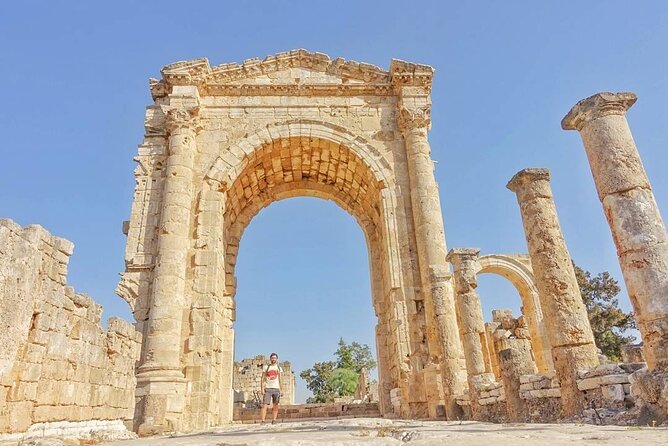
A big reason this stop feels worth it is the way the site organizes itself around entry and movement. The sector of Tyre El Bass includes the principal entrance in antique times, with the remains of the necropolis on both sides of a wide monumental causeway. Dominating that view is a Roman triumphal arch from the 2nd century AD.
You’ll also see an aqueduct and the Roman hippodrome from the 2nd century, plus the necropolis itself with several hundred well-preserved sarcophagi. Other surviving elements noted include an intact Roman road, the aqueduct, and the monumental arch. In other words, you’re not just looking at “one thing.” You’re looking at an entire functional scene: entrance approach, burial landscape, and the racing venue connection.
Time wise, you’ll spend about 1 hour. That’s a good match for this kind of place. Too short and it feels overwhelming, too long and you start to lose the relationships between features. One hour keeps you oriented.
Admission is not included. Still, if you want Roman Tyre without turning the day into a multi-stop museum marathon, this is a strong way to do it.
Value check: how the day stays efficient (and when it might feel rushed)
The reason this tour makes sense at this price is the combination of transport plus guided stop structure. You get pickup, an air-conditioned vehicle, and brief explanations across six main touchpoints. With no meals included, you do lose some “all-in” convenience, but the time budgeting still keeps the day moving.
How it tends to feel:
- If you like history that you can see, you’ll enjoy the rotation: fortress, khan, soap making, markets, shrine, and then Roman remains.
- If you prefer only one type of site, it might feel like you’re switching gears often.
The most important pacing tip is this: plan to do a quick note-to-self at each stop. Ask your guide one simple question like what feature you should look for first. That turns a 15-minute stop into something you actually remember.
Also, because tickets are only included for some sites, build a small buffer in your spending mindset for the paid admissions. You won’t be blocked, but it helps to know that not every stop is free.
Who should book this southern Lebanon day trip
This tour is a good fit if you:
- Want southern Lebanon highlights without renting a car
- Like variety, and you don’t mind a full day with several short walks
- Enjoy mixing big historic sites with places that show daily life, like the souks
- Prefer a small group day with a guide who explains what you’re seeing
It may not be the best choice if you:
- Want long, slow stays at one major site
- Need meals included as part of the base price
- Hate paying separate admissions for certain stops
Should you book it
Yes, I’d book it if you want a tight, efficient day built around real places: Sidon’s Sea Castle, the soap workshop story, the courtyard of Khan al-Franj, the Our Lady of Mantara shrine, and Tyre’s Al-Bass Roman setting. The $50 cost makes sense because you’re paying for transport, a guide, and a structured day rather than just ticking off landmarks.
Before you go, do two practical things. First, plan your food so you are not stuck hungry during transitions. Second, assume you will pay admissions for a few key stops, and keep your budget flexible. If you do that, the day feels like money well spent, not like a rushed checklist.
FAQ
What time does the tour start?
It starts at 8:00 am.
How long is the trip?
The duration is about 8 hours.
What is the maximum group size?
The tour has a maximum of 15 travelers.
Is hotel pickup and drop-off included?
Yes. Hotel pick up & drop off is included.
Does the price include meals?
No. Meals are not included.
Are entrance tickets included for every stop?
No. Admission tickets are not included for the Crusaders Sea Castle, Soap Museum – Saida, and Al-Bass Archaeological Site. Admission is free for Khan al-Franj, Sidon Souks, and Basilica of Our Lady of Mantara.
What’s included in the tour price besides transport?
You get a tour leader, an air-conditioned vehicle, and a brief explanation about each site.
Is this tour suitable for most people?
The tour notes say most travelers can participate.
Can I cancel for a full refund?
Yes. Free cancellation is available, and you can cancel up to 24 hours in advance for a full refund. If you cancel less than 24 hours before the experience starts, the amount paid is not refunded.
Newest Beirut write-ups
- Small Group Tours to Jeita Grotto and Byblos with tickets★ 5.0 · 3 reviews
- Small-Group Tour with Lunch to Jeita Grotto, Byblos and Harissa★ 4.5 · 3 reviews
- Small-Group Tour with Lunch to Baalbek, Anjar and Ksara★ 5.0 · 3 reviews
- Small-Group Tour to Sidon, Tyre and Maghdouche with Lunch and Tickets★ 4.5 · 3 reviews
- Beirut to Qadisha Valley, Bcharri & Cedar: Daily Tours with Lunch★ 4.5 · 3 reviews
- Beirut to Sidon, Tyre and Maghdouché: Daily Tours with Lunch★ 5.0 · 3 reviews
- Exploring Beirut’s Past: A Private Guided Historical Tour★ 5.0 · 3 reviews
- Private Tour: Tyre, Sidon and Maghdouche Day Trip from Beirut★ 4.5 · 3 reviews
Harissa Tours, compared.
Guided Small-Group Tour to Jeita, Harissa, Byblos with Lunch
Read our review →
Jeita Grotto,Harissa&Byblos Full-Day PRIVATE-CAR Trip from Beirut
Read our review →
Byblos, Jeita Grotto & Harissa Day Trip -With Lunch (4G on Board)
Read our review →
Semi-Private Tour to Jeita Grotto, Harissa & Byblos with Lunch
Read our review →
Private Guided Tour to Jeita Grotto through Harissa and Byblos
Read our review →
New Guided Semi-Private Tour to Jeita Grotto, Harissa & Byblos
Read our review →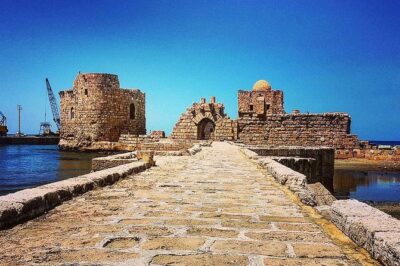
Small-Group Adventure Tour to Sidon Tyre & Maghdouche-Day Trip
Read our review →Browse the lists this tour appears in