
Reviewed · BYBLOS TOURS
Private Full-Day Tour to Byblos and Tripoli from Beirut
This is one of those Lebanon days that feels efficient in a good way. You hit Byblos and Tripoli in a single go, with enough time to actually notice details instead of just flashing a camera and moving on. The big draw for me is the way the day is anchored by a tour leader, plus a local guide in Byblos who gives the right context as you walk.
What I especially like is how the route mixes “big monuments” with the everyday parts of city life. You’re not only looking at stone. You’re also seeing souks, ports, and hammam traditions, then following the architectural timeline forward into Mamluk and Ottoman Tripoli.
One consideration: two of the major viewpoints have entrance costs not included in the price, and lunch isn’t included either. So you’ll want a bit of cash or a card plan for those stops.
Key highlights before you go
- Local guide time in Byblos for the Phoenician alphabet and layered coastal history as you stroll.
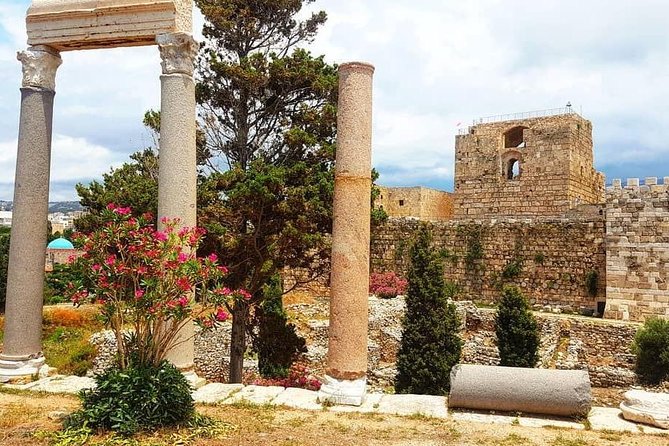
- Byblos Castle viewpoint with a 12th-century Crusader structure and clear views over the archaeological ruins.
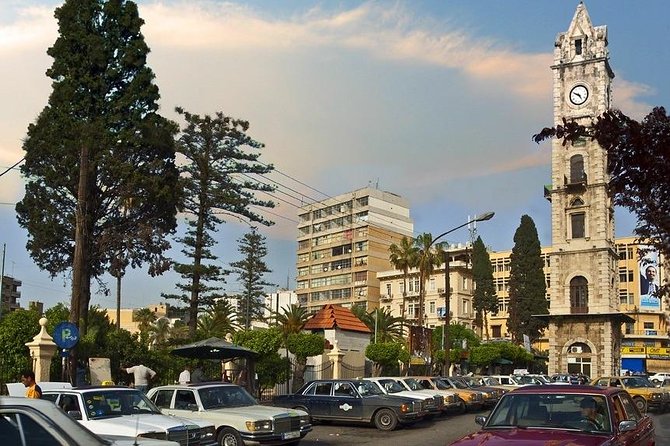
- Tripoli’s landmark cluster in a compact day, including Citadel Saint Gilles and major mosques.
- Khan and workshop stops like Khan al-Khayyatin and the soap factory, where craft and architecture meet.
- A functioning hammam experience at Hammam El-Abed, designed as a living museum.
- A sweet stop idea in Tripoli if you want it: Al Hallab 1881 was singled out as a favorite.
How a private full-day route keeps Byblos and Tripoli from feeling rushed
This is a private day, so the pacing can match your group rather than the clock. You start at 9:00 am, and you’ll spend roughly 8 hours total, moving between sites in an air-conditioned private vehicle. In Lebanon, that matters, because distance and heat can turn “short hop” plans into an all-day slog.
You also get hotel pickup and drop-off in Beirut, door-to-door. That reduces the usual stress of meeting points and rearranging your day around transit. I like that the tour is built around a smooth sequence, so you’re not zig-zagging across town.
The day is guided in two layers. You have a tour leader throughout, and then you get a local guide in Byblos. That combination is ideal: one person keeps the day moving and explains the big picture, while the local guide helps you understand what you’re standing in front of.
Other days out of Beirut to consider
- Jeita Grotto,Harissa&Byblos Full-Day PRIVATE-CAR Trip from Beirut
★ 5.0 · 222 reviews - Private Anjar and Baalbek Tour from Beirut with Departure Ticket
★ 5.0 · 79 reviews - Guided Private Full Day Tour to Baalbek, Anjar and Chateau Ksara
★ 5.0 · 60 reviews
Byblos: Neolithic roots, the Phoenician alphabet, and a port-city mood
Byblos is the kind of place where you quickly understand why people keep returning to the Mediterranean coast. The city is described as one of the oldest Phoenician cities, with habitation reaching back to Neolithic times. Even if you don’t memorize every era, you feel the long timeline in the streets and the way the ruins sit close to modern life.
You’ll have about 2 hours in Byblos, and admission there is free. This is enough time to walk the archaeological area and connect the dots between legends of the region and the city’s role in the Phoenician alphabet. That alphabet link is one of the reasons Byblos matters far beyond Lebanon. It’s not just an old port city. It’s part of how writing systems spread through the Mediterranean world.
If you like history that comes with place-based details, this is your sweet spot. You’re not only hearing dates. You’re moving through the physical setting that helped shape those stories.
Climbing Byblos Castle for Crusader walls and big-picture views
After Byblos, you go up to Byblos Castle, with about 30 minutes there. Admission for this stop is not included, so budget for the ticket if you want the castle experience.
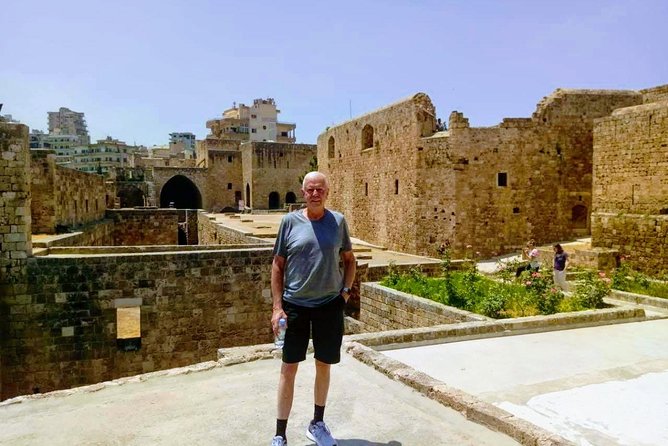
The castle itself is a restored 12th-century Crusader castle, surrounded by a 10-meter-wide dry moat. Even before you step inside, the setting does a good job of explaining why castles were built where they were: defensive design plus elevation.
Inside, there’s a small museum and information panels that outline the city’s history. I found that particularly useful because the surrounding archaeological site can look like a puzzle if you don’t have a quick guide. And the best payoff is the view from the top of the four-square keep. You can look down toward the sea and see Bronze Age dwellings below the walls. It’s one of those moments where you instantly understand scale, not just chronology.
If you’re short on energy that day, prioritize the climb and the viewpoint. You can skip extra wandering in the interior museum if you want, but do not skip the top view.
Old Souk and Byblos Port: small stops that set the day’s rhythm
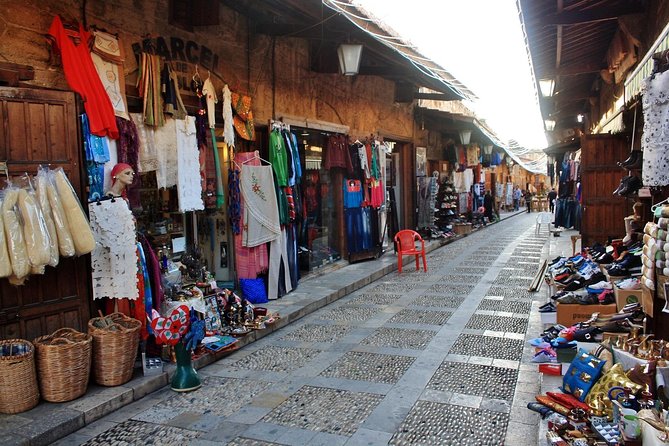
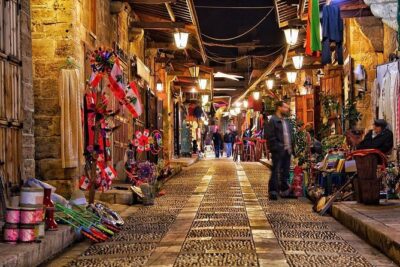
Two quick breaks help keep the day feeling balanced rather than all stone and no street. You spend about 15 minutes at the Old Souk, where you can browse souvenirs and antiques, or simply stroll cobblestone lanes and architecture. Since it’s free, you can treat it like a breather, not a “must-see checklist.”
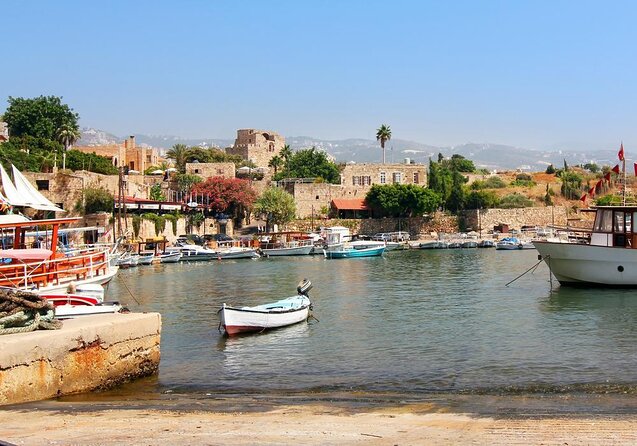
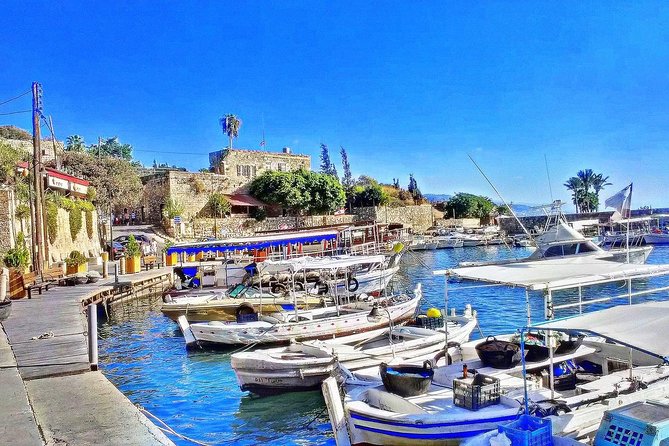
Then it’s Byblos Port for another 15 minutes, also free. The port is believed by Lebanese tradition to be the oldest port in the world. Even if you treat that as a local belief rather than a provable headline, the underlying story is solid: around 3000 BC, Byblos Port was a major timber shipping center in the eastern Mediterranean.
This is a good place to step back and take in the coast angle. You’ll be doing a lot of inland architectural viewing later in Tripoli, so a port-side reset helps your brain shift gears.
A different spoke from Beirut:
- Guided Small-Group Tour to Baalbek, Anjar and Ksara with Lunch
★ 5.0 · 511 reviews - Guided Small-Group Tour to Jeita, Harissa, Byblos with Lunch
★ 5.0 · 361 reviews - Paragliding Trip Over Lebanon – Jounieh Bay
★ 5.0 · 257 reviews - First Paragliding Club in Lebanon – Since 1992
★ 5.0 · 193 reviews
Tripoli: Mamluk and Ottoman layers you can spot as you walk
Tripoli is a different kind of historical experience. You still get Phoenician-era roots in the broader city identity, but the built landmarks visible today reflect later eras, including Mamluk and Ottoman influence. The day gives you about 3 hours in Tripoli, and admission for the city-area visit is free.
The context you’ll hear matters. Tripoli has forty-five historical buildings registered as historical sites, with many dating to the 14th century, plus twelve mosques from Mamluk and Ottoman times that have survived. You’ll also hear how secular buildings like hammams, souks, and khans form a working network of trades.
That is what I like most about this part of the day: you’re not only visiting monuments. You’re moving through a city layout that was built for daily routines. When you see mosques, markets, and trade structures within the same arc of walking, it helps you understand why these buildings were built where they were.
Citadel Saint Gilles (Qal’at Sinjil): the biggest fortress stop and the clearest “time layers”
Next comes one of Tripoli’s power statements: Citadel Saint Gilles, also known as Qal’at Sinjil. You get about 30 minutes and, again, admission is not included.
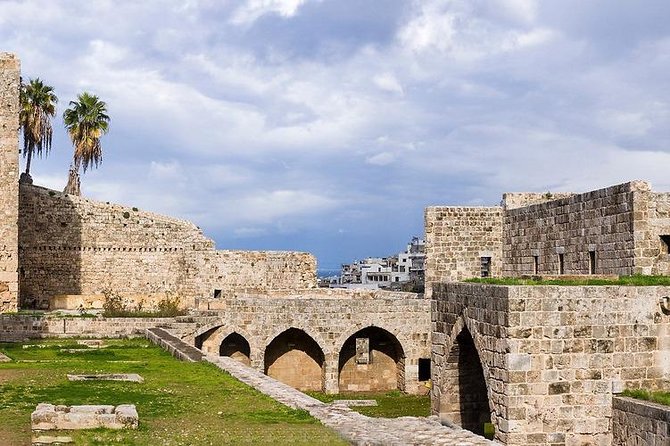
This fortress overlooks the city. It has been renovated and changed many times through its history, and the architecture reflects that. You’ll see octagonal Fatimid constructions converted to a church by the Crusaders, plus Crusader structures from the 12th to 13th centuries, 14th-century Mamluke additions, and Ottoman additions from the 16th century.
The current condition is largely linked to extensive restoration work by Mustafa Barbar Agha, governor of Tripoli in the early 19th century. The cite of that name helps. It reminds you that heritage is something people actively managed long after the original builders.
Also, the size is huge: the fortress is described as 140 meters long and 70 meters wide. That’s why this stop feels like a “pause point” in the day. Even if you spend only 30 minutes, you get a sense of scale that makes Tripoli’s other buildings easier to interpret.
Al Mansouri and Taynal Mosques: architectural clues from St. Mary of the Tower to 14th-century craftsmanship
Two mosque stops are free, each around 15 minutes, and they’re built for short attention spans. They also teach you how to read buildings as history documents.
First is Al Mansouri Great Mosque. It began in 1294 and was completed in 1315, built on the ruins of a 12th-century Crusader cathedral dedicated to St. Mary of the Tower. In the courtyard you’ll find a large open space surrounded by a vaulted prayer hall.
What makes this mosque especially interesting is the visible transfer of Western church elements. You can still spot parts like the northern entrance and a Lombard style bell tower, which was transformed into a minaret. The mosque’s foundation plaques and decrees also reveal details of daily life during the Mamluke period, so the building isn’t only spiritual. It’s administrative and practical too.
Second is Taynal Mosque. Built in 1336 by Saif Ed-Dine Taynâl, it sits on a site of a ruined Crusader church. The adjoining domed mausoleum holds the tomb of the founder. You’ll also notice reused elements, including two rows of granite columns with late Roman capitals inside the first prayer hall. The second prayer hall’s decorated entrance is described as a unique example of Mamluke-era architectural ornamentation.
If you’re visiting Lebanon for architecture and you like “spot the layers,” these two stops deliver without exhausting you.
Khan al-Khayyatin, the soap factory, and a functioning hammam that feels like a museum
After the big faith landmarks, the day shifts toward work life and daily rituals. These stops are shorter, mostly free, and they’re the kind of places where you get a snapshot of how people lived and made things.
You’ll pass through Khan al-Khayyatin, part of Tripoli Souks. It’s a long rectangular building about 40 by 80 meters, with a covered central courtyard and shops on either side. As the name suggests, it housed tailors and related trades like needles, thread, and sewing equipment. The practical angle here is that khans were not random market buildings. They were structured work hubs.
Then you go to the soap factory area, described as Khan As Sabon, also known as the Soap Khan. It was built at the beginning of the 17th century. Originally it was intended as a military barracks to garrison Ottoman troops, built in the center of the city so the pasha could control any uprising. Yes, a soap production site that doubled as a political tool is exactly the kind of twist you hope for in a history day.
Architecturally, it’s a large rectangular structure with two-story arcaded corridors running around a fountain courtyard. Even if you spend only a few minutes there, you’ll understand why people associated soap making with real civic space, not a back alley.
Next is Hammam El-Abed, also called Hammam Al Jadid in the schedule. It’s described as the only functioning hammam in Tripoli, likely built toward the end of the 17th century. The pierced domes are typical of Mamluke and Ottoman public baths. This stop is brief, but it’s described like a living museum, with cushions, a central fountain, and traditional fittings.
This is where I see why people love the tour format. After mosques and fortresses, you finally get something human-scale and routine-based. A hammam is not a monument you “tour” in the usual sense. It’s still part of the culture of bathing spaces, which is why it lands differently.
El Mina Port: finish with the waterfront and a sense of the wider coast
To close the day, you visit El Mina Port. It’s about 15 minutes and admission is free.
El Mina is a coastal town that occupies the location of the old Phoenician city of Tripoli. It also acts as the harbor city for modern neighboring Tripoli. One interesting detail is the mention of nine islands, with four declared as natural reservations to help breed fish and preserve natural habitat.
Even if you’re not stopping for a long waterfront walk, this finish helps you get perspective. You see how the historic city identity keeps returning to the sea, not just the inland fortress and mosque view.
Price and value: what $65 gets you, and what to plan for
At $65 per person, this is a good value if you want a structured full day without arranging transport yourself. You’re getting a private air-conditioned vehicle, tour leader support, and hotel pick-up and drop-off in Beirut. You also get local guide time in Byblos, which is the kind of add-on that often costs extra on other tours.
Most stops have free admission, which is a big part of the value math. But keep in mind two key paid stops: Byblos Castle and Citadel Saint Gilles (Qal’at Sinjil) have admission listed as not included. So your true cost depends on whether you plan to enter those structures.
Lunch is not included, so you’ll need to handle food on your own. A tip from the shared experience highlights: if you want sweets, Al Hallab 1881 in Tripoli was called out as a favorite. That’s a fun way to treat yourself during the day without turning it into a full restaurant detour.
Who should book this Byblos and Tripoli private day trip
Book it if you want a day that mixes major sites with everyday city textures. This is especially good for:
- People who like architectural layers and want to see how Mamluk and Ottoman eras reused and shaped older structures.
- Travelers who prefer guided context when visiting ruins and major fortifications.
- Anyone who wants to get out of Beirut for a full day without losing time on public transport.
You might skip it if you want a slow, beach-heavy itinerary. This is a structured history loop. You’ll be walking and switching sites through the day.
Should you book this tour?
I’d say yes if your goal is a high-output history day with smooth logistics and strong guidance. The combination of door-to-door pickup, private comfortable transport, and the split guidance plan (tour leader plus a local guide in Byblos) is exactly the kind of setup that turns “two cities in one day” from stressful into satisfying.
The only reason to hesitate is cost add-ons. If you don’t plan to enter Byblos Castle and Citadel Saint Gilles, you might feel like you’re paying mostly for time on the outside. If you do plan to go inside, then the itinerary fits the value.
If you want a day that feels like Lebanon’s layers on foot, this is a smart way to do it.
FAQ
What time does the tour start?
The tour starts at 9:00 am.
How long is the private day trip?
It runs for about 8 hours.
Is hotel pickup and drop-off included?
Yes. Hotel pick up and drop off in Beirut are included.
Is this tour private or shared?
This is private. Only your group participates.
Is lunch included?
No. Lunch is not included.
Are entrance fees included?
Admission is free for several stops. Byblos Castle and Citadel Saint Gilles list admission as not included, so those likely require separate payment.
What about transportation during the day?
You ride in a private air-conditioned vehicle, and transfers between stops are handled for you.
Do I need a printed ticket?
No. It uses a mobile ticket.
Can I cancel for a full refund?
Yes, you can cancel up to 24 hours in advance for a full refund. If you cancel less than 24 hours before the start time, the amount paid is not refunded.
Newest Beirut write-ups
- Small Group Tours to Jeita Grotto and Byblos with tickets★ 5.0 · 3 reviews
- Small-Group Tour with Lunch to Jeita Grotto, Byblos and Harissa★ 4.5 · 3 reviews
- Small-Group Tour with Lunch to Baalbek, Anjar and Ksara★ 5.0 · 3 reviews
- Small-Group Tour to Sidon, Tyre and Maghdouche with Lunch and Tickets★ 4.5 · 3 reviews
- Beirut to Qadisha Valley, Bcharri & Cedar: Daily Tours with Lunch★ 4.5 · 3 reviews
- Beirut to Sidon, Tyre and Maghdouché: Daily Tours with Lunch★ 5.0 · 3 reviews
- Exploring Beirut’s Past: A Private Guided Historical Tour★ 5.0 · 3 reviews
- Private Tour: Tyre, Sidon and Maghdouche Day Trip from Beirut★ 4.5 · 3 reviews
Byblos Tours, compared.
Guided Small-Group Tour to Jeita, Harissa, Byblos with Lunch
Read our review →
Jeita Grotto,Harissa&Byblos Full-Day PRIVATE-CAR Trip from Beirut
Read our review →
Byblos, Jeita Grotto & Harissa Day Trip -With Lunch (4G on Board)
Read our review →
Semi-Private Tour to Jeita Grotto, Harissa & Byblos with Lunch
Read our review →
Small Group Tour to Jeita Grotto, Harisa & Byblos with Hotel pickup
Read our review →
Private Guided Tour to Jeita Grotto through Harissa and Byblos
Read our review →
New Guided Semi-Private Tour to Jeita Grotto, Harissa & Byblos
Read our review →Browse the lists this tour appears in